
How AI in Recruitment Finds Better Candidates
Discover how artificial intelligence in recruitment helps companies identify better candidates, reduce hiring time, improve screening accuracy, and build stronger teams with AI-powered hiring solutions.
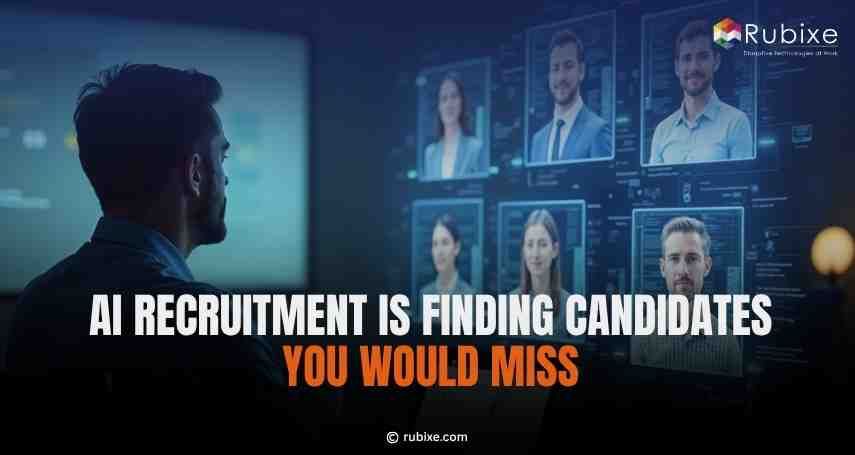
Hiring the right candidate has become harder than ever.
Companies receive hundreds of applications for a single role, hiring teams work under pressure to fill positions quickly, and traditional screening methods often miss highly qualified talent hidden inside massive applicant pools.
That challenge explains why artificial intelligence in recruitment has become one of the fastest-growing areas in HR technology.
Businesses today use AI to improve resume screening, automate repetitive hiring tasks, analyze skills more accurately, and speed up decision-making without sacrificing hiring quality.
According to LinkedIn’s Future of Recruiting report, talent acquisition leaders increasingly view AI as a major driver of hiring efficiency and candidate quality. Gartner also predicts that AI-powered recruitment technology will continue expanding rapidly as organizations focus on smarter hiring strategies.
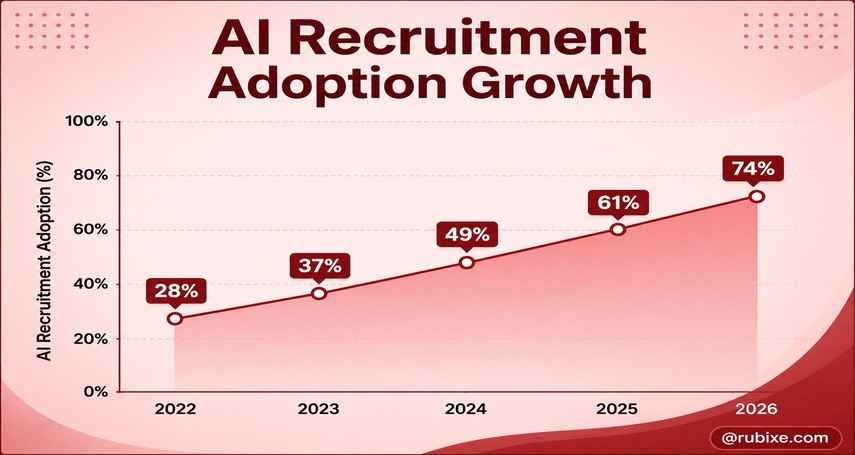 Growing adoption of AI-powered recruitment systems across businesses from 2022 to 2026.
Image Source: LinkedIn & Gartner recruitment technology insights
Why Artificial Intelligence in Recruitment Is Growing Rapidly
Recruitment teams face increasing pressure from multiple directions:
-
High application volumes
-
Faster hiring expectations
-
Skill shortages
-
Candidate drop-offs
-
Rising hiring costs
-
Internal resource limitations
Traditional recruitment methods often slow the process significantly.
Recruiters spend hours reviewing resumes manually, coordinating interviews, responding to candidates, and filtering unqualified applications.
Even experienced hiring teams struggle to process large applicant pools efficiently.
Artificial intelligence in recruitment helps solve those challenges by automating repetitive workflows while improving candidate quality.
AI systems can:
-
Screen resumes faster
-
Match skills more accurately
-
Predict candidate suitability
-
Schedule interviews automatically
-
Improve communication workflows
-
Reduce hiring bias in early-stage screening
The result involves better hiring decisions with less operational strain.
What Do AI Companies Do in Recruitment Technology?
Many businesses exploring recruitment automation first ask an important question: what do AI companies actually do in hiring systems?
An experienced AI company develops intelligent recruitment tools that improve efficiency across the hiring lifecycle.
These systems combine:
-
Machine learning
-
Natural language processing
-
Predictive analytics
-
Automation frameworks
-
Candidate behavior analysis
AI recruitment platforms analyze large amounts of candidate data quickly while identifying patterns that human recruiters may overlook during manual screening.
Modern AI hiring solutions support businesses through:
|
Recruitment Function |
AI Capability |
|
Resume screening |
Skill matching |
|
Candidate ranking |
Predictive analysis |
|
Interview scheduling |
Workflow automation |
|
Talent sourcing |
Intelligent search |
|
Candidate engagement |
Automated communication |
|
Performance forecasting |
Hiring analytics |
The objective involves improving hiring quality while reducing recruitment delays and operational costs.
How AI in Recruitment Finds Better Candidates
The biggest advantage of artificial intelligence in recruitment involves its ability to identify high-potential candidates more efficiently than traditional screening methods.
Intelligent Resume Screening
Recruiters often spend only a few seconds reviewing each resume manually.
That creates a major risk of overlooking strong candidates.
AI-powered systems analyze resumes based on:
-
Skills
-
Experience
-
Certifications
-
Industry relevance
-
Role alignment
-
Career progression
-
Keyword context
Instead of relying only on exact keyword matches, advanced AI systems evaluate broader skill relationships and candidate suitability.
For example:
A recruiter hiring for a data analytics role may overlook candidates with transferable technical experience from adjacent industries. AI systems can identify those connections more effectively through contextual analysis.
Many companies now rely on AI hiring software to improve candidate discovery accuracy.
Predictive Candidate Matching
Artificial intelligence in recruitment helps companies move beyond resume filtering alone.
AI systems analyze historical hiring data to identify patterns associated with successful employees.
That includes factors such as:
-
Skill combinations
-
Career growth patterns
-
Project experience
-
Industry transitions
-
Performance indicators
The system then compares incoming applicants against successful employee profiles to improve candidate matching quality.
This approach helps businesses identify candidates with stronger long-term potential rather than relying solely on traditional qualifications.
Faster Talent Sourcing
Finding skilled candidates has become increasingly competitive.
AI recruitment platforms help hiring teams identify talent across:
-
Job platforms
-
Professional networks
-
Internal databases
-
Talent communities
AI recruiting tools analyze candidate profiles automatically and recommend strong matches based on role requirements.
This process reduces manual search time significantly while expanding candidate reach.
Smarter AI-Based Interviews
Many organizations now use AI-based interviews to improve early-stage screening efficiency.
AI interview systems help recruiters:
-
Conduct structured assessments
-
Evaluate communication patterns
-
Analyze technical responses
-
Standardize screening workflows
-
Reduce scheduling delays
For example:
A global customer support company hiring hundreds of agents monthly may use AI interview systems to evaluate communication consistency before final interviews begin.
That approach improves speed while maintaining structured evaluation standards.
Reduced Hiring Delays
Slow hiring processes often result in candidate drop-offs.
Strong candidates frequently accept competing offers before recruitment cycles finish.
Artificial intelligence in recruitment improves hiring speed through automation across:
-
Resume filtering
-
Candidate communication
-
Interview scheduling
-
Status updates
-
Assessment coordination
According to SHRM, companies using AI-driven hiring systems often reduce time-to-hire and cost-per-hire by as much as 30%, significantly compared to traditional recruitment workflows.
Faster hiring improves both candidate experience and business continuity.
Industries Using AI Recruitment Automation Successfully
AI hiring systems continue expanding across multiple industries.
Technology Companies
Technology firms use AI Recruitment automation to process high application volumes efficiently while identifying specialized technical skills.
AI helps recruiters filter candidates based on:
-
Programming expertise
-
Project experience
-
Technical certifications
-
Product development exposure
Healthcare Organizations
Hospitals and healthcare networks use AI recruitment systems to identify qualified professionals quickly during staffing shortages.
AI supports:
-
Credential verification
-
Skill matching
-
Candidate prioritization
-
Workforce planning
Retail and E-Commerce
Retail companies often hire large seasonal workforces.
AI systems help automate:
-
Volume hiring
-
Candidate communication
-
Interview coordination
-
Applicant ranking
This improves recruitment scalability during peak demand periods.
Financial Services
Financial organizations use AI hiring tools for:
-
Compliance-focused recruitment
-
Risk-sensitive role screening
-
Candidate background analysis
-
Skill verification
Structured hiring processes improve both efficiency and accuracy.
Where Human Recruiters Continue to Matter
AI improves recruitment efficiency significantly, yet human judgment remains essential throughout hiring decisions.
Recruitment still depends heavily on:
-
Relationship building
-
Emotional intelligence
-
Leadership evaluation
-
Cultural alignment
-
Strategic decision-making
AI helps recruiters work faster and smarter. Human teams still guide final hiring decisions and long-term workforce planning.
The strongest hiring strategies combine AI-powered efficiency with experienced recruiter judgment.
Common Recruitment Mistakes Companies Make With AI
 Many businesses adopt AI hiring systems without proper implementation planning.
That often weakens hiring outcomes.
1. Over-Automating the Process
Some companies rely too heavily on automation without maintaining recruiter involvement.
Candidates still expect personalized communication and human interaction during important hiring decisions.
2. Ignoring Data Quality
AI systems depend heavily on accurate recruitment data.
Poorly structured hiring records reduce recommendation quality and candidate matching accuracy.
3. Using Generic Screening Models
Every company hires differently.
Generic AI systems may fail to evaluate industry-specific skills or organizational priorities effectively.
Businesses should customize hiring frameworks wherever possible.
4. Forgetting Candidate Experience
Recruitment automation should improve communication quality rather than creating robotic interactions.
Strong hiring systems maintain:
-
Timely updates
-
Clear communication
-
Structured interview experiences
-
Transparent hiring processes
Candidate experience influences employer reputation heavily.
Why AI Recruitment Technology Will Continue Expanding
The future of recruitment will depend heavily on intelligent automation and data-driven hiring systems.
Businesses increasingly need faster hiring cycles, stronger workforce planning, and better candidate evaluation methods.
Artificial intelligence in recruitment helps organizations:
-
Improve hiring speed
-
Reduce operational workload
-
Identify stronger candidates
-
Improve workforce quality
-
Scale hiring operations efficiently
According to IBM, organizations adopting AI across HR operations continue reporting stronger productivity and improved decision-making efficiency.
As competition for skilled talent increases, businesses using AI-powered recruitment systems gain a significant operational advantage.
How AI Companies Help Businesses Build Smarter Hiring Systems
An experienced AI services provider helps businesses design recruitment systems aligned with operational goals, workforce strategy, and scalability requirements.
Strong AI implementation involves more than software deployment alone.
AI companies help businesses through:
-
Recruitment workflow analysis
-
Automation strategy
-
AI model customization
-
Hiring analytics integration
-
Candidate engagement optimization
-
Long-term system refinement
Many businesses also explore scalable AI products that integrate recruitment automation with workforce analytics and employee management systems.
The objective involves creating hiring systems that remain efficient as businesses grow.
FAQs
1. What is artificial intelligence in recruitment?
Artificial intelligence in recruitment involves using AI-powered systems to automate hiring tasks, screen candidates, analyze resumes, and improve recruitment decision-making.
2. How does AI help recruiters find better candidates?
AI analyzes skills, experience, and hiring patterns more efficiently than manual screening, helping recruiters identify stronger candidate matches faster.
3. Can AI replace human recruiters?
AI improves recruitment efficiency significantly, yet human recruiters remain essential for relationship-building, cultural evaluation, and final hiring decisions.
4. What industries use AI recruitment automation?
Technology, healthcare, finance, retail, manufacturing, and customer service industries actively use AI recruitment systems.
5. Is AI hiring software suitable for small businesses?
Yes. Many small and mid-sized businesses use AI hiring software to improve recruitment speed, reduce manual workload, and manage growing application volumes efficiently.
Hiring quality directly influences business growth, operational performance, and long-term workforce stability. Companies that continue relying heavily on manual recruitment processes often struggle with delays, inconsistent screening, and missed talent opportunities.
Artificial intelligence in recruitment helps businesses improve hiring accuracy, automate repetitive tasks, reduce time-to-hire, and identify stronger candidates more efficiently.
Organizations investing in intelligent recruitment systems position themselves for faster hiring, stronger workforce planning, and improved scalability.
For businesses exploring advanced recruitment automation and scalable AI implementation, Rubixe provides intelligent AI solutions designed to support modern hiring and business growth strategies.