
















How AI is Solving Manufacturing's Biggest Problems in 2026
AI in manufacturing industry is reducing downtime, improving production efficiency, optimizing operations, and transforming modern smart factory systems.
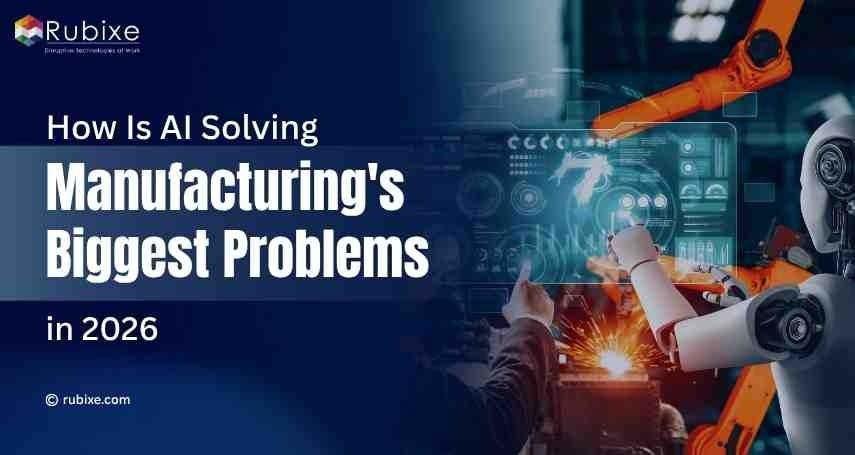
What if factories could predict machine failures before they happen, detect defects instantly, and reduce production waste without slowing operations?
That is exactly what is happening with the integration of AI in manufacturing industry in 2026. Manufacturing companies are now using AI-powered systems to solve some of the biggest operational problems that have affected factories for decades.
For years, manufacturers depended on manual inspections, reactive maintenance, and fixed production planning. While these methods worked to some extent, they also created higher costs, production delays, equipment failures, and inconsistent product quality.
Why Manufacturing Companies Are Struggling in 2026
Manufacturing companies today face several challenges that affect productivity, costs, and overall efficiency. Rising operational expenses, machine failures, quality issues, and supply chain disruptions continue to slow down factory operations.
One of the biggest problems is unplanned machine downtime. Unexpected equipment failures can stop production, delay deliveries, and increase repair costs. At the same time, manual quality inspection often misses defects during high-speed production, leading to product recalls and customer complaints.
Manufacturers also struggle with inventory management, changing customer demand, rising energy costs, and labor shortages. Traditional systems are no longer enough to handle these growing challenges efficiently.
This is why AI in manufacturing industry is becoming a critical solution for modern manufacturing in 2026.
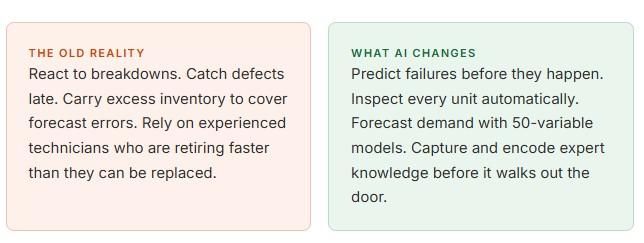
How AI in Manufacturing Improves Factory Operations
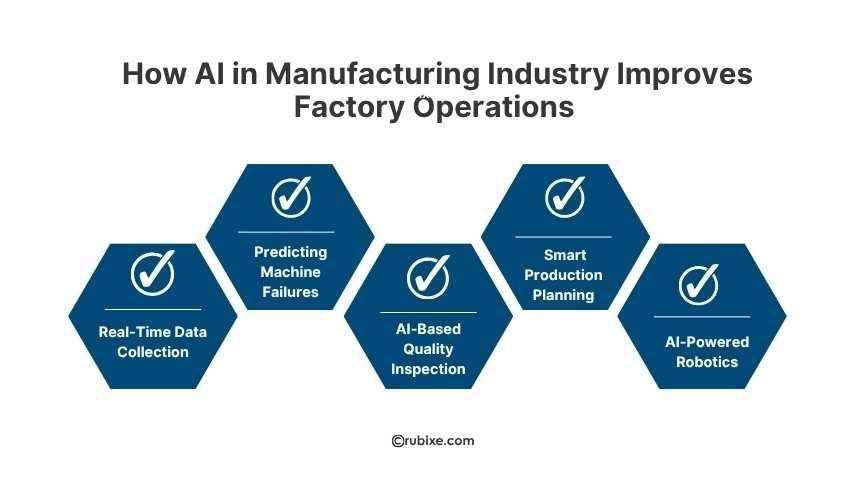 AI in the manufacturing industry is not just about advanced robots or futuristic machines. In real factories, AI works behind the scenes by collecting data, analyzing patterns, and helping teams make faster and smarter decisions. From machine monitoring to quality inspection, AI supports almost every stage of the manufacturing process.
1. Real-Time Data Collection
AI systems collect live data from machines using sensors, cameras, and connected devices. This includes:
-
Temperature
-
Pressure
-
Machine speed
-
Energy usage
-
Vibration levels
2. Predicting Machine Failures
AI studies machine behavior patterns and identifies early warning signs before breakdowns happen.
Result:
-
Reduced downtime
-
Faster maintenance
-
Lower repair costs
3. AI-Based Quality Inspection
Computer vision systems scan products during production and instantly detect:
-
Cracks
-
Scratches
-
Missing parts
-
Alignment issues
Result:
-
Better product quality
-
Fewer defective products
-
Reduced manual inspection errors
4. Smart Production Planning
AI analyzes:
-
Customer demand
-
Inventory levels
-
Supply chain data
-
Production schedules
It then helps factories decide:
-
What to produce
-
When to produce
-
How much to produce
Result:
-
Reduced waste
-
Better inventory control
-
Faster delivery timelines
5. AI-Powered Robotics
Modern AI robots can:
-
Handle repetitive tasks
-
Work alongside employees
-
Adjust movements based on production needs
Result:
-
Increased production speed
-
Improved worker safety
-
Higher operational efficiency
Traditional Manufacturing vs AI-Powered Manufacturing
|
Traditional Manufacturing |
AI-Powered Manufacturing |
|
Reactive maintenance |
Predictive maintenance |
|
Manual inspection |
AI visual inspection |
|
Fixed production planning |
Real-time optimization |
|
Higher downtime |
Reduced downtime |
|
Limited operational visibility |
Real-time factory insights |
|
Higher defect rates |
Better quality control |
Case Study: Siemens' Amberg Smart Factory
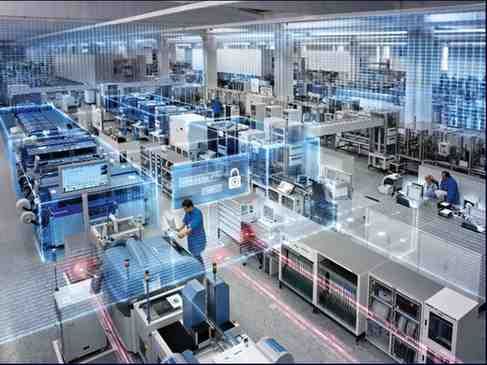
One of the best real-world examples of AI in manufacturing industry is the Siemens Amberg Electronics Plant in Germany. This factory is known globally for using AI, automation, and smart manufacturing technologies to improve production efficiency and product quality.
What Siemens Implemented
The factory uses:
-
AI-powered automation systems
-
Connected machines and sensors
-
Real-time production monitoring
-
Predictive maintenance tools
-
Smart quality inspection systems
These technologies allow machines and software systems to communicate with each other and make faster operational decisions.
Key Results Achieved
-
More than 75% of production processes are fully automated
-
Extremely low defect rates in manufacturing
-
Faster production cycles
-
Better operational efficiency
-
Real-time monitoring across the factory floor
The plant produces millions of products every year while maintaining very high quality standards.
Top Ways AI Is Solving Manufacturing Problems
1. Predictive Maintenance
Predictive maintenance is one of the biggest applications of ai in manufacturing industry. Instead of repairing machines only after they fail, AI continuously monitors manufacturing operations in real time, tracks equipment performance, and identifies warning signs early before breakdowns happen.
AI systems can detect:
-
Micro-vibrations
-
Heat fluctuations
-
Unusual energy consumption
-
Motor performance changes
Maintenance teams receive early alerts, allowing repairs to happen during planned downtime instead of emergency shutdowns.
Result:
-
Reduced downtime
-
Lower repair costs
-
Longer machine lifespan
-
Improved factory productivity
Many manufacturers report major operational improvements after implementing AI-based predictive maintenance systems.
2. Automated Quality Inspection
Traditional quality inspection often depends on manual checks, which become difficult during large-scale production.
AI-powered computer vision systems inspect products in real time at full production speed.
These systems identify:
-
Surface defects
-
Incorrect assembly
-
Dimension errors
-
Packaging issues
-
Product inconsistencies
Unlike human inspectors, AI systems do not become tired or inconsistent between shifts.
Result:
-
Higher product quality
-
Lower defect rates
-
Reduced recalls and returns
-
Better customer satisfaction
This is one of the fastest-growing use cases of ai in manufacturing industry today.
3. Supply Chain Demand Forecasting
Supply chain management has become increasingly difficult because of changing customer demand and global logistics disruptions.
AI forecasting systems analyze:
-
Historical sales data
-
Supplier timelines
-
Logistics performance
-
Market demand trends
-
Customer buying behaviour
This helps manufacturers forecast demand more accurately and improve production planning.
Result:
-
Reduced inventory costs
-
Better supply chain visibility
-
Faster deliveries
-
Improved production planning
Manufacturers can now respond to market changes much faster than before.
4. Energy Optimization
Energy costs are a major operational expense for manufacturing companies.
AI systems monitor machine-level energy consumption and identify areas of unnecessary energy waste.
AI can detect:
-
Excessive machine power usage
-
Heating inefficiencies
-
Idle machine operation
-
Equipment energy leaks
AI also helps factories move energy-heavy operations to lower-cost production hours.
Result:
-
Reduced energy bills
-
Improved operational efficiency
-
Lower environmental impact
-
Better sustainability performance
For large factories, even small improvements in energy efficiency can save millions annually.
Why AI Is Now Essential for Modern Manufacturing
Manufacturing is becoming more competitive every year. Companies are expected to produce faster, reduce costs, improve quality, and respond quickly to changing market demands.
Traditional systems alone are no longer enough.
This is why AI in manufacturing industry is becoming a critical part of modern factory operations.
AI helps manufacturers:
-
Reduce downtime
-
Improve product quality
-
Optimize production planning
-
Lower operational costs
-
Improve supply chain management
-
Increase overall efficiency
Manufacturers adopting AI today are building stronger, smarter, and more scalable production systems for the future.
The Future of AI in Manufacturing Industry
The manufacturing industry is going through a major transformation, and AI is becoming the foundation of this change.
From predictive maintenance to smart quality inspection and supply chain optimization, AI in manufacturing industry is helping factories solve long-standing operational problems more efficiently than ever before.
Factories using AI are becoming:
-
Faster
-
Smarter
-
More efficient
-
More scalable
In 2026, AI is no longer just an innovation in manufacturing - it is becoming a necessity for companies that want to stay competitive in the modern industrial world.
Frequently Asked Questions
1. How is AI used in manufacturing industry?
AI is used for predictive maintenance, quality inspection, industrial automation, production planning, and supply chain forecasting.
2. What are the biggest benefits of AI in manufacturing?
AI helps manufacturers reduce downtime, improve product quality, optimize production processes, lower operational costs, and improve factory efficiency.
3. Can AI reduce factory downtime?
Yes. Predictive maintenance systems powered by AI can identify machine issues early and significantly reduce unexpected downtime.
4. Is AI replacing factory workers?
In most cases, AI supports workers instead of replacing them. AI automates repetitive tasks while employees focus on more complex operational work.
Ready to Transform Your Manufacturing Operations With AI?
Looking to modernize your manufacturing operations with AI?
Partner with Rubixe to reduce downtime, improve production efficiency, and build smarter factory operations with AI-powered manufacturing solutions designed for the future.