








Building Smarter Classrooms? Here’s How AI Is Changing Learning
AI is transforming education with smarter classrooms, personalized learning, automation, and better student engagement for future-ready learning.
Have you ever wondered why two students sitting in the same classroom can walk away with completely different learning experiences? Or what it would look like if every student had a personal tutor available 24 hours a day, seven days a week, at no extra cost?
These are no longer just wishful questions.
The rapid growth of AI in education sector is turning these ideas into everyday realities for students, teachers, schools, and institutions across the world.
What Is AI Doing in Classrooms Today?
When most people hear "artificial intelligence," they picture robots or science fiction movies. But in education, AI looks much simpler and much more useful.
It shows up as a reading app that adjusts to your child's level, a grading tool that saves teachers hours every week, or a dashboard that helps school administrators spot which students might be falling behind.
At its core, AI in education sector means using smart software to make learning more personal, more efficient, and more accessible. It does not replace teachers. It gives teachers better tools, and it gives students more support.
According to recent market reports, the global AI in education market is expected to reach $10.6 billion in 2026, growing rapidly as schools and colleges invest more in smart learning technologies and personalized education systems. That level of growth clearly shows how strongly AI is transforming modern education.
Why Traditional Classrooms Have Limitations
Before understanding what AI brings to the table, it helps to acknowledge what traditional classrooms struggle with.
In a class of thirty students, a teacher cannot reasonably give every child individual attention. Students who learn faster get bored. Students who need more time feel left behind. Teachers spend a significant portion of their week on administrative tasks - grading papers, preparing reports, tracking attendance, instead of focusing on actual teaching.
A study from the Bill & Melinda Gates Foundation found that teachers spend an average of 11 hours per week on non-teaching tasks. That is nearly a third of a working week that does not directly benefit students.
This is exactly where AI steps in.
Key Ways AI Is Improving the Education Sector

1. Personalized Learning Paths
One of the strongest use cases for AI in education sector is personalized learning. AI-powered platforms can analyze how a student interacts with content - where they pause, what they get wrong, how long they spend on a topic, and then adjust the material accordingly.
Instead of every student reading the same chapter at the same pace, one student might receive more visual explanations, while another gets extra practice questions. The content fits the learner, not the other way around.
2. Saving Teachers' Time Through Automation
AI tools can handle many of the repetitive tasks that take up a teacher's day. Automated grading for multiple-choice and short-answer questions is now widely available. Some tools can even give preliminary feedback on written essays, flagging grammar issues, structure problems, or gaps in argument , leaving the teacher to focus on the higher-level feedback that really matters.
This does not diminish the teacher's role. It sharpens it. When a teacher spends less time marking routine assignments, they have more time to have meaningful conversations with students, design better lessons, and support learners who are struggling.
3. Early Identification of Learning Difficulties
One of the quieter but more important benefits of AI in education is its ability to spot patterns that humans might miss. If a student's quiz scores are slipping, their assignment submissions are becoming shorter, or they are skipping certain modules entirely, an AI system can flag this before the problem becomes serious.
4. Making Education More Accessible
For students with disabilities, language barriers, or limited access to quality teachers, AI opens doors that would otherwise stay closed. Real-time transcription tools help hearing-impaired students follow along in class. AI-powered translation assists non-native speakers. Text-to-speech and speech-to-text tools support students with reading or writing difficulties.
In rural and underserved communities, AI-driven platforms can deliver high-quality learning experiences even where qualified teachers are scarce. This is one of the most socially significant aspects of AI in education sector, showing how AI in Education Driving Innovation in Learning Systems can reduce inequality and make learning more accessible for everyone.
AI in Education: A Comparison at a Glance
|
Feature |
Traditional Classroom |
AI-Enhanced Classroom |
|
Learning pace |
Same for all students |
Adjusted per individual |
|
Teacher time on admin |
30%+ per week |
Reduced significantly |
|
Feedback speed |
Days to weeks |
Immediate or same day |
|
Early intervention |
Often reactive |
Proactive and data-driven |
|
Accessibility support |
Limited, resource-dependent |
Built-in and scalable |
|
Cost of personalisation |
High (requires tutors) |
Lower through technology |
Brand Case Study: Duolingo and the Power of AI-Driven Learning
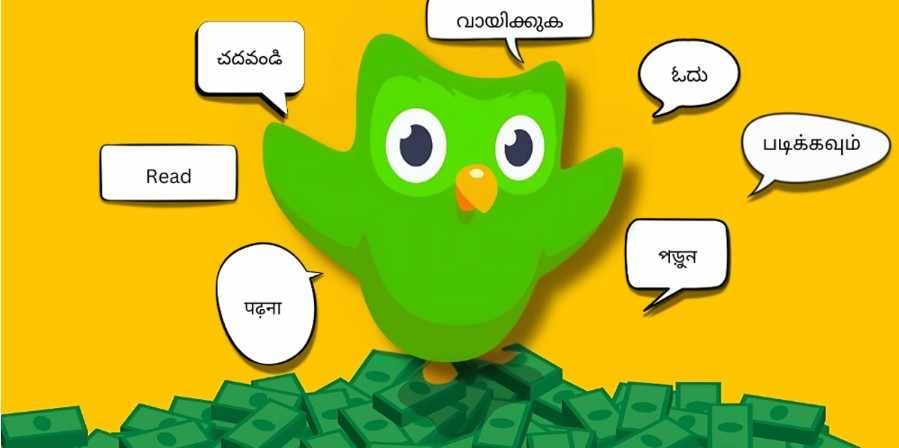 Duolingo is one of the clearest examples of AI in education sector working at scale. The language learning app serves over 500 million registered users across the world. What makes it genuinely interesting from an educational standpoint is not its popularity; it is what happens under the surface.
Duolingo uses AI to determine the best time to review a word before you forget it, a technique called spaced repetition. It adjusts the difficulty of exercises based on your current performance. It identifies which concepts a learner tends to confuse and brings them back more often.
In 2023, Duolingo introduced Duolingo Max, which uses generative AI to provide two new features: "Explain My Answer," which gives learners a detailed explanation of why their response was right or wrong, and "Roleplay," which allows learners to practice conversations with an AI character in real-world scenarios.
Independent researchers studying Duolingo's effectiveness found that 34 hours of study on the platform was comparable to a full university semester of language study in terms of measurable learning outcomes. That is not just clever marketing; it is a result of thoughtful AI design applied to a genuine educational challenge.
What Teachers, Students, and Schools Actually Need to Know
For Teachers
AI is a support tool, not a replacement. The skills that make a great teacher - empathy, creativity, the ability to inspire, the judgment to know when a student is struggling emotionally, not just academically are not things AI can replicate. What AI can do is take the administrative weight off your desk so you can focus on those human skills.
Start small. Try one AI-assisted grading tool or one adaptive practice platform with a single class. See what works before committing to a full integration.
For Students
AI tutoring tools are genuinely useful for revision, practice, and getting quick explanations when you are stuck at 11 pm and your teacher is not available. But they work best when you engage actively - ask follow-up questions, test yourself, and do not just accept the first answer you get.
For School Administrators and Decision Makers
Investing in AI tools requires thinking beyond the software itself. Teacher training, data privacy policies, and clear guidelines for responsible use are all essential. A tool is only as good as the environment it operates in. This is why AI for schools should focus not only on technology adoption but also on creating safe, effective, and student-friendly learning environments.
Challenges Worth Acknowledging
A balanced look at AI in education sector means being honest about the challenges.
-
Data privacy is a serious concern, especially when tools collect data on minors. Schools must ensure that any platform they use complies with regulations like FERPA in the United States or GDPR in Europe.
-
Digital equity remains a barrier. AI tools require reliable internet access and devices - things that are still not guaranteed for all students globally.
-
Over-reliance is a risk. If students use AI to complete assignments rather than learn from them, the technology undermines its own purpose. Clear policies on acceptable use are essential.
-
Teacher buy-in matters enormously. Technology without training rarely delivers results. Schools that invest in helping teachers understand and use AI tools tend to see far better outcomes than those that simply install software and hope for the best.
Actionable Insights for Getting Started
-
Schools: Pilot one AI-assisted tool per department before scaling. Choose platforms with strong data privacy policies and clear teacher training resources.
-
Teachers: Use AI for low-stakes grading and practice generation first. Spend the time saved on student conversations and creative lesson design.
-
Students: Treat AI tutors like a study partner, not a shortcut. The goal is understanding, not just completing the task.
-
Parents: Ask your child's school what AI tools are in use and what data is collected. Engagement from families helps schools implement these tools responsibly.
Frequently Asked Questions
Q: Will AI replace teachers in the future?
No credible research or expert in AI in education sector supports this idea. AI handles tasks, teachers handle people. The human relationship between a teacher and a student remains central to education. AI is far more likely to make teachers more effective than to make them unnecessary.
Q: Is AI in education only for wealthy schools?
Not anymore. Many AI tools are available at low or no cost, including Khan Academy's Khanmigo and Duolingo's core platform. Governments and NGOs are also increasingly funding AI-based education programs in underserved communities.
Q: How do I know if an AI education tool is actually effective?
Look for platforms backed by independent research, not just company-produced case studies. Tools that show clear data on learning outcomes, not just engagement metrics, are more trustworthy. Pilot programs with clear success criteria are the best way to evaluate a tool before committing to it.
Q: What subjects benefit most from AI in the classroom?
Mathematics and language learning have seen the most consistent results from AI-assisted tools, largely because progress in these subjects can be measured precisely. However, AI is increasingly being used in science, writing, history, and even arts education to support feedback and content delivery.
The Classroom of Tomorrow Is Being Built Today
The conversation about AI in education sector is no longer about whether it will happen. It is already happening, in apps on students' phones, in dashboards on teachers' computers, and in tools that are helping schools identify struggling learners before it is too late.
What matters now is how thoughtfully we bring these tools into classrooms. AI does not make education better by itself. It makes education better when it is used with clear goals, adequate training, genuine care for students, and an honest eye on the challenges that come with it.
The best classrooms of the future will not be defined by the technology they use. They will be defined by the quality of learning that technology makes possible. Smart schools are already building in that direction, one tool, one teacher, one student at a time.