

Are AI-Based Interviews the Future of Hiring?
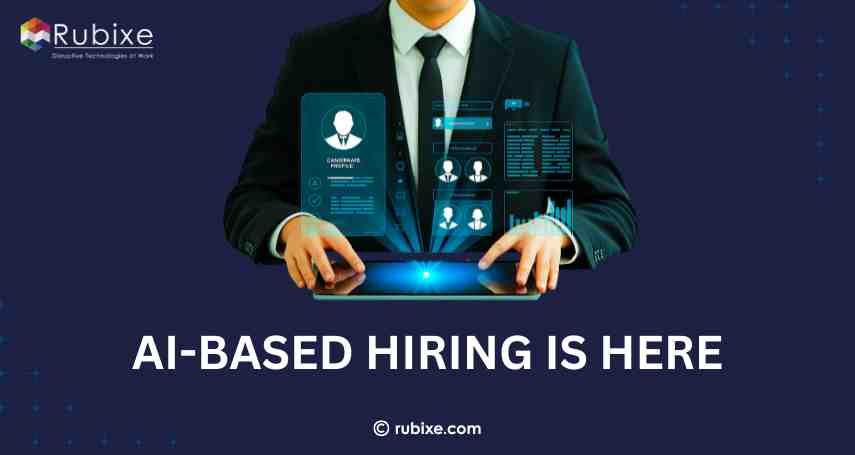
AI-based interviews are the future, enhancing recruitment speed, fairness, accuracy, and decision-making to help companies select the right talent.
Are resumes enough to identify the right talent today?
Can companies hire faster without compromising quality?
Traditional hiring methods are no longer enough to handle modern recruitment demands. AI-based interviews are emerging as a smarter way to evaluate candidates, reduce delays, and improve hiring accuracy.
This is where ai based interviews are changing the hiring process.
Companies receive hundreds or even thousands of job applications for a single job role. HR teams struggle to screen resumes, schedule interviews, and reduce hiring delays. AI based interviews offer a smart solution to these problems.
They help companies focus more on skills and real abilities rather than just resume keywords. Hiring teams can shortlist the right candidates more quickly and accurately. This approach improves hiring quality while saving time and effort for HR teams.
How Unilever uses AI-based interviews
Unilever has adopted AI-based interviews to make the hiring process faster and more efficient. They wanted to improve candidate evaluation and overall recruitment quality.
They use AI games to test skills and AI video interviews to analyze candidate responses objectively.
The results were impressive: hiring time dropped by 75%, candidate satisfaction increased, and hiring became more diverse and fair.
What Are AI-Based Interviews?
AI-based interviews use artificial intelligence to assess candidates through automated questions, response analysis, and data-driven evaluation.
AI systems can ask job-related interview questions and record candidate responses. They analyze answers to understand skills, knowledge, and communication ability. Some tools also review speech patterns, tone, and behavior to measure confidence and clarity.
Based on this analysis, AI ranks candidates according to job fit and required skills. This allows HR teams to quickly identify the most suitable candidates. AI does not replace human decision-making, but it helps HR teams make faster, more accurate, and more consistent hiring decisions.
How AI-Based Interviews Work
AI interviews follow a structured process to evaluate candidates fairly and efficiently. The system focuses on skills, communication, and job relevance rather than only resumes.
1. Interview Invitation
Candidates receive an interview link through email or a hiring platform. They can attend the interview at a convenient time without scheduling conflicts.
2. Question Delivery
AI asks pre-set, job-related questions through video, voice, or chat. These questions are designed based on the role and required skills.
3. Response Analysis
AI analyzes candidate responses by reviewing spoken words, written answers, and communication clarity. It checks how well the answers match the job requirements.
4. Behavior and Skill Evaluation
Some AI tools also assess tone of voice, confidence level, and problem-solving approach to better understand the candidate’s abilities.
5. Candidate Scoring and Shortlisting
Based on the analysis, AI scores and ranks candidates according to job fit. HR teams review top candidates and move them to the next hiring stage.
6. Human Review and Final Decision
Recruiters review AI insights and make the final hiring decision. AI supports the process but does not replace human judgment.
Why Companies Are Choosing AI-Based Interviews

Hiring the right talent is one of the biggest challenges for companies today. Traditional recruitment can be slow, costly, and sometimes biased, which makes it hard to find the best candidate. This is why more businesses are turning to AI interviews.
1. Save Time and Speed Up Hiring
Traditional hiring involves reviewing hundreds of resumes, scheduling multiple interviews, and coordinating with different departments. This process can take weeks or even months.
AIinterviews can handle multiple candidates at the same time. The AI can automatically screen resumes, ask interview questions, and score candidates. This reduces the initial hiring process from weeks to a few days, helping companies fill roles faster.
2. Reduce Human Bias
Even experienced HR professionals can have unconscious biases when reviewing resumes or conducting interviews. Factors like gender, age, or education can unintentionally influence hiring decisions.
AI interviews focus purely on a candidate’s skills, experience, and answers. This ensures that every applicant is evaluated fairly and equally. For example, AI can ignore names, addresses, or photos that may trigger bias.
3. Better Insights into Candidate Skills
AI doesn’t just ask questions -it also analyzes answers deeply. Modern AI tools can evaluate:
-
Communication skills: clarity, confidence, and vocabulary
-
Problem-solving ability: logic and approach to scenarios
-
Personality traits: teamwork, adaptability, and leadership potential
-
Emotional responses: tone of voice and facial expressions
This provides hiring managers with data-driven insights, helping them make informed decisions instead of relying on intuition alone.
4. Consistency Across Candidates
In traditional interviews, each candidate may face different questions or evaluation styles, depending on the interviewer. This can lead to inconsistent results and make it harder to compare candidates fairly.
AI interviews ensure every candidate is evaluated in the same way, using the same scoring system. This consistency makes hiring decisions more objective and reliable.
5. Cost-Effective Hiring
Conducting multiple rounds of interviews requires significant resources, interviewer time, office space, scheduling, and administrative work. AI can handle the initial screening and interviews automatically, which reduces the need for extensive human involvement. This not only lowers recruitment costs but also frees up HR teams to focus on strategic tasks, like onboarding and employee engagement.
Challenges of AI Based Interviews
While AI based interviews are transforming recruitment, they are not without challenges. Companies must understand these limitations to use AI effectively and ensure a fair, reliable, and trustworthy hiring process.
1. Data Privacy Concerns
AI systems collect a large amount of personal and sensitive information from candidates, including:
-
Resumes and cover letters
-
Video recordings of interviews
-
Voice tone and facial expressions
-
Assessment results
If this data is not stored or handled properly, it could lead to data breaches or privacy violations. Companies must follow strict data protection rules, such as GDPR in Europe or local privacy laws, to protect candidates’ information.
2. Limited Emotional Understanding
AI can analyze tone, facial expressions, and word choice, but it cannot fully understand human emotions. Human qualities like empathy, creativity, and subtle interpersonal cues are difficult for AI to measure accurately.
3. Bias in AI Systems
AI services systems from historical data, which may carry past human biases. If these AI services are trained on biased datasets, they can replicate or even amplify these biases, affecting fair hiring.
4. Technical Issues
AI based interviews depend on technology, the internet, software platforms, cameras, and microphones. Any technical glitch can affect candidate evaluation and experience.
Common Issues Include:
-
Poor internet connection is causing frozen or lagging video
-
Software bugs or AI misinterpreting speech
-
Device compatibility problems (mobile vs. desktop)
5. Over-Reliance on AI
AI should assist human recruiters, not replace them entirely. Over-reliance on AI can lead to:
-
Missing candidates with unconventional but strong skills
-
Ignoring cultural fit and soft skills
-
Reducing human connection in recruitment, which can harm employer branding
Are AI Based Interviews the Future?
According to Gartner, AI will play a major role in automating early-stage hiring processes in the coming years.
Many experts believe AI based interviews are here to stay. Why?
-
They help companies hire faster.
-
They reduce human bias in hiring decisions.
-
They give better insights into candidate skills.
However, AI should work alongside human recruiters. Humans bring empathy, judgment, and intuition that AI cannot replicate.
Predictions for the future:
-
By 2030, more than 50% of companies may use AI for initial hiring stages.
-
AI could help small businesses access top talent without large HR teams.
-
Hybrid hiring, combining AI and human interviews, will likely become the norm.
Tips for Candidates Facing AI Based Interviews
1. Be Clear and Concise
Speak clearly and structure your answers logically. Avoid long, rambling explanations so the AI can easily understand your key points.
2. Practice Common Questions
Prepare for common role-based and behavioral questions. Practicing helps you respond confidently and demonstrate your problem-solving and communication skills effectively.
3. Show Confidence
Maintain a steady tone and speak at a moderate pace. AI evaluates clarity and energy, so confident answers make a stronger impression.
4. Test Your Tech
Check your internet, camera, and microphone before the interview. Ensuring everything works smoothly prevents technical issues from affecting your performance.
5. Be Yourself
Answer naturally and honestly. Trying to “trick” the AI can backfire, as these systems are designed to detect authenticity and consistency.
Tips for Companies Using AI Based Interviews
1. Choose the Right Tool
Select AI software that fits your industry, role requirements, and company size. The right tool ensures accurate and relevant candidate evaluation.
2. Train Your AI Properly
Ensure your AI is trained on diverse and unbiased data. Regular updates improve accuracy and fairness in candidate assessment.
3. Combine AI with Human Judgment
Use AI for initial screening, but let humans make final hiring decisions. This ensures empathy, cultural fit, and intuition remain part of the process.
4. Monitor Performance
Regularly review AI results to check for accuracy, fairness, and bias. Adjust settings as needed to maintain reliable hiring outcomes.
5. Respect Candidate Privacy
Always follow data protection laws and inform candidates how their data is used. Secure handling builds trust and maintains compliance.
AI-based interviews are reshaping modern hiring by improving speed, consistency, and decision-making. While they cannot replace human judgment, they significantly enhance the recruitment process when used correctly. Companies that adopt a balanced approach combining AI and human insight will be better positioned to hire the right talent efficiently.