


How AI Consulting Improves Workflows in Mid-Size Companies
AI consulting improves workflows in mid-size companies by streamlining processes, boosting productivity, reducing costs, and enhancing efficiency.
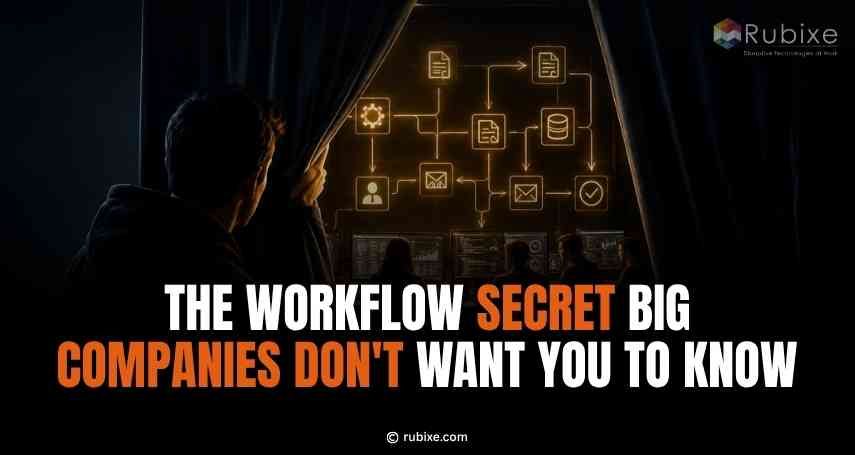
Your team is working hard. Yet somehow, approvals take forever. Reports are always late. Customer queries pile up. And your operations team is buried in spreadsheets nobody trusts.
Sound familiar?
Most mid-size companies are not dealing with a people problem.
They are dealing with a workflow problem, one that quietly erodes productivity, slows growth, and frustrates everyone involved.
AI consulting steps in precisely here, not as a flashy technology pitch, but as a structured approach to identifying where your operations are breaking down and building intelligent systems that fix them.
Let's see exactly how AI consulting works inside mid-size businesses, what problems it solves, and what results companies are achieving across industries.
What Is AI Consulting?
AI consulting is a professional service where specialists analyze your business operations, identify automation and intelligence opportunities, and guide you through implementing AI tools that fit your actual workflow.
An AI consultant typically covers:
-
Workflow analysis: mapping every step of your current process to find friction points
-
AI opportunity mapping: matching specific AI tools or models to specific pain points
-
Automation strategy: deciding what to automate, when, and in what sequence
-
AI integration: connecting new tools with your existing systems without breaking them
-
Operational optimization: measuring output and refining the system over time
In practice, let’s take a mid-size logistics company manually matching purchase orders with delivery confirmations. This task takes a full-time employee nearly four hours every day. However, the right AI consulting partner can map the workflow, build a document-matching model, and automate up to 90% of the process.
Gartner research: Companies using AI-powered workflow automation experience an average 40% reduction in process cycle times.
Why Mid-Size Companies Are Investing in AI Consulting
Larger enterprises have internal AI teams.
Small businesses often survive on simplicity.
Mid-size companies are stuck in a difficult middle ground, complex enough to need AI, but rarely resourced to build it independently.
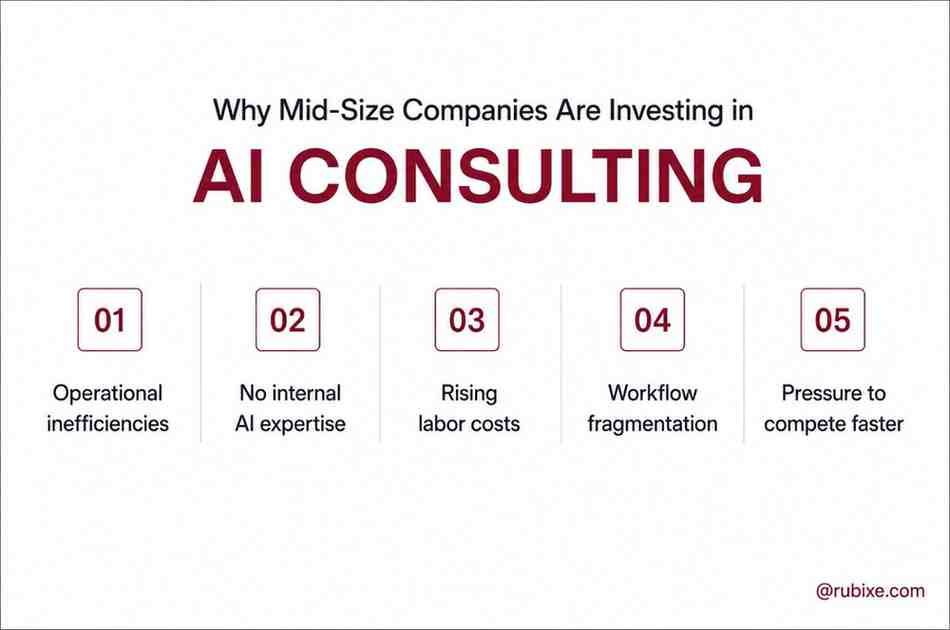
Here is what is driving the investment:
-
Operational inefficiencies that scale poorly as headcount grows
-
No internal AI expertise to evaluate tools, risks, or integrations
-
Rising labor costs are pushing companies to automate repetitive functions
-
Workflow fragmentation across departments that never communicate
-
Pressure to compete faster against digitally advanced competitors
Common Workflow Problems Mid-Size Companies Face
Before AI consulting can fix anything, it helps to name what is actually broken.
The most common workflow failures in growing companies:
-
Repetitive manual tasks: data entry, form processing, scheduling, copy-paste operations across tools
-
Delayed approvals: multi-step sign-offs sitting in inboxes for days, blocking execution
-
Disconnected data: finance has one version, operations has another, and leadership works off a third
-
Inconsistent reporting: monthly reports assembled manually with mismatched figures
-
Slow customer responses: support teams overwhelmed, SLAs missed, customers leaving
-
Inefficient document handling: contracts buried in shared drives, version control chaos
These are not abstract problems. They compound daily, and they are exactly what structured AI consulting is built to address.
Top 10 Ways AI Consulting Improves Business Workflows
1. Automating Repetitive Administrative Tasks
Invoice processing, data entry, email sorting, and appointment scheduling - AI consulting identifies which repetitive tasks consume the most labor hours and builds automation and pipelines to handle them at scale.
2. Improving Customer Support Workflows
AI consultants deploy conversational AI and intelligent routing systems that automatically handle tier-1 queries, escalate complex cases to the right agent, and meaningfully reduce average handle time.
3. Streamlining Internal Communication
AI automation tools can summarize meeting notes, flag action items, and route approvals through the right channels — reducing the "did you see my email?" problem that clogs mid-size operations daily.
4. Reducing Reporting and Data Analysis Delays
Instead of someone spending two days assembling a monthly report, AI consulting builds automated reporting pipelines that pull live data and generate dashboards on demand.
5. Improving Sales and Lead Qualification
AI consulting sets up lead scoring models that analyze behavioral signals and rank prospects, so your sales team focuses on accounts most likely to convert, not whoever emailed last.
6. Optimizing Inventory and Supply Chain Decisions
AI consultants build predictive models that factor in seasonality, supplier lead times, and demand patterns to recommend smarter reorder points, cutting both overstock and stockouts.
7. Accelerating HR and Recruitment Processes
From screening resumes at scale to scheduling interviews automatically, AI consulting trims weeks off hiring cycles. One SaaS company cut time-to-offer from 34 days to 11 using an AI-assisted screening workflow.
8. Improving Document Search and Knowledge Access
With RAG (Retrieval-Augmented Generation) pipelines, AI consulting makes your internal knowledge base actually searchable. Employees stop hunting through folders and start getting answers in seconds.
9. Enhancing Workflow Visibility Across Teams
AI consulting builds cross-departmental dashboards that show where tasks are, who owns them, and where they are stuck, giving operations leaders actual visibility instead of endless status meetings.
10. Supporting Faster Executive Decision-Making
Executives receive AI-curated briefings pulling from sales data, operations metrics, and market signals. Less time digging through dashboards, more time making confident calls.
How AI Consulting Improves Workflows Across Different Industries
 Healthcare: AI consulting streamlines patient intake, appointment scheduling, and clinical documentation.
Manufacturing: Predictive maintenance workflows identify equipment failure before it happens. AI consulting in manufacturing builds sensor data pipelines that alert engineers before downtime costs accumulate.
Finance: Intelligent document processing pipelines for loan applications, compliance checks, and audit preparation cut processing time by half in many cases.
Logistics: Route optimization, delivery confirmation matching, and carrier performance scoring deliver immediate operational value.
SaaS and Technology: Product teams use AI consulting to build internal data pipelines, automate QA workflows, and improve customer onboarding sequences with behavioral triggers.
Retail: From demand forecasting to personalized promotions, AI-powered retail systems help ops teams stop reacting and start anticipating.
Benefits of AI Consulting for Mid-Size Companies
-
Cost efficiency: fewer labor hours on low-value tasks means better margins without layoffs
-
Faster operations: cycle times shrink across sales, support, finance, and logistics
-
Scalability: AI systems handle volume increases without proportional headcount growth
-
Higher productivity: teams spend time on judgment-heavy work instead of mechanical tasks
-
Better decisions: leaders work from cleaner, faster data instead of stale reports
-
Fewer operational bottlenecks: approval chains, handoffs, and integrations stop being friction points
A right AI consulting company delivers most of its value within the first 90 days when done with discipline. Companies that see the slowest returns typically skipped the workflow audit phase and jumped straight to tool selection.
What Actually Causes AI Projects to Fail (And How to Avoid It)
This deserves a direct conversation because the failure rate in poorly managed AI projects is high.
-
Poor data quality: AI systems are only as good as what you feed them. Inconsistent CRM data or incomplete inventory records make reliable outputs impossible.
-
Unrealistic expectations: AI consulting builds practical systems that improve real processes — not a general-purpose chatbot expected to drive transformation alone.
-
Disconnected tools: AI breaks when connecting five platforms never designed to talk to each other. Integration planning is non-negotiable.
-
No workflow mapping: Automating a broken process makes it break faster. Map first, automate second.
-
Over-automation: Moving too fast overwhelms employees and creates new problems faster than old ones disappear.
-
Weak change management: If your team does not understand why a process is changing, they will work around the new system.
How to Choose the Right AI Consulting Partner
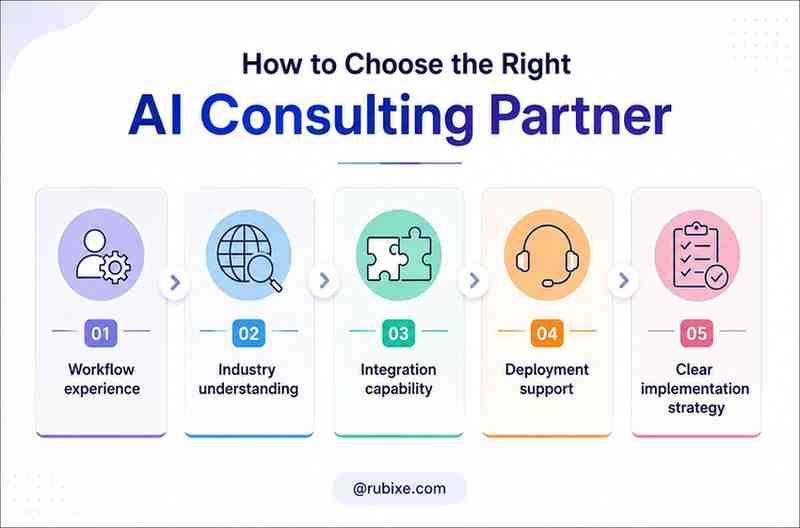 Not every AI consulting firm is equipped to handle mid-size operations. Here is what to look for:
-
Workflow experience : They should read your operations and identify bottlenecks rather than only talk about models and algorithms.
-
Industry understanding - Your consulting partner should speak your industry's language.
-
Integration capability - Ask specifically how they approach legacy system integration before signing anything.
-
Deployment support - Many firms disappear after the blueprint phase. Look for partners who stay through launch and offer post-deployment optimization.
-
Clear implementation strategy - Ask for a phased roadmap with defined milestones and outcomes upfront.
The Future of AI Consulting for Mid-Size Businesses
The trajectory is moving fast. AI copilots are becoming standard inside CRMs, ERPs, and project management platforms , and AI consulting is what helps companies configure them meaningfully rather than using defaults.
Workflow orchestration platforms are emerging that coordinate AI agents across entire operational pipelines, not just individual tasks, but end-to-end processes running autonomously with human oversight at key decision points.
RAG-based knowledge systems are making company expertise accessible in seconds. Predictive operations are shifting organizations from reactive to proactive decision-making. Intelligent automation is replacing brittle rule-based systems with adaptive workflows that learn from outcomes.
For mid-size companies, AI consulting is the bridge between where these technologies are heading and what your operations actually need right now.
Frequently Asked Questions
1. What does an AI consultant actually do?
An AI consultant analyzes your current workflows, identifies where AI tools can reduce manual effort or improve outcomes, and builds a roadmap to implement them, including integration, testing, and employee adoption support.
2. Is AI consulting expensive for mid-size companies?
Engagement costs vary based on scope. Many mid-size companies start with a focused audit and roadmap phase before committing to full implementation, which keeps early investment manageable while delivering clarity on ROI.
3. Which business workflows benefit most from AI?
Workflows involving high volume, repetitive tasks, data processing, document handling, customer communication, and reporting consistently show the fastest and highest returns from AI consulting.
4. How long does AI implementation take?
A focused single-workflow automation can go live in 4 to 8 weeks. Multi-department programs typically span 3 to 9 months, depending on complexity, data readiness, and integration requirements.
5. Can AI consulting improve employee productivity?
Yes. By eliminating low-value mechanical tasks, which frees your team to focus on higher-judgment work. Productivity gains are most visible in operations, support, and finance teams.
Mid-size companies sit at a crossroads. Operations are too complex to manage manually, but internal resources rarely cover AI expertise. Workflows fragment, bottlenecks pile up, and growth stalls behind processes designed for a smaller company.
AI consulting addresses this directly with structured workflow analysis, targeted automation, and thoughtful implementation. Companies seeing the strongest results treat AI consulting as an operational investment, not a technology experiment.
If your team is spending hours on tasks that should take minutes, or if decisions are being made from data nobody fully trusts, that is precisely where AI consulting delivers its value.
The question is not whether AI consulting works. The question is whether your business is ready to let it.