
How Does AI Resume Screening Help Recruiters?
AI-powered resume screening, recruitment automation, candidate shortlisting, talent acquisition, HR tech, applicant tracking, AI recruiting & workforce analytics.
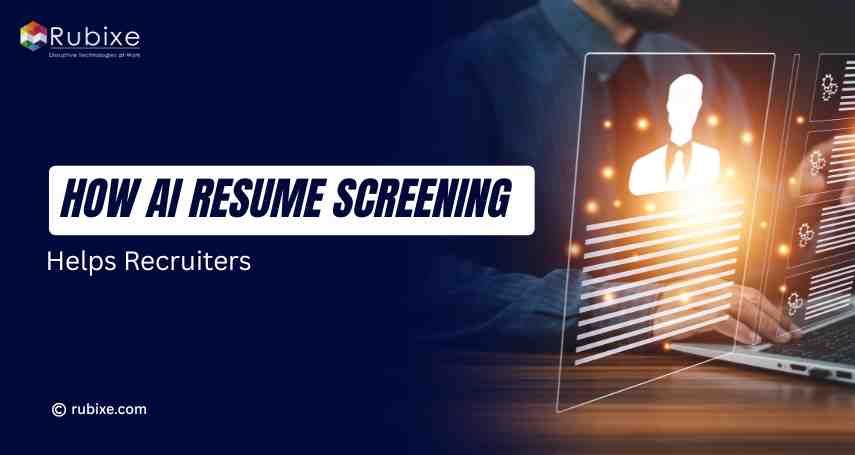
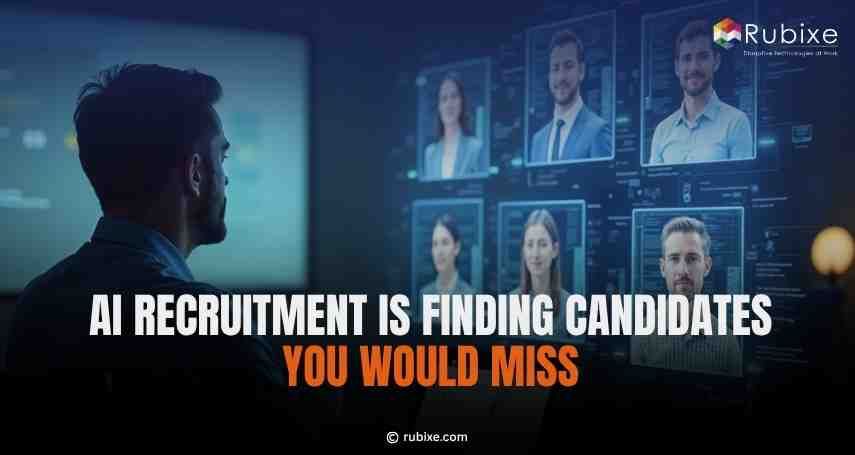
Recruiters are expected to screen hundreds of resumes quickly without missing the right candidates. Manual screening slows down hiring, increases bias, and often leads to inconsistent decisions. This is where AI resume screening becomes practical. It helps recruiters identify relevant candidates faster, improve hiring accuracy, and reduce time spent on repetitive tasks.
Let's know how AI resume screening works, what it evaluates, and how it fits into real hiring workflows.
Understanding AI Resume Screening
AI resume screening is designed to solve a core hiring problem, volume with accuracy. When applications scale, manual review becomes inefficient. Recruiters either miss strong candidates or spend excessive time filtering irrelevant ones.
AI systems process resumes at scale while maintaining consistency. Instead of scanning line by line, they analyse structure, context, and relevance in seconds. This allows recruiters to focus on decision-making rather than initial filtering.
What is AI Resume Screening
AI resume screening is the process of using AI hiring software powered by technologies like machine learning and natural language processing to automatically read, analyse, and rank resumes against specific job requirements.
Instead of manually reviewing each application, the system processes all resumes submitted for a role, extracts key information such as skills, experience, and qualifications, and evaluates how closely each candidate matches the job criteria. It then generates a ranked list or match score, helping recruiters quickly identify the most relevant profiles.
Unlike traditional screening methods that rely heavily on keyword matching, AI evaluates context and relationships between skills, roles, and experience. This allows it to identify qualified candidates even when their resumes don’t exactly match the job description wording.
In practice, AI resume screening acts as an initial decision-support layer - it reduces manual effort, improves consistency, and helps recruiters focus on high-potential candidates rather than sorting through large volumes of applications.
How AI Resume Screening Works
1. Parsing
The first step is extracting structured information from resumes. The system identifies sections such as education, work experience, skills, and certifications. This converts unstructured resumes into organized data that can be analyzed.
2. NLP (Natural Language Processing)
NLP enables the system to understand the meaning behind the text. Instead of treating words as isolated inputs, it interprets how skills, roles, and responsibilities are connected.
For example, it can identify whether a candidate has actually worked on “campaign strategy” or just mentioned it as a skill.
3. Matching
The system compares candidate profiles with job requirements. It evaluates how closely a candidate’s experience aligns with the role, including:
-
Skill match
-
Industry relevance
-
Role similarity
This step ensures that candidates are ranked based on fit, not just keyword presence.
4. Scoring
Each resume is assigned a score based on relevance. Recruiters can then prioritize high-scoring candidates, reducing the time spent on manual filtering.
According to IBM, recruiters spend around 23 hours screening resumes for a single hire, which AI significantly reduces.
Technologies Behind AI Resume Screening
NLP
NLP helps the system interpret language, context, and relationships between different skills and roles. It is essential for understanding resumes beyond keywords.
Machine Learning
Machine learning models improve over time by learning from hiring decisions. If recruiters consistently select certain types of candidates, the system adapts and refines its screening criteria.
Semantic Matching
Semantic matching identifies related terms and concepts. This allows the system to recognize equivalent skills even when phrased differently.
These technologies collectively enable effective AI for hiring, making the screening process more accurate and scalable.
What AI Resume Screening Looks for in Candidates
-
Skills: The system evaluates both technical and functional skills based on job requirements.
-
Keywords vs Context: While keywords are important, AI checks whether they are used in a meaningful context. A resume that lists skills without supporting experience may not rank highly.
-
Achievements: Candidates who demonstrate measurable impact, such as growth metrics, performance improvements, or project outcomes, are prioritized.
-
Relevance: The system assesses how closely a candidate’s experience matches the role, including industry and job function.
This ensures that candidates are shortlisted based on actual suitability, not formatting tricks.
Benefits of AI Resume Screening
-
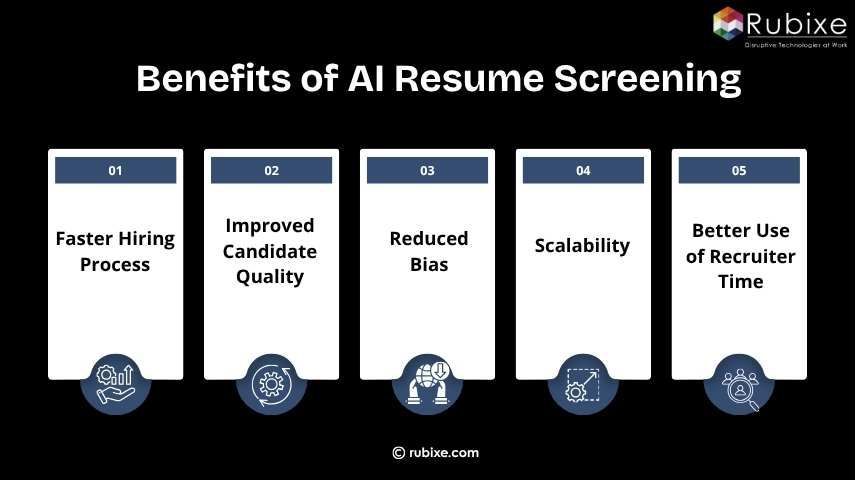
Faster Hiring Process: AI can process thousands of resumes in minutes, significantly reducing time-to-hire, resulting in faster and smarter recruitment.
-
Improved Candidate Quality: Shortlisted candidates are more aligned with job requirements, improving interview efficiency.
-
Reduced Bias: AI applies consistent evaluation criteria, helping reduce unconscious bias in early-stage screening.
-
Scalability: Organizations can handle large application volumes without increasing recruiter workload.
-
Better Use of Recruiter Time: Recruiters can focus on interviewing and decision-making instead of repetitive screening tasks.
LinkedIn reports that companies using AI in hiring see up to a 30% reduction in hiring time.
Limitations and Risks of AI Resume Screening
-
Bias in Training Data: If the system is trained on biased hiring data, it can replicate those patterns.
-
Over-Reliance on Keywords: Some systems may still prioritize keyword matching if not properly configured.
-
Missing Non-Traditional Candidates: Candidates with unconventional career paths may be overlooked.
-
Limited Human Judgment: AI cannot fully assess qualities like communication skills, adaptability, or cultural fit.
To eliminate these risks, organizations should partner with experienced AI hiring and staffing service providers who can design, train, and continuously refine AI systems to align with real hiring requirements.
AI Resume Screening vs ATS vs Human Recruiters
AI Resume Screening
-
Context-driven evaluation
-
Learns from data
-
Handles scale efficiently
ATS
-
Rule-based filtering
-
Keyword-focused
-
Limited contextual understanding
Human Recruiters
-
Strong judgment
-
Ability to assess nuance
-
Time-intensive
The most effective hiring process combines all three, using AI for efficiency and humans for decision-making.
Tools Recruiters Use for AI Resume Screening
Recruiters do not rely on a single tool for AI resume screening. In practice, they use a combination of AI-powered applicant tracking systems (ATS), screening platforms, and assessment tools depending on hiring volume and role complexity.
1. AI Powered Applicant Tracking Systems (ATS)
Most organizations start with AI-enabled ATS platforms that handle resume intake, parsing, and ranking.
Common tools include:
-
CVViZ
-
Greenhouse
-
Lever
These systems use AI to analyze resumes contextually and generate ranked candidate lists based on job fit, helping recruiters move from raw applications to shortlists quickly.
Why recruiters use them:
They combine screening with workflow automation, making them suitable for high-volume hiring.
2. AI Resume Screening & Matching Platforms
Some tools focus specifically on deep resume analysis and matching accuracy.
Examples:
-
Ideal
-
Textkernel
-
SkillPool
These platforms use machine learning and semantic matching to evaluate how closely a candidate’s experience aligns with the role, even when exact keywords are missing.
Why recruiters use them:
They improve the quality of shortlisting, especially for roles where context matters more than keywords.
3. AI Interview & Assessment Tools
Modern hiring workflows extend beyond resumes. Recruiters often use tools that combine screening with evaluation.
Examples:
-
HireVue
-
NTRVSTA
These platforms integrate resume screening with AI-based interviews, candidate scoring, and skill assessments.
Why recruiters use them:
They reduce dependency on resumes alone and provide deeper insights into candidate capabilities.
4. End-to-End AI Hiring Platforms
Some organizations adopt integrated platforms that cover the entire hiring funnel—from sourcing to screening to interviews.
These platforms:
-
Rank candidates automatically
-
Suggest next actions
-
Automate recruiter workflows
AI-powered systems can achieve 85-95% accuracy in matching candidates to job requirements and reduce screening time by up to 75%, making them highly effective for scaling recruitment.
What This Means for Recruiters
-
AI resume screening is not a standalone tool—it is part of a larger hiring system
-
Different tools solve different problems:
-
ATS → workflow & volume
-
Screening tools → accuracy
-
Interview tools → deeper evaluation
Recruiters who use the right mix of tools can move faster, shortlist better candidates, and maintain consistency across hiring decisions.
How AI Resume Screening Fits into the Hiring Process
AI resume screening is typically used at the beginning of the hiring process.
-
The job posting is published
-
Applications are collected
-
AI screens and ranks candidates
-
Recruiters review top profiles
-
Selected candidates move to interviews
Organizations using AI hiring software integrate screening with assessments and interviews to streamline the entire process.
Future of AI Resume Screening
AI resume screening is evolving toward more accurate and skill-focused hiring.
Key trends include:
-
Skill-based hiring replacing degree-based filtering
-
Integration with behavioural and video assessments
-
Real-time candidate evaluation
-
Improved bias detection systems
Gartner estimates that over 50% of large enterprises will adopt AI-driven hiring tools by 2026.
Accelerate Your Hiring with AI-Driven Talent Screening
AI resume screening improves recruitment efficiency by reducing time-to-hire, minimizing manual effort, and enabling teams to identify the most relevant candidates faster. For organizations managing high application volumes, structured screening directly impacts hiring quality, speed, and overall recruiter productivity.
Rubixe delivers advanced AI hiring solutions that analyse candidate profiles at scale, improve match accuracy, and streamline the screening process. By combining intelligent screening with data-driven insights, Rubixe helps recruitment teams focus on selecting the right talent instead of spending time on manual resume evaluation. Connect with our team to explore how we can support your hiring needs.
AI resume screening helps recruiters handle high application volumes, improve shortlisting accuracy, and reduce time spent on repetitive tasks. When used effectively, it enables faster hiring decisions while maintaining consistency in evaluation. The real value lies in combining AI capabilities with human judgment to create a balanced and efficient hiring process.