







AI Chatbot vs Rule-based Chatbot: Key Differences
AI chatbot vs rule based chatbot key differences features benefits and use cases explained to help you choose the right chatbot for your business needs
Choosing between rule-based systems and AI chatbots often creates confusion for businesses trying to improve customer engagement. Both appear similar on the surface, but they operate on completely different logic, which directly impacts customer experience, scalability, and operational efficiency.
When customer queries increase, the limitations of basic automation become visible. Responses start feeling repetitive, unresolved queries pile up, and human intervention increases.
This is where the distinction between rule-based chatbots and AI-driven systems becomes important for long-term strategy.
What Is a Rule-Based Chatbot?
A rule-based chatbot is a system that follows predefined instructions to respond to user queries. It works based on “if this-then-that” logic, where responses are mapped to specific keywords or menu selections.
Unlike advanced systems built on Conversational AI, rule-based bots cannot understand intent beyond predefined conditions. They are designed for structured interactions rather than dynamic conversations.
Core characteristics:
-
Operates on predefined rules and decision trees
-
Works best with structured inputs
-
Cannot understand context or intent beyond set patterns
-
Limited flexibility in conversation flow
Rule-based systems are often used for basic automation tasks like FAQs or simple navigation assistance
How Does a Rule-Based Chatbot Work?
 source:airdriod.com
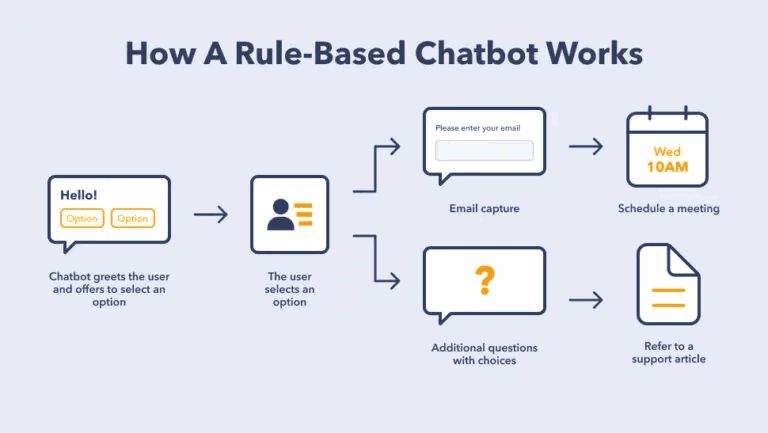
A rule-based chatbot functions through a structured flow designed by developers or business teams.
Step-by-step process:
-
User input is received: The chatbot waits for a keyword or button selection.
-
Keyword matching happens: The system scans for predefined triggers.
-
Predefined response is delivered: The chatbot responds with a fixed message mapped to that keyword.
-
Flow continues through decision trees: The conversation follows a structured path without deviation.
This model does not evolve. It only performs within the boundaries defined during development.
In many cases, businesses integrate rule-based systems with Robotic process automation to handle repetitive backend tasks like ticket creation or form submission, but the conversation layer remains rigid.
What Is an AI-Powered Chatbot?
An AI-powered chatbot is designed to simulate human-like conversations using data-driven intelligence. It understands intent, learns from interactions, and improves responses over time.
Unlike rule-based systems, AI chatbots depend on NLP capabilities to interpret natural language and respond contextually.
These systems are built on machine learning models that evolve with usage patterns and data exposure.
Core characteristics:
-
Understands intent and context
-
Learns from past interactions
-
Handles unstructured queries
-
Supports dynamic conversation flow
-
Improves accuracy over time
AI chatbots are widely used in customer service, sales, HR, and digital engagement systems
How Does an AI Chatbot Work?
AI chatbots depend on natural language processing, machine learning, and data to understand user intent and respond dynamically.
A 2025 comparative study found that rule-based chatbots can be extended with NLP, traditional machine learning, and deep learning models to improve response quality and interpretability.
This layered approach allows chatbots to move beyond predefined responses and handle real conversations with context.
Step-by-step process:
-
Input interpretation using NLP: The system analyzes user queries beyond keywords to understand intent.
-
Context mapping: It identifies previous interactions and conversation history.
-
Response generation: The chatbot generates relevant responses instead of selecting fixed replies.
-
Continuous learning: Every interaction improves future response accuracy.
Some advanced systems now use generative AI Chatbot frameworks, which allow more natural and adaptive responses instead of static answers.
This creates a more human-like experience that adapts to complex queries.
How is an AI Chatbot Different from a Rule-Based Chatbot?
The difference lies in intelligence, adaptability, and scalability. Rule-based systems follow instructions, while Artificial Intelligence chatbots interpret intent and generate responses dynamically.
Chatbots built with AI chatbot development services can scale across industries because they are not restricted by fixed logic trees.
Key distinction:
-
Rule-based systems react
-
AI systems understand and respond intelligently
This difference becomes critical when customer queries become complex or unpredictable.
Direct Comparison: AI Chatbot vs Rule-Based Chatbot
|
Aspect |
Rule-Based Chatbot |
AI Chatbot |
|
Response Type |
Predefined answers |
Dynamic responses |
|
Understanding |
Keyword-based |
Intent-based |
|
Learning Ability |
None |
Continuous learning |
|
Scalability |
Limited |
High |
|
Personalization |
Minimal |
Advanced |
|
Complexity Handling |
Low |
High |
This comparison clearly shows how AI-driven systems outperform traditional rule-based models in dynamic environments.
Key Features of AI Chatbot
AI-powered systems come with advanced capabilities that go beyond scripted interactions.
Natural language understanding: Interprets user queries in conversational language rather than fixed keywords.
Context awareness: Remembers previous interactions to maintain continuity in conversations.
Personalization: Adjusts responses based on user behavior and history.
Multichannel support: Works across websites, apps, and messaging platforms.
Continuous learning: Improves performance through data and interaction feedback.
A strong multilingual chatbot capability further enhances global customer engagement by supporting multiple languages in real time.
When Rule-Based Chatbots Make Sense
Rule-based chatbots still hold value in specific scenarios where interactions are simple and predictable. They work best in structured environments where user queries follow a fixed pattern and do not require contextual understanding.
Suitable use cases:
FAQ handling:
Used to answer predefined questions like pricing, working hours, or basic service information using fixed responses.
Basic navigation support:
Helps users move through menus or website sections by guiding them through button-based or keyword-based paths.
Form-based queries:
Collects structured user inputs such as contact details, appointment requests, or simple lead generation forms.
Internal process automation:
Assists employees with routine tasks like ticket creation, password resets, or accessing standard company information.
They are useful when businesses need quick deployment without complex AI systems. However, they struggle when conversations move beyond predefined flows.
Pros and Cons of Rule-Based vs AI Chatbots
Rule-based chatbots and AI-powered chatbots differ significantly in how they perform, scale, and adapt to user needs. Understanding their strengths and limitations helps businesses choose the right approach for customer engagement.
Advantages of a Rule-based chatbot
-
Easy to build and deploy: Works on predefined logic, making it quick to design and implement without complex training models.
-
Low implementation cost: Requires minimal infrastructure and is suitable for businesses with limited budgets or simple use cases.
-
Works well for simple queries: Handles repetitive and structured questions like FAQs or basic navigation efficiently.
-
Predictable outputs: Delivers consistent responses since every user input is mapped to a fixed rule.
Limitations of Rule-based chatbot
-
Cannot handle complex conversations: Fails when users go beyond predefined rules or ask multi-intent questions.
-
No learning capability: Does not improve over time since it cannot learn from past interactions.
-
Poor user experience in dynamic queries: Breaks flow when users ask unexpected or contextual questions.
-
Requires constant manual updates: Needs frequent rule additions to handle new scenarios or business changes.
Advantages of an AI chatbot
-
Understands natural language: Interprets user intent even when queries are unstructured or conversational.
-
Improves over time through learning: Continuously enhances accuracy using machine learning and past interaction data.
-
Handles complex and layered queries: Manages multi-step conversations without losing context.
-
Provides personalized responses: Adjusts replies based on user behavior, history, and preferences.
-
Scales across use cases: Works across industries and functions without requiring a full redesign.
Limitations of the AI chatbot
-
Higher initial setup complexity: Requires model training, integration, and system configuration before deployment.
-
Requires quality data for training: Performance depends heavily on structured and accurate datasets.
-
Needs monitoring and optimization: Requires continuous tracking to improve performance and reduce errors.
-
Integration can be more advanced: Needs proper system alignment with CRM, APIs, and enterprise tools.
Use Cases: When to Use What
Different business needs require different chatbot capabilities based on complexity, intent handling, and scalability requirements. Choosing the right type ensures better performance, customer experience, and operational efficiency.
Use Case vs Which Chatbot:
|
Use Case |
Which Chatbot |
|
FAQ handling and basic support queries |
Rule-based chatbot |
|
Appointment booking and scheduling flows |
Rule-based chatbot |
|
Lead capture and simple form submissions |
Rule-based chatbot |
|
Customer support automation with complex queries |
AI chatbot |
|
Sales assistance and product recommendations |
AI chatbot |
|
Intelligent query resolution across departments |
AI chatbot |
|
E-commerce personalization and shopping support |
AI chatbot |
|
Enterprise-level service desk operations |
AI chatbot |
Businesses using AI chatbot development services often combine both systems for layered automation.
How to Choose the Best Chatbot for Your Business Objectives?
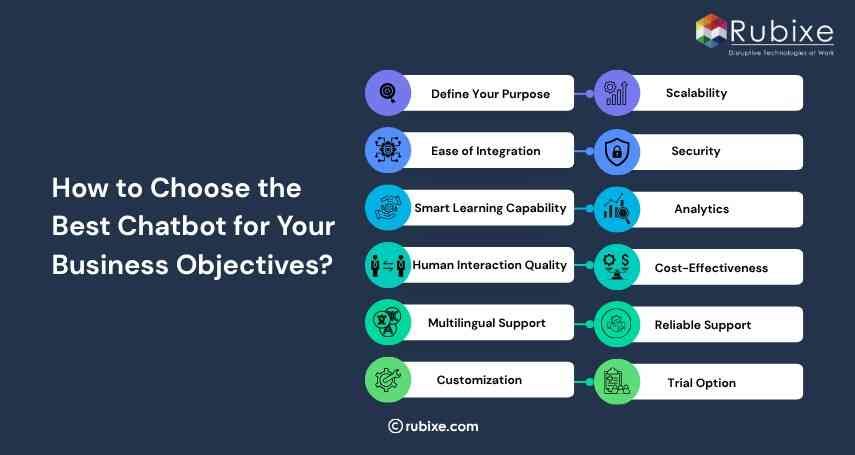 Selecting the right chatbot depends on your business goals, customer complexity, and scalability needs.
-
Define Your Purpose: Understand whether the chatbot is for support, sales, or engagement. Clear intent ensures better design.
-
Ease of Integration: The chatbot should integrate smoothly with CRM, support tools, and backend systems.
-
Smart and Learning Capability: AI-based systems improve over time, making them more effective for long-term use.
-
Human Interaction Quality: Systems using NLP Chatbot technology provide more natural conversations.
-
Multilingual Support: A multilingual chatbot ensures global accessibility.
-
Customization: The chatbot should reflect your brand tone and communication style.
-
Scalability: It should handle increasing user volume without performance drops.
-
Security: Data protection is critical, especially in customer-facing systems.
-
Analytics: Insights from conversations help improve performance and customer experience.
-
Cost-Effectiveness: Balance between implementation cost and long-term value.
-
Reliable Support: Vendor support plays a key role in system stability.
-
Trial Option: Testing before full deployment reduces risk and improves fit.
Role of AI Chatbot vs Rule-Based Systems in Business Growth
Chatbots play a key role in shaping how businesses interact with customers and manage support operations. While rule-based systems handle structured tasks, Artificial Intelligence chatbots bring intelligence, adaptability, and scalability into customer engagement.
Together, they influence both operational efficiency and long-term business growth.
Key Impact Areas
-
Operational efficiency improvement
-
Enhanced customer engagement.
-
Cost optimization at scale
-
Shift to Conversational AI experiences
-
Integration with automation systems.
Getting fixed, one-line replies from a rule-based chatbot might solve basic queries, but it often stops when conversations go beyond simple paths. On the other hand, AI-powered chatbots enable real, contextual conversations that adapt to user intent and keep interactions moving forward.
If you’re aiming to improve engagement, reduce support load, and create better customer experiences, it’s worth exploring the right approach with AI chatbot development services.