








How to Choose the Best Chatbot for Your Website
Choose the right chatbot for your website based on features, business needs, integration options, and user experience to improve customer support.

Businesses invest heavily in website traffic through SEO, paid ads, and social media campaigns. Yet many visitors leave the site without asking questions, exploring products, or completing a purchase. This gap often happens because customers expect immediate responses while browsing online.
This is where AI Chatbot Solutions play an important role. A well-implemented chatbot can answer queries instantly, guide visitors to the right information, and support conversions at any time of the day. Companies across industries use AI chatbots to manage customer interactions, capture leads, and assist users during their buying journey.
However, selecting the best chatbot for website integration requires careful evaluation. Different platforms offer various capabilities such as natural language processing, automation workflows, and multilingual support. Understanding what to look for helps businesses implement chatbot systems that improve customer experience and operational efficiency.
How AI Chatbot Solutions Help Your Business
Website visitors often expect immediate assistance when they are researching products or services. Delayed responses may cause them to leave and explore competitor websites. AI Chatbot Solutions address this challenge by providing instant communication through automated conversations.
These chatbots operate using conversational AI, which enables systems to understand user intent and respond in a meaningful way. Instead of relying on fixed responses, advanced chatbots interpret questions and guide users through helpful interactions.
Several industries rely on chatbots to streamline digital communication:
1. Faster Customer Support
Many organizations use AI chatbots for customer services to answer common questions about products, pricing, or account information. These systems can handle large volumes of inquiries simultaneously, reducing pressure on support teams.
According to industry research from IBM, AI powered chatbots can reduce customer service costs by up to 30% while improving response times for common queries.
2. Improved Lead Generation
Websites often receive traffic from potential buyers who are exploring options before making a decision. Lead generation chatbots capture visitor details by asking simple questions and offering useful resources.
This approach allows marketing teams to qualify prospects while maintaining a helpful interaction.
3. Personalized User Experience
AI chatbots can analyse user behaviour, browsing patterns, and previous interactions. Based on this information, the system can recommend relevant products or provide tailored assistance during the customer journey.
4. Multilingual Communication
Businesses serving global audiences often implement a multilingual AI chatbot to interact with visitors in different languages. This improves accessibility and helps companies communicate with customers across regions.
5. Data Insights for Business Decisions
Every interaction handled by a chatbot generates valuable insights. Companies can analyse questions, customer concerns, and engagement patterns to improve their website experience and marketing strategies.
How to Choose the Best Chatbot for a Website: A Step-by-Step Guide
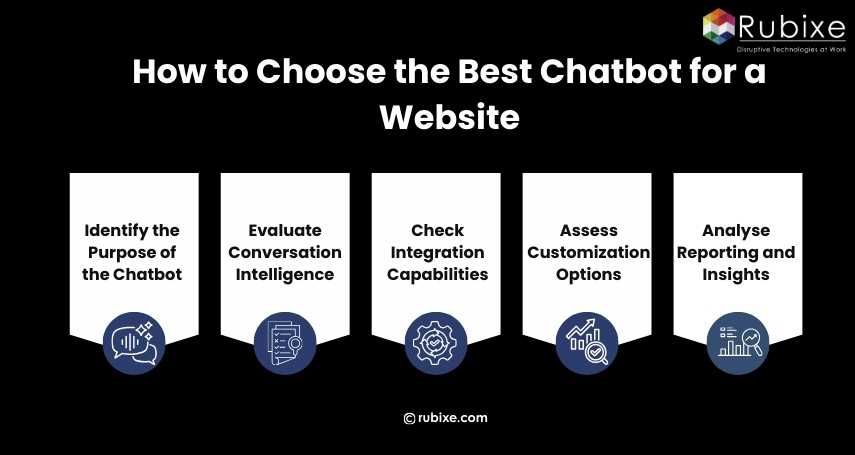 Choosing the right chatbot requires evaluating both business goals and technical capabilities. A structured approach helps organizations identify chatbot solutions that align with their website objectives.
Step 1: Identify the Purpose of the Chatbot
Before selecting a platform, businesses should define what they want the chatbot to accomplish. Common objectives include:
-
Customer support automation
-
Lead generation and qualification
-
Product recommendations
-
Appointment booking
-
Website navigation assistance
Clear goals help narrow down chatbot platforms that support specific use cases.
Step 2: Evaluate Conversation Intelligence
Modern chatbot systems rely on natural language understanding to interpret user queries. A NLP Chatbot can recognize intent, identify keywords, and respond with context-appropriate answers.
Advanced language processing improves the quality of automated conversations and reduces misunderstandings during interactions.
Step 3: Check Integration Capabilities
The best chatbot for website integration should connect easily with existing tools such as CRM platforms, marketing software, and analytics systems.
Integrations allow businesses to store conversation data, track customer journeys, and manage leads effectively.
Step 4: Assess Customization Options
Different industries require different conversation flows. The chatbot platform should allow businesses to customize responses, workflows, and automation triggers based on their processes.
Customization ensures the chatbot reflects the company’s communication style and service approach.
Step 5: Analyse Reporting and Insights
Analytics features help organizations measure chatbot performance. Important metrics include:
-
Number of conversations handled
-
Lead capture rate
-
Customer satisfaction indicators
-
Response accuracy
These insights support continuous improvement of chatbot interactions.
5 Important Parameters You Should Consider When Choosing AI Chatbots
Businesses evaluating chatbot platforms should focus on practical factors that influence performance and long-term usability.
1. Natural Language Understanding
The ability to interpret user intent is essential for effective communication. Chatbots powered by strong natural language processing provide accurate responses and maintain smooth conversations.
This capability also highlights the difference between chatbot and conversational AI, where conversational AI systems offer deeper language comprehension and contextual interactions.
2. Automation Capabilities
Automation features determine how effectively the chatbot manages repetitive tasks. Advanced bots can schedule appointments, qualify leads, send notifications, and route users to the correct department when needed.
3. Scalability and Performance
Website traffic often fluctuates depending on campaigns or seasonal demand. The chatbot system should support high conversation volumes without affecting performance or response time.
4. Omnichannel Support
Many businesses communicate with customers through multiple channels such as websites, messaging platforms, and social media. A chatbot that integrates across channels helps maintain consistent customer communication.
5. Security and Data Privacy
Customer conversations may include sensitive information. Businesses should ensure that the chatbot platform follows industry security standards and protects user data.
Emerging Trends in AI Chatbot Solutions
Recent developments in artificial intelligence continue to expand the capabilities of chatbot technology.
Industry studies highlight the rapid growth of chatbot adoption across sectors. According to Statista, the global chatbot market is projected to reach over $27 billion by 2030, reflecting the increasing demand for automated customer interaction systems.
Several technology trends are shaping chatbot development:
-
AI-Powered Personalization
Chatbots increasingly analyse customer behaviour to provide personalized recommendations and support during website interactions.
-
Voice-Enabled Chatbots
Some businesses integrate voice interaction with chatbot systems, enabling customers to communicate through spoken queries.
-
Deeper Integration with Business Platforms
Modern chatbots connect with CRM tools, marketing platforms, and analytics systems to create a unified customer communication ecosystem.
-
Advanced Conversational Experiences
Developments in conversational AI improve the ability of chatbots to understand context, maintain dialogue flow, and deliver more human-like responses.
-
Organizations adopting these innovations often treat chatbot technology as a strategic AI product that supports both marketing and customer experience initiatives.
FAQs
1. What is an AI chatbot?
An AI chatbot is a software application that interacts with users through automated conversations. It uses artificial intelligence and natural language processing to understand user questions and provide relevant responses during website or messaging interactions.
2. How do AI chatbots improve customer service?
AI chatbots assist customers by providing instant responses to common questions, guiding users to helpful information, and reducing waiting time for support. Businesses often use chatbots to handle routine inquiries and support customer service teams.
3. Can chatbots help generate leads for businesses?
Yes. Many companies use chatbots to capture visitor information, ask qualifying questions, and guide potential customers toward relevant products or services. This helps marketing teams identify interested prospects directly from website interactions.
4. Are AI chatbots suitable for small businesses?
AI chatbots can benefit businesses of all sizes. Small companies often use chatbots to manage website inquiries, automate customer communication, and provide support without expanding their support teams.
5. Can AI chatbots replace human customer support?
AI chatbots can handle routine queries, provide instant responses, and guide users through common tasks. Complex issues, personalized advice, and sensitive situations still require human support, so businesses often use chatbots alongside customer service teams.
Selecting the best chatbot for website integration requires more than choosing a popular tool. Businesses should evaluate their communication goals, customer interaction needs, and technical requirements before implementing chatbot systems.
AI Chatbot Solutions help organizations deliver faster support, guide visitors through digital experiences, and capture valuable leads directly from website interactions. When implemented with the right strategy and technology, chatbots contribute to stronger engagement and improved operational efficiency.
Companies exploring chatbot adoption should focus on solutions that provide intelligent conversation capabilities, flexible integrations, and meaningful analytics. These factors help businesses create digital experiences that support both customer satisfaction and long-term growth.