

















Digital Transformation:Use Cases and Benefits
Understand how digital transformation helps businesses improve processes, adopt AI, cloud computing, automation, IoT, analytics, and achieve better efficiency.
Many organizations struggle with slow processes, disconnected systems, and limited visibility into operational data. These challenges reduce efficiency and make decision-making difficult. Digital transformation addresses these problems by integrating modern technologies into business operations.
According to IDC, global spending on digital transformation is expected to reach $3.4 trillion by 2026, highlighting how organizations are prioritizing digital initiatives to improve performance and competitiveness.
Understanding the use cases and benefits of digital transformation helps businesses identify where technology can deliver measurable operational improvements.
What is Digital Transformation?
Digital transformation refers to the integration of digital technologies into business operations to improve how organizations operate, deliver services, and respond to market demands. Instead of relying on manual workflows or fragmented systems, companies implement connected platforms that enable data sharing, automation, and faster decision-making.
Many organizations begin by digitizing core processes such as document management, communication systems, and internal reporting. These early initiatives improve operational visibility and reduce administrative workload. Over time, businesses expand their initiatives to include analytics platforms, automation tools, and intelligent technologies.
Modern transformation strategies often combine cloud computing, data analytics, automation, and artificial intelligence to improve business performance. The growing role of ai in digital transformation allows organizations to analyse large data sets, identify operational patterns, and improve forecasting accuracy.
Digital transformation, therefore, represents a long-term shift in how organizations manage operations, collaborate across departments, and deliver value to customers.
Why Digital Transformation Matters Today
Technology adoption has accelerated rapidly as businesses respond to changing customer expectations and increasing competition. Organizations operating with disconnected systems or manual processes often struggle to maintain operational efficiency and data accuracy.
Digital transformation helps companies streamline operations and gain real-time insights into performance.
According to research from McKinsey, organizations implementing digital technologies can improve operational productivity by approximately 20-30 percent through automation, analytics, and improved workflow management.
Customer expectations also continue to evolve. Consumers expect fast, seamless digital experiences across websites, mobile applications, and support channels. Companies equipped with integrated digital systems can respond more quickly, personalize interactions, and maintain consistent service quality.
Digital initiatives also play a critical role in regulated industries where operational accuracy and security are essential. Financial institutions, for example, depend heavily on the applications of digital transformation in banking to support secure transactions, strengthen fraud monitoring, and deliver efficient digital services to customers.
Businesses that invest in digital capabilities are therefore better positioned to improve operational efficiency, adapt to changing markets, and maintain competitive advantage.
Key Technologies That Are Driving Digital Transformation
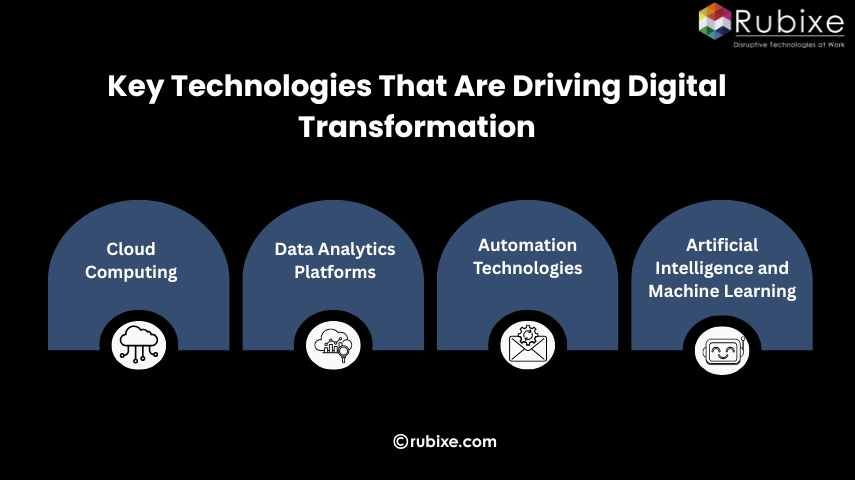
Several technologies enable organizations to modernize operations and improve business performance. These technologies form the foundation of most digital transformation strategies.
1. Cloud Computing
Cloud infrastructure allows businesses to store and access data through secure online platforms. Cloud systems improve scalability, support remote collaboration, and reduce dependency on physical infrastructure.
2. Data Analytics Platforms
Analytics tools transform raw business data into meaningful insights. Organizations use these systems to monitor performance, evaluate customer behaviour, and guide strategic decisions.
3. Automation Technologies
Automation platforms reduce repetitive manual work by executing rule-based tasks such as data entry, reporting, and workflow management. Automation improves process consistency and allows employees to focus on strategic responsibilities.
Together, these technologies create the digital infrastructure required for modern business operations.
4. Artificial Intelligence and Machine Learning
Artificial intelligence enables systems to analyse data patterns, automate decision processes, and generate predictive insights. Organizations use AI-driven tools for demand forecasting, fraud detection, and customer behaviour analysis.
Companies that invest in AI adoption often gain stronger operational visibility and improved decision accuracy. Predictive analytics platforms, for example, help organizations forecast demand fluctuations, identify operational risks, and plan resources more effectively.
Use Cases of Digital Transformation
Digital transformation supports practical improvements across many industries. The following use cases demonstrate how businesses apply digital technologies in everyday operations.
1. Business Process Automation: Organizations often automate repetitive operational tasks such as invoice processing, payroll updates, and document management. Automation improves processing speed and reduces the risk of human errors.
Finance departments frequently automate invoice validation and payment workflows. This reduces administrative workload and allows teams to focus on financial planning and analysis.
2. Data-Driven Decision Making: Digital transformation enables organizations to collect and analyse operational data from multiple systems. Analytics dashboards provide real-time insights into performance metrics, enabling managers to make informed decisions quickly.
Companies use these insights to improve forecasting accuracy, optimize inventory levels, and identify operational inefficiencies.
3. Customer Experience Enhancement: Customer relationship management platforms allow businesses to track customer interactions across digital channels. These systems help organizations respond quickly to inquiries and personalize communication based on customer behaviour.
Retail companies often analyse purchasing patterns and browsing activity to deliver targeted product recommendations and marketing campaigns.
4. Remote Collaboration and Workforce Productivity: Cloud-based collaboration platforms allow teams to share documents, manage projects, and communicate efficiently regardless of physical location. These tools support flexible work environments and improve productivity across departments.
5. Intelligent Operations: Manufacturing and logistics companies increasingly rely on predictive technologies to monitor equipment performance and operational conditions.
Predictive maintenance systems analyse sensor data to identify early signs of equipment failure, reducing downtime and improving production reliability.
Benefits of Digital Transformation
Businesses implementing digital transformation initiatives often experience measurable operational improvements.
-
Improved Operational Efficiency: Automation and integrated digital systems reduce manual workloads and streamline business processes.
-
Smarter Process Automation: Digital transformation enables intelligent process management through AI-powered systems. AI workflow automation helps analyse information, route tasks automatically, and improve operational accuracy.
-
Better Data Visibility: Digital platforms centralize business data across departments, allowing leaders to access accurate insights and respond quickly to operational changes.
-
Enhanced Customer Engagement: Digital systems enable organizations to communicate with customers across multiple channels while delivering personalized experiences.
-
Increased Business Agility: Organizations equipped with flexible digital infrastructure can adapt quickly to changing market conditions and launch new services faster.
-
Cost Optimization: Automation and digital monitoring systems help reduce operational costs by improving resource utilization and minimizing process inefficiencies.
According to Gartner, more than 90 percent of organizations are actively engaged in digital transformation initiatives.
How to Implement Digital Transformation
Successful digital transformation requires a structured and strategic approach.
1. Assess Current Business Processes
Organizations should begin by reviewing existing workflows and identifying inefficiencies. Process mapping helps determine where digital solutions can deliver the most value.
2. Define Clear Business Objectives
Transformation initiatives should align with measurable goals such as improved productivity, better customer experience, or reduced operational costs.
3. Select Appropriate Technologies
Businesses should evaluate technology solutions such as cloud platforms, analytics systems, automation tools, and AI-driven applications.
Many organizations seek guidance from specialists offering digital transformation consulting to develop a structured implementation roadmap.
4. Build Digital Capabilities Within Teams
Employees must receive adequate training to adapt to new systems and workflows. Skilled teams play a critical role in sustaining transformation initiatives.
5. Monitor Performance and Optimize Continuously
Organizations should track key performance indicators and refine digital strategies to ensure continuous improvement.
Key Considerations Before Implementing Digital Transformation
Before launching digital initiatives, businesses should evaluate several critical factors.
Organizational Readiness
Leadership support and a culture that encourages innovation are essential for successful transformation.
Technology Integration
Many organizations operate with legacy systems that must integrate with modern digital platforms.
Data Governance and Security
Reliable data management practices ensure that analytics and automation systems operate with accurate and secure information.
Investment Planning
Digital transformation requires financial resources and skilled personnel. Businesses should evaluate potential returns and prioritize initiatives strategically.
Change Management
Employees may need time to adapt to new technologies. Clear communication and training programs help ensure smooth adoption across teams.
What Should Businesses Do Next?
Digital transformation delivers measurable improvements when organizations approach it with a clear strategy and a realistic implementation plan. The next step for most businesses involves evaluating current processes, identifying areas where digital technologies can improve efficiency, and defining measurable transformation goals.
Leaders should begin by assessing operational workflows, data systems, and customer interaction channels to identify opportunities for improvement. Prioritizing high-impact processes such as automation, analytics-driven decision making, and digital customer engagement often produces early results and builds momentum for broader transformation initiatives.
Businesses that approach digital initiatives with structured planning and the right technical expertise are more likely to achieve sustainable outcomes.
Organizations looking to implement digital solutions effectively often collaborate with experienced technology partners to evaluate opportunities, design scalable solutions, and support long-term digital growth.