













Steps to Build a Lead Generation Chatbot
Build a lead generation chatbot using AI chatbot solutions, including steps for planning, designing conversation flows, CRM integration, testing, and security.
Many businesses attract website visitors every day, but only a small number of those visitors become leads.
People browse pages, check services, and leave without taking action. This usually happens because there is no quick response or clear guidance when users need help.
A lead generation chatbot helps businesses connect with visitors instantly. It starts conversations, answers common questions, and collects lead details in a simple and friendly way. With the support of AI chatbot solutions, businesses can improve engagement and capture leads without increasing manual effort.
What Is a Lead Generation Chatbot?
A lead generation chatbot is an automated chat tool placed on a website or landing page. Its main role is to interact with visitors and collect important details such as name, email address, phone number, or business requirements.
Instead of waiting for users to fill out forms, the chatbot starts a conversation and guides them step by step. Modern businesses use AI chatbot solutions to make these conversations more natural and helpful, which improves trust and response rates.
Why Businesses Use Lead Generation Chatbots
Businesses today need faster ways to respond to customer interest. Visitors expect instant answers and clear direction.
Lead generation chatbots help by:
-
Responding to users at any time
-
Reducing the need for manual follow-ups
-
Keeping visitors engaged longer
-
Collecting organised lead information
With the right setup, AI chatbot solutions help businesses turn website traffic into real opportunities while saving time for sales teams.
Step-by-Step Guide to Building a Lead Generation Chatbot
Step 1: Set Clear Lead Generation Goals
The first step is deciding what the chatbot should achieve. A chatbot without a goal often confuses users and fails to deliver value.
Common goals include:
-
Collecting contact details
-
Booking meetings or demos
-
Qualifying leads using simple questions
-
Directing users to the right services
Clear goals help shape the chatbot flow and questions. Strong planning leads to better results
Step 2: Understand Your Website Visitors
A chatbot should speak clearly and match user expectations. Understanding your audience helps create better conversations.
Businesses should consider:
-
Who visits the website
-
What problems they are trying to solve
-
What information they are willing to share
When chatbots reflect real user needs, conversations feel natural and helpful instead of forced.
Step 3: Choose the Right Chatbot Platform
Some only follow fixed rules, while others support learning and adaptation, which highlights the benefits of AI solutions for businesses that want smarter and more flexible conversations.
When selecting a platform, businesses should look for:
-
Easy setup and management
-
Integration with CRM systems
-
Strong security features
-
Reporting and analytics tools
Reliable platforms that support AI chatbot solutions allow businesses to scale without rebuilding systems later.
Step 4: Design Simple Conversation Flow
Chatbot conversations should always be easy to follow. Long messages or complex questions reduce engagement.
Best practices include:
-
Starting with a friendly greeting
-
Asking one question at a time
-
Using clear and simple words
-
Providing quick response options
Simple conversations help users feel comfortable and increase the chances of completing the chat.
Step 5: Decide What Lead Information to Collect
Collecting too much information at once can push users away. It is better to start small.
Begin with:
-
Name
-
Email address
Later, you can collect:
-
Phone number
-
Company name
-
Specific business needs
Gradual data collection improves user experience and leads quality.
Step 6: Add Intelligence to the Chatbot
A chatbot becomes more effective when it can understand user intent instead of only fixed commands, which clearly explains how AI chatbots work in real conversations.
This is where AI chatbot solutions add value. They help chatbots:
-
Understand different ways users ask questions
-
Respond more accurately
-
Guide users even when inputs vary
Smarter conversations lead to better engagement and more qualified leads.
Step 7: Integrate Chatbot with CRM and Tools
Leads collected by the chatbot should flow directly into business systems. Integration ensures no lead is missed.
Key benefits of integration:
-
Automatic lead storage
-
Faster follow-up by sales teams
-
Better tracking and reporting
This reduces manual work and improves overall efficiency.
Step 8: Ensure Data Privacy and Security
Trust plays a major role in lead generation. Users must feel safe sharing their information.
Businesses should:
-
Clearly explain how data is used
-
Store data securely
-
Follow data protection laws
Responsible handling of data builds long-term trust and protects business reputation.
Step 9: Test the Chatbot Before Launch
Testing helps identify issues before real users interact with the chatbot.
Testing should include:
-
Checking conversation flow
-
Verifying lead data capture
-
Testing integrations
-
Reviewing response accuracy
Proper testing improves reliability and user satisfaction.
Step 10: Launch and Monitor Performance
Once testing is complete, the chatbot can be launched. Monitoring performance is just as important as building it.
Track:
-
Number of conversations
-
Leads collected
-
Drop-off points
-
User behaviour
Performance data helps improve chatbot effectiveness over time.
Common Challenges Without a Lead Generation Chatbot
Many businesses face hidden problems when they rely only on forms or manual follow-ups. Without a chatbot, visitors often leave before taking action, and valuable leads are lost.
-
Slow Response to Visitor Queries: Website visitors expect quick answers when they show interest. Without instant responses, they leave the site and look for faster options elsewhere.
-
Low Website Engagement: Users visit pages but do not interact with the business. Without guidance or conversation, interest drops and conversions remain low.
-
Missed Lead Opportunities: Many visitors are willing to share details but are not prompted at the right time. This leads to lost leads and reduced sales potential.
-
High Manual Workload: Sales and support teams must handle enquiries manually. This slows response time and increases pressure on internal teams.
-
Poor Lead Tracking: Lead details come from multiple sources like forms and emails. This makes it difficult to organise, track, and follow up effectively.
-
Weak User Experience: Visitors do not receive clear directions during their journey. This reduces trust and lowers the chances of turning visitors into customers.
How Chatbots Reduce Manual Work for Sales Teams
Chatbots automate early conversations with website visitors and reduce the need for manual effort from sales teams. They handle repetitive tasks so sales teams can focus on closing deals.
-
Automated Lead Collection: Chatbots collect basic details like name, email, and business needs automatically. This removes the need for manual form checks and follow-ups.
-
Lead Qualification: By asking simple questions, chatbots filter serious prospects from casual visitors. Sales teams receive only relevant and ready-to-contact leads.
-
Instant Responses: Chatbots reply instantly to visitor questions at any time. This reduces waiting time and keeps potential leads engaged without human support.
-
CRM Data Entry: Chatbots send lead details directly into CRM systems. This saves time, reduces data entry errors, and keeps records organised.
-
Faster Sales Follow-Ups: With pre-qualified leads and clean data, sales teams can respond faster. This improves conversion chances and overall efficiency.
Future of Lead Generation Chatbots
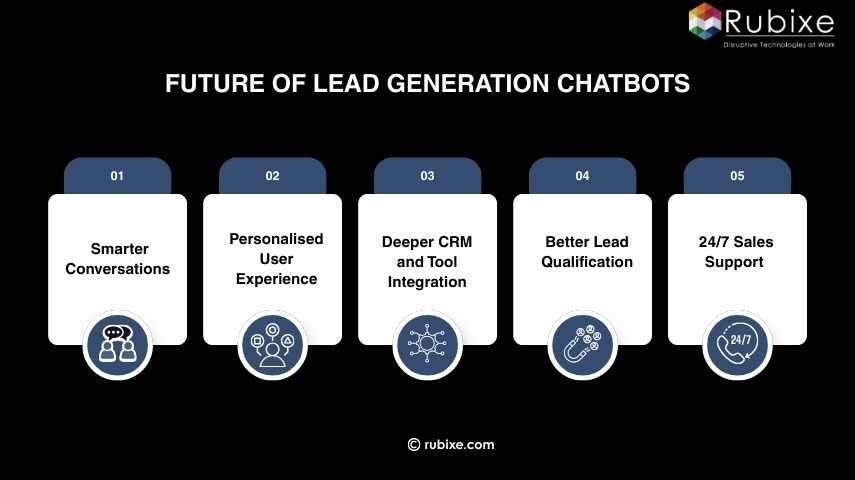
Lead generation chatbots are becoming a key part of modern business growth. As technology improves, chatbots will move beyond basic replies and play a bigger role in sales and marketing.
1. Smarter Conversations: Future chatbots will better understand user intent and context. They will hold more natural conversations and guide visitors more effectively.
2. Personalised User Experience: Chatbots will use visitor data to offer personalised messages, recommendations, and follow-ups. This will increase engagement and lead quality.
3. Deeper CRM and Tool Integration: Chatbots will connect more closely with CRM, marketing, and sales tools through ai automation with crm, helping businesses track leads, behaviour, and conversions in one place.
4. Better Lead Qualification: Advanced AI will help chatbots score and prioritise leads automatically. Sales teams will receive more accurate and sales-ready leads.
5. 24/7 Sales Support: Chatbots will act as always-on sales assistants. They will handle inquiries, book meetings, and support customers even outside business hours.
With the support of AI chatbot solutions, businesses can create smarter conversations, improve lead quality, and ensure no opportunity is missed. When built with clear goals, simple conversation flow, and proper system integration, chatbots deliver long-term value.
As customer expectations continue to rise, lead generation chatbots will play a central role in improving engagement, saving time, and supporting business growth in a practical and scalable way.