



Why the Impact of AI on Business Can’t Be Ignored
Know why the impact of AI on business can’t be ignored and how AI services optimize strategy, productivity, automation, efficiency, innovation, and growth
Can small and medium businesses really use AI without making things complicated?
Yes!
Artificial Intelligence (AI) is no longer something only big tech companies or experts can use.
It is already part of daily business work.
Companies are using AI to answer customer questions, study data, manage routine tasks, and much more. AI helps businesses work faster, make better decisions, and save time and money. This is why the impact of AI on business is becoming stronger every day and why it cannot be ignored.
What Is AI, and Why Is It Important for Businesses?
Artificial intelligence refers to computer systems that can perform tasks that usually require human intelligence. These tasks include learning, analyzing data, making decisions, and even predicting future trends.
For businesses, AI is more than just a tech trend. It offers tools to improve efficiency, reduce costs, and enhance customer experiences. The impact of AI on business is visible in areas like marketing, operations, finance, customer support, and product development.
By using AI, businesses can analyze large amounts of data faster than any human team. This ability helps them make smarter decisions, predict market trends, and deliver services tailored to individual customer needs.
Why the Impact of AI on Business Is Important
Today, businesses face many challenges. They have more data, more customers, and higher expectations than ever before. Doing everything manually takes too long and can lead to mistakes.
AI is important because it helps businesses manage their work more easily and efficiently.
Here are the main reasons:
1. Handling Growing Workloads
Teams spend many hours on routine work such as answering emails, making reports, and entering data. AI can do these tasks quickly, allowing employees to focus on important work.
2. Making Decisions Faster
Markets change fast. AI can analyze data in seconds, helping leaders make timely and accurate decisions.
3. Meeting Customer Expectations
Customers expect fast responses. AI chatbots and tools can answer questions instantly, keeping customers happy.
Because of these reasons, the impact of AI on business is no longer optional, it is necessary.
Key Areas Where AI Impacts Business
Here are the main ways AI is changing how businesses work
1. Customer Experience
Customer expectations are higher than ever. They want fast, personalized, and accurate responses. AI-powered tools like chatbots, virtual assistants, and recommendation engines help businesses meet these expectations.
For example, Amazon uses AI to recommend products based on browsing history and previous purchases. This personalized approach improves sales, customer engagement, and satisfaction. The impact of AI on business here is clear: businesses that use AI see better retention and higher customer loyalty.
2. Data-Driven Decision Making
AI can analyze vast amounts of data in real time, which humans cannot do efficiently. Businesses can use these insights to identify patterns, forecast demand, and make data-driven decisions.
For instance, Netflix uses AI to understand viewing preferences and suggest content that viewers are likely to enjoy. This not only improves user engagement but also drives subscriptions, showcasing the impact of AI on business in the entertainment industry.
3. Marketing and Sales
AI is revolutionizing marketing strategies. AI tools help businesses target the right audience, optimize ad campaigns, and even predict which leads are likely to convert into sales.
By analyzing customer behavior, AI allows marketers to create highly personalized campaigns, which increases ROI. This demonstrates the impact of AI on business, as companies can achieve more sales with less effort and cost.
4. Operations and Automation
One of the most tangible benefits of AI is automation. Businesses use AI to streamline repetitive tasks, improve accuracy, and reduce human errors.
In manufacturing, AI-powered robots can work 24/7, ensuring faster production while reducing costs. Similarly, AI in logistics helps companies optimize delivery routes, saving time and fuel. Here, the impact of AI on business is measured in efficiency, productivity, and cost savings.
5. Risk Management
AI helps businesses identify risks before they become significant problems. For example, AI can detect fraudulent transactions in banks, analyze cybersecurity threats, and even predict supply chain disruptions.
By proactively managing risks, businesses protect their assets, customers, and reputation. The impact of AI on business in this area is enormous because it prevents losses and ensures long-term stability.
Benefits of AI for Businesses
Understanding the impact of AI on business also means recognizing the benefits it brings. Some of the key benefits include:
-
Efficiency and Productivity: AI automates repetitive tasks, freeing employees to focus on higher-value work.
-
Better Decision Making: AI analyzes data and predicts trends more accurately than human intuition alone.
-
Cost Savings: Automation and optimization reduce operational costs.
-
Personalization: AI provides tailored experiences, improving customer loyalty and satisfaction.
-
Market Opportunity: Businesses using AI stay ahead of competitors by innovating faster and more effectively.
Challenges of AI Adoption
Despite its benefits, businesses face challenges while adopting AI. Understanding these challenges helps companies prepare better.
-
High Costs: Implementing AI can be expensive due to technology, training, and infrastructure.
-
Data Quality: AI depends on accurate and clean data to function effectively. Poor data leads to poor results.
-
Skill Gaps: Businesses need skilled professionals who can develop, implement, and maintain AI solutions.
-
Ethical Concerns: AI can raise issues like bias, privacy invasion, and job displacement. Companies must handle these responsibly.
These challenges are real, but the impact of AI on business shows that the benefits outweigh the hurdles if businesses plan and execute AI adoption carefully.
How Businesses Can Use AI Effectively
To maximize the impact of AI on business, companies should follow a structured approach:
-
Start Small: Begin with a pilot project in a critical business area before scaling up.
-
Focus on Data: Ensure your data is accurate, complete, and well-structured. AI depends on high-quality data.
-
Choose the Right Tools: Select AI solutions that align with your business goals and budget.
-
Train Employees: Upskill staff to work alongside AI and use AI tools effectively.
-
Monitor and Improve: Continuously evaluate AI performance and refine strategies.
By taking these steps, businesses can avoid common pitfalls and fully harness the impact of AI on business.
Future of AI in Business
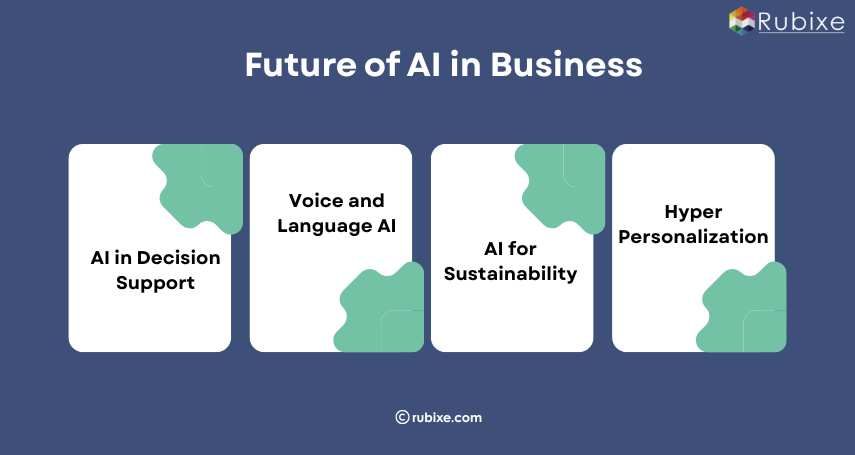
The future of AI in business is exciting and full of potential. Experts predict that AI will become even more integrated into everyday business operations, offering smarter automation, predictive analytics, and personalized customer experiences.
Some trends include:
-
AI in Decision Support: AI will help leaders make faster, evidence-based decisions.
-
Voice and Language AI: Natural language processing will make human-AI interaction more seamless.
-
AI for Sustainability: AI will optimize energy usage, supply chains, and resource management.
-
Hyper-Personalization: Businesses will provide highly tailored products and services based on AI insights.
Ignoring these trends means missing opportunities. Businesses that embrace AI will gain a long-term advantage, showing the profound impact of AI on business in shaping future markets.
The impact of AI on business is clear. It is changing how companies work, talk to customers, and make choices. From saving time to giving personalized experiences and reducing risks, AI is not just an option, it is needed for business growth and success.
Businesses that use AI early can do better than others, save money, and come up with new ideas faster