
















What Is Data Readiness Assessment?
Understand what a data readiness assessment is, why it matters, and how it prepares your data for AI, analytics, and better business decision-making.
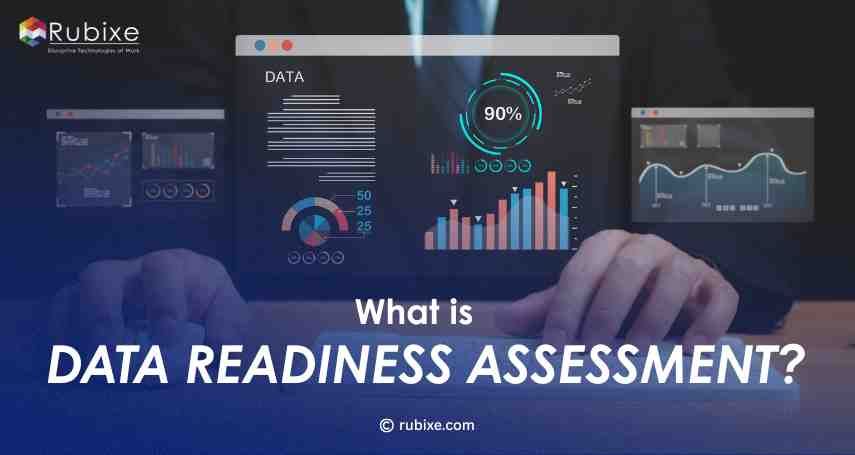
Many organizations invest in AI and analytics but fail to see results due to poor data quality and structure.
But the results often fall short.
AI models fail to deliver accuracy. Reports don’t match across teams. Decision-making slows down instead of improving.
The problem is not the technology.
The problem is the data.
If your data is incomplete, inconsistent, or poorly structured, even the most advanced systems will fail. This is why a Data Readiness Assessment is not optional, it is the foundation of every successful AI and analytics initiative.
What Is Data Readiness Assessment?
Data Readiness Assessment is a structured process used to evaluate the quality, accessibility, governance, and usability of data to ensure it is suitable for analytics, AI, and business decision-making.
It helps organizations identify gaps in their data and create a clear roadmap to improve data quality before investing further in technology.
Why Data Readiness Assessment Matters
Many organizations assume that having large amounts of data is enough. In reality, data without structure and quality creates more problems than solutions.
Without proper data readiness:
-
AI models generate inaccurate predictions
-
Business reports show conflicting numbers
-
Teams struggle to access reliable data
-
Operational costs increase due to rework
A structured data readiness assessment ensures that data is usable for analytics and AI systems
Data Readiness Framework
To evaluate data effectively, organizations can follow a structured data readiness framework built on six key pillars
1. Data Quality
Data quality is the most critical factor in readiness.
It includes:
-
Accuracy of data
-
Completeness of records
-
Consistency across systems
-
Timeliness of updates
For example, duplicate customer records or missing transaction data can directly impact business outcomes.
2. Data Availability
Data must be easily accessible to the right teams at the right time.
Organizations often struggle with:
-
Data stored in silos
-
Limited access permissions
-
Delayed retrieval
Improving availability ensures faster and more efficient decision-making.
3. Data Structure and Standardization
Raw data is often unstructured and difficult to analyze. As part of an AI readiness assessment, this step ensures your data is properly prepared before any AI implementation begins.
This step focuses on:
-
Organizing data into usable formats
-
Standardizing naming conventions
-
Ensuring compatibility with analytics tools
Structured data is essential for effective AI data preparation.
4. Data Governance Strategy
A strong data governance strategy ensures that data is secure, compliant, and properly managed.
It includes:
-
Defining data ownership
-
Establishing usage policies
-
Implementing security controls
Without governance, data becomes unreliable and risky to use
5. Data Integration and Interoperability
Modern businesses rely on multiple systems such as CRM, ERP, and marketing platforms.
Data readiness ensures:
-
Seamless integration across systems
-
Consistent data flow
-
Elimination of duplication
This creates a unified view of business operations.
6. Data Infrastructure and Scalability
As data grows, systems must be able to handle increased volume and complexity.
Assessment focuses on:
-
Storage capabilities
-
Processing performance
-
Scalability for future needs
This is essential for long-term success in AI and analytics.
Data Maturity Model
A data maturity model helps organizations understand their current data capabilities and plan improvements.
|
Level |
Stage |
Description |
|
Level 1 |
Raw Data |
Unstructured, siloed, inconsistent |
|
Level 2 |
Organized Data |
Basic structure with limited usability |
|
Level 3 |
Integrated Data |
Systems connected, consistent reporting |
|
Level 4 |
Optimized Data |
Governed, scalable, analytics-ready |
|
Level 5 |
AI-Ready Data |
Automated, high-quality, decision-driven |
Most businesses operate between Level 1 and Level 3, which limits their ability to scale AI initiatives.
How to Measure Data Readiness
A successful Data Readiness Assessment is based on measurable metrics rather than assumptions.
Key metrics include:
-
Data Completeness: Percentage of missing values
-
Data Accuracy: Error rate in datasets
-
Duplication Rate: Redundant records across systems
-
Data Latency: Time required to access data
-
Accessibility Score: Ease of data availability
These metrics provide a clear picture of current readiness and highlight areas for improvement.
Data Readiness Checklist
Use this checklist to evaluate your data:
-
Are all data sources identified and documented?
-
Is your data clean and free from duplication?
-
Are systems integrated and synchronized?
-
Is governance clearly defined?
-
Can teams access real-time data?
-
Is your infrastructure scalable?
If multiple answers are “no,” your data is not ready.
Technical Components of Data Readiness
For enterprise-level implementation, technical depth is essential.
1. Data Architecture: Organizations must evaluate whether their data is stored in centralized or distributed systems.
Cloud-based systems often provide better scalability, while on-premise systems may offer more control.
2. Data Pipelines: Efficient data pipelines ensure smooth data flow.
This includes:
-
Data collection
-
Transformation
-
Loading into systems
Automated pipelines reduce manual errors and improve efficiency.
3. Data Lineage: Data lineage tracks how data moves across systems.
It helps:
-
Ensure transparency
-
Identify errors
-
Maintain data integrity
4. Metadata Management: Metadata provides context to data.
It improves:
-
Data discoverability
-
Data classification
-
Data usability
These technical elements are critical for advanced analytics and AI.
AI Specific Data Readiness Factors
AI projects require additional preparation beyond basic data readiness.
Key factors include:
1. Feature Engineering: Data must be structured in a way that AI models can interpret.
2. Bias Detection: Biased data leads to inaccurate predictions.
3. Data Labeling: Proper labeling is essential for supervised learning.
4. Training Data Volume: AI models require large datasets to perform effectively.
Data Readiness vs Data Quality
|
Factor |
Data Readiness |
Data Quality |
|
Scope |
End-to-end evaluation |
Accuracy-focused |
|
Focus |
Usability for AI & analytics |
Clean data |
|
Outcome |
Business readiness |
Data correctness |
Data Readiness vs Data Maturity
|
Factor |
Data Readiness |
Data Maturity |
|
Purpose |
Evaluate current usability |
Measure long-term capability |
|
Focus |
Immediate gaps |
Growth stages |
|
Use Case |
AI readiness |
Strategic planning |
Tools Used for Data Readiness Assessment
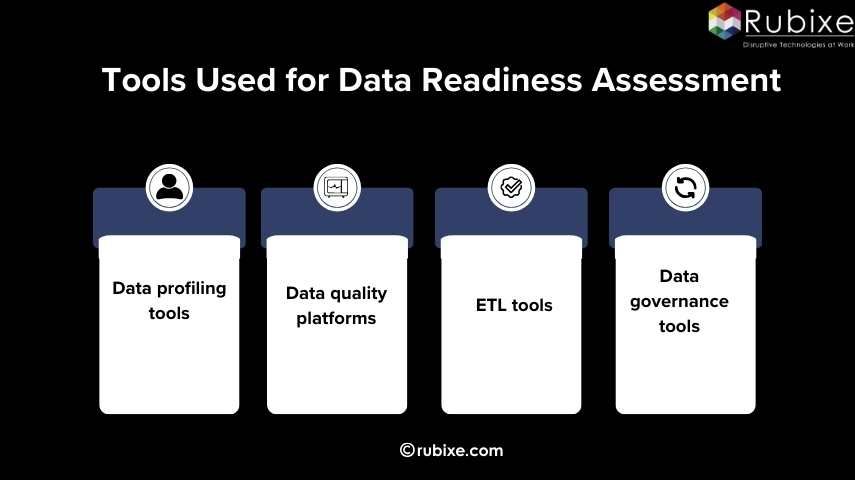 Organizations use various tools to support assessment:
-
Data profiling tools
-
Data quality platforms
-
ETL tools
-
Data governance tools
These tools help automate the process and improve efficiency.
Common Data Readiness Mistakes to Avoid
Businesses often make avoidable mistakes, such as:
-
Ignoring data quality issues
-
Lack of governance policies
-
Working with siloed data
-
Skipping standardization
-
Delaying assessment
Avoiding these mistakes can significantly improve outcomes.
When Should You Conduct a Data Readiness Assessment?
-
Before implementing AI or analytics
-
During digital transformation
-
When facing inconsistent reports
-
Before migrating systems
-
While scaling operations
Key Takeaways
-
Data quality directly impacts business outcomes
-
AI success depends on structured data
-
A Data Readiness Assessment identifies risks early
-
A strong data readiness framework ensures scalability
-
Businesses must aim for AI-ready data
Most organizations don’t struggle because they lack data, they struggle because their data isn’t ready.
A Data Readiness Assessment helps businesses evaluate their current data state, identify gaps, and build a strong foundation for AI and analytics success.
Once your data is ready, the next step is implementing AI effectively. Once your data is ready, the next step is implementing AI solutions effectively through structured AI consulting