











How AI Is Transforming the Financial Services Industry
AI is transforming financial services by enhancing fraud detection, automating workflows, improving customer support, and enabling data-driven financial decisions.
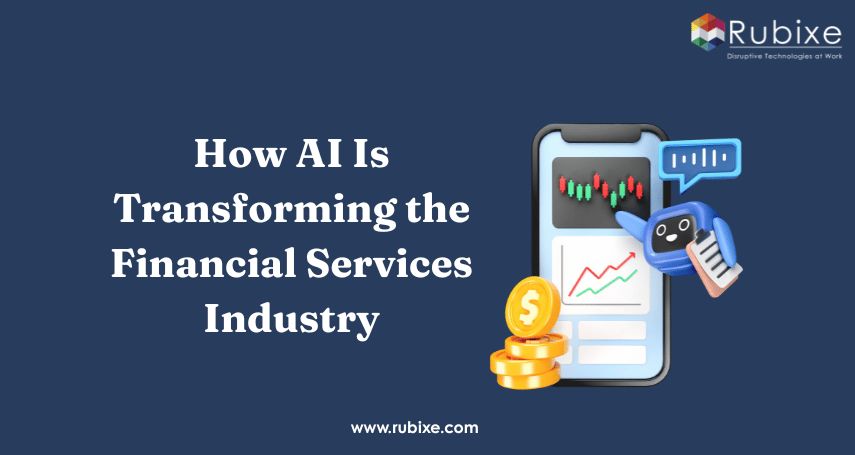
Artificial intelligence is reshaping how banks and financial institutions operate in real time. From detecting fraudulent transactions within seconds to delivering personalized banking experiences, AI is becoming a core driver of speed, accuracy, and trust in financial services. Institutions that once relied on manual verification are now shifting toward intelligent, data-driven systems that reduce risk and improve decision-making.
Key AI Statistics in Financial Services
-
AI-powered fraud detection systems can reduce false positives by more than 50%, improving transaction security and customer trust.
-
Over 75% of financial institutions are investing in AI technologies to improve automation, customer support, and operational efficiency.
-
The global AI in finance market is projected to grow rapidly as banks and fintech companies increase investments in intelligent automation and predictive analytics.
How AI Improves Fraud Detection in Financial Services
Artificial intelligence has become a critical defense mechanism in financial cybersecurity. With growing digital transactions and online banking services, fraud detection systems need to be faster, smarter, and more adaptive.
-
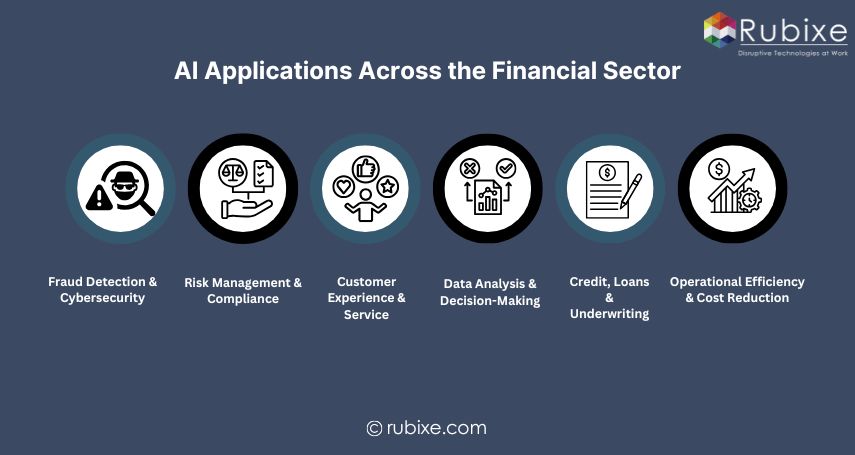
Real-Time Monitoring: AI systems scan thousands of transactions per second to detect anomalies and suspicious patterns instantly.
-
Behavior-Based Authentication: AI products use biometrics and behavioral tracking to verify users and block unauthorized access.
-
Adaptive Threat Detection: Machine learning models evolve with emerging threats, boosting cybersecurity resilience.
How AI Detects Fraud in Real-Time Banking Transactions
Managing risk and staying compliant with evolving regulations is complex. AI provides financial institutions with automated, data-driven approaches to minimize exposure and ensure compliance.
-
Dynamic Risk Scoring: AI evaluates credit, operational, and market risk continuously using real-time internal and external data.
-
Automated Underwriting: AI services assess loan and insurance applications instantly, using alternative data and predictive models.
-
Regulatory Surveillance: AI monitors transactions and communications to detect compliance violations proactively.
-
Automated Reporting: Reporting tools generate accurate regulatory documents with minimal human intervention, reducing errors and delays.
Investment & Financial Forecasting
AI is transforming investment strategies and financial planning through automation and predictive analytics. It enables smarter, faster decisions in the fast-paced world of finance.
-
Algorithmic Trading: AI systems execute trades in milliseconds, analyzing real-time market signals to capitalize on micro-opportunities.
-
Robo-Advisors: AI-driven platforms personalize investment strategies based on user goals, market trends, and risk profiles.
-
Financial Forecasting: Predictive analytics use macroeconomic indicators and historical patterns to project earnings, expenses, and market movement.
-
Sentiment Analysis: NLP models scan financial news and social media to gauge public sentiment and influence investment timing.
How AI Enhances Customer Experience in Banking
AI is redefining how financial institutions engage with customers. From chatbots to personalization, AI enables seamless and intelligent customer experiences.
-
AI Chatbots: Virtual assistants handle customer queries, perform transactions, and offer support 24/7, reducing service costs and improving satisfaction.
-
Personalized Banking: AI analyzes transaction behavior to offer tailored financial advice, product recommendations, and alerts.
-
Natural Language Interaction: AI products enable voice-activated commands and smart interfaces for intuitive banking experiences.
-
Credit Decisioning: AI evaluates non-traditional credit data (e.g., utilities, rent, mobile usage) to offer loans to underserved populations.
Data Analysis & Decision-Making
Financial institutions depend on data for strategic decisions. AI enhances this process by offering real-time insights, scenario planning, and better accuracy.
-
Real-Time Data Processing: AI in financial services enables analysis of structured and unstructured data for timely insights.
-
Scenario Planning: AI models simulate multiple market and business conditions to support long-term strategic decisions.
-
Smart Alerts & Recommendations: AI services generate intelligent prompts based on spending behavior and financial goals.
-
Improved Accuracy: AI minimizes human error in forecasting and decision-making, enhancing confidence across departments.
Operational Efficiency & Cost Reduction
AI plays a crucial role in streamlining back-end operations and reducing overhead. Automation and intelligent systems are optimizing day-to-day workflows across the sector.
-
Process Automation: Tasks like KYC verification, invoice processing, and claims management are handled entirely by AI systems.
-
Reduced Human Overhead: AI services eliminate repetitive work, freeing up teams for high-value strategic functions.
-
Scalable Solutions: Cloud-based AI products scale with business needs, supporting rapid growth without proportional costs.
-
Low-Code Integration: Modern AI tools integrate easily with existing infrastructure, accelerating digital transformation.
Credit, Loans & Underwriting
AI is modernizing credit evaluation and underwriting, making these processes faster, fairer, and more data-driven. This benefits both institutions and customers.
-
Instant Loan Approvals: AI services assess loan applications and approve or reject them in real time based on risk scores.
-
Bias Reduction: AI models trained on diverse data sets reduce human bias in lending and underwriting decisions.
-
Default Prediction: Predictive analytics flag potential defaulters early, enabling proactive mitigation strategies.
-
Custom Lending Products: AI enables hyper-targeted loan offerings based on income, spending behavior, and financial history.
The Role of AI Products & Services
-
AI Products in Action: Tools like biometric scanners, fraud alert systems, and document verification platforms streamline operations.
-
Cloud-Based AI Services: Scalable platforms offer plug-and-play APIs for fraud detection, analytics, chatbots, and forecasting.
-
AI in Industry Applications: Finance is just one vertical; these tools extend to insurance, real estate, and capital markets, showing the broader power of AI in industry
FAQs - AI in Financial Services
1. What is AI in financial services?
AI in financial services refers to the use of artificial intelligence to improve banking, insurance, and investment processes such as fraud detection, risk analysis, customer support, and financial forecasting.
2. How is AI used in banking and finance?
AI is used in banking to detect fraud in real time, automate loan approvals, improve customer service through chatbots, and analyze financial data for better decision-making.
3. Can AI help prevent financial fraud?
Yes. AI systems continuously monitor transactions and detect unusual patterns or suspicious activity within seconds, helping prevent fraud before it occurs.
4. How does AI improve customer experience in banking?
AI improves customer experience by offering personalized recommendations, instant support through chatbots, faster query resolution, and smart financial insights based on user behavior.
5. Is AI in finance only for large banks?
No. AI solutions are scalable and can be used by small banks, fintech startups, insurance companies, and growing financial businesses to improve efficiency and reduce costs.
6. What are the main benefits of AI in financial services?
The main benefits include faster fraud detection, improved risk management, automated operations, better customer experience, and more accurate financial forecasting.
Businesses that strategically adopt AI today will be better prepared for the future of finance, where speed, accuracy, and intelligent automation will play a critical role in long-term growth and competitiveness.