











Role of AI and ML in Automation
The role of AI and ML in automation improves efficiency, reduces manual tasks, enables predictive insights, and supports smarter business processes.
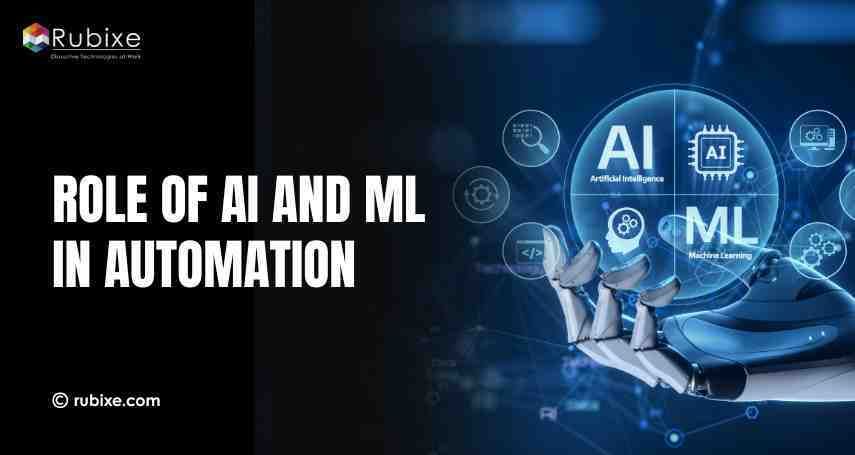
Businesses today face mounting pressure to move faster, cut costs, and deliver better results with fewer resources. Repetitive tasks still eat up hours, errors slip through cracks, and teams struggle to keep pace with growing demands. This is exactly where AI automation solutions step in and change the game.
By integrating artificial intelligence and machine learning into automation systems, companies transform rigid, rule-based processes into adaptive, intelligent workflows. These solutions don’t just follow instructions, they learn, predict, and decide. The result? Faster operations, sharper insights, and a real competitive edge.
Let’s break down how AI and ML drive automation, the optimal benefits they deliver, where they’re making the biggest impact, and what the latest data reveals about their growth. If you’re exploring ways to streamline your operations, you’ll find clear answers and practical steps ahead.
What Are AI Automation Solutions?
AI automation solutions combine traditional automation tools like robotic process automation (RPA) with advanced AI capabilities. Instead of simple scripts that repeat the same steps every time, these systems use data, patterns, and context to handle tasks that once needed human judgment.
At their core, they rely on three key technologies:
-
Machine learning (ML): Algorithms that improve over time by learning from data.
-
Natural language processing (NLP): The ability to understand and generate human language.
-
Computer vision and predictive analytics: Tools that “see” documents or forecast outcomes.
The shift from basic automation to AI-powered systems marks a major leap. Traditional tools excel at repetitive, structured work. AI automation solutions go further; they manage exceptions, adapt to new information, and even suggest better ways to do things.
For example, more than extracting data, an AI system processing invoices can flag anomalies, cross-check with records, and route complex cases to the right person automatically.
How Machine Learning Powers AI Automation
Machine learning sits at the heart of what makes AI automation solutions truly intelligent. While basic automation follows fixed rules, ML models analyze vast amounts of historical and real-time data to spot patterns humans might miss.
Here’s how it works in practice:
-
Training phase: The system learns from thousands of examples what a standard invoice looks like, which customer queries signal urgency, or which production variables predict delays.
-
Inference phase: Once trained, it applies that knowledge to new situations in real time.
-
Continuous improvement: Every new interaction refines the model, making it more accurate and efficient.
This learning loop turns automation from a static tool into a dynamic partner. In supply chain management, ML models predict demand shifts days in advance. In customer service, they route queries to the best agent or even resolve simple ones entirely.
The beauty lies in the adaptability. ML doesn’t break when processes change, it evolves with them.
Key Advantages of AI Automation Solutions for Modern Businesses
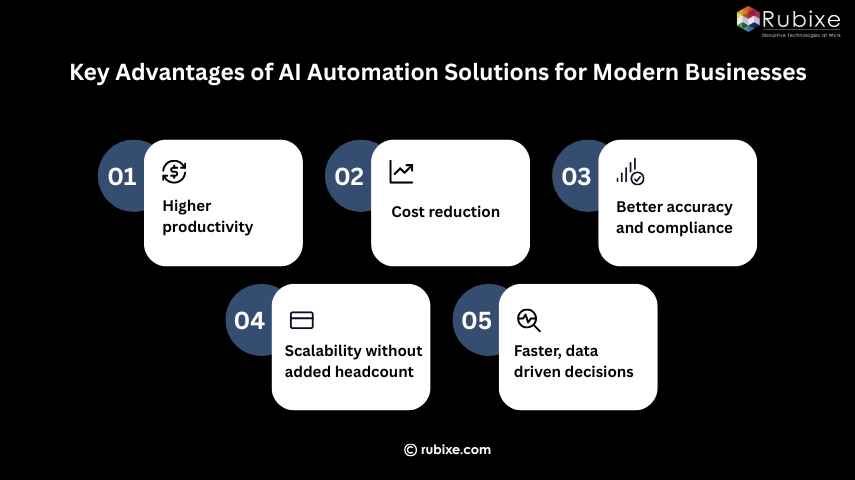 Organizations that adopt AI automation solutions see measurable gains across the board. Here are the most common outcomes:
-
Higher productivity: Teams spend far less time on routine work. Studies show employees dedicate around 41% of their time to repetitive tasks. AI automation solutions reclaim those hours for strategic initiatives.
-
Cost reduction: By minimizing manual effort and errors, companies cut operational expenses significantly. Many report 30-60% efficiency improvements in targeted processes.
-
Better accuracy and compliance: ML reduces human error in data-heavy tasks like document processing or regulatory reporting. The system flags inconsistencies instantly.
-
Scalability without added headcount: AI handles spikes in volume, whether it’s processing thousands of claims during peak season or managing global customer inquiries, without proportional increases in staff.
-
Faster, data-driven decisions: Predictive models surface insights in real time, helping leaders act before problems escalate.
These advantages compound over time. Early adopters often see payback within months, then continue to benefit as the systems grow smarter.
Practical Applications of AI and ML Across Key Industries
AI automation solutions deliver value in nearly every sector. Here are standout examples:
Healthcare: AI systems automate patient scheduling, claims processing, and even preliminary diagnostics. One hospital network reduced administrative charting time by 75%, freeing doctors for patient care.
Finance: Fraud detection models scan transactions in milliseconds and flag suspicious activity with high precision. Loan processing that once took days now completes in hours, with AI automated risk assessments.
Retail and E-commerce: Intelligent inventory systems predict stock needs, while chatbots handle order queries 24/7. Personalized recommendations drive higher conversion rates without extra marketing spend.
Logistics and Supply Chain: Route optimization and demand forecasting models cut delivery times and reduce waste. Companies adjust dynamically to disruptions like weather or supplier delays.
Manufacturing: Predictive maintenance uses sensor data and ML to forecast equipment failures before they happen. Factories avoid unplanned downtime and extend asset life dramatically.
Latest Trends and Statistics Shaping AI-Driven Automation
The momentum behind AI automation solutions continues to accelerate. Recent data paints a clear picture:
-
Widespread adoption: 88% of organizations now use AI in at least one business function, according to McKinsey’s 2025 State of AI report - up sharply from previous years.
-
Productivity impact: Companies implementing AI-driven automation report productivity boosts of up to 40%, according to research cited by leading automation platforms.
-
Market growth: The broader AI market is projected to reach $371 billion in 2025 and climb toward $2.4 trillion by 2032, with automation applications forming a major share of that expansion.
We’re also seeing a rise in agentic AI, systems that don’t just execute tasks but plan and orchestrate entire workflows with minimal oversight. Hyperautomation, which combines AI, ML, and RPA into unified platforms, is another hot trend helping enterprises achieve end-to-end process transformation.
These developments signal that AI automation solutions are moving from nice-to-have to essential infrastructure.
Common Challenges in AI Automation Adoption
While the benefits are compelling, successful implementation requires thoughtful planning. Common hurdles include:
-
Data quality: ML models perform best with clean, well-organized data. Many organizations start with an audit to identify gaps.
-
Integration with legacy systems: Modern solutions work best when they connect seamlessly with existing tools. APIs and low-code platforms make this easier than ever.
-
Change management: Employees need clear communication about how their roles will evolve, shifting from routine work to higher-value contributions.
-
Governance and ethics: Strong frameworks around data privacy, bias detection, and explainability build trust and ensure compliance.
The key is starting small. Pilot projects in one department often deliver quick wins that build momentum for broader rollout. Partnering with experienced providers helps navigate technical and organizational challenges smoothly.
Ready to Transform Your Operations with AI Automation Solutions?
AI and machine learning have redefined what’s possible in automation. From reducing drudgery to unlocking new levels of efficiency and insight, these technologies give forward-thinking businesses a genuine advantage.
If your organization is ready to move beyond basic automation and build intelligent, future-ready processes, Rubixe stands ready to help. With over eight years of experience and more than 50 successful AI automation deployments, the team at Rubixe designs and implements solutions tailored to your industry and goals, delivering up to 60% efficiency gains in enterprise workflows.
Explore Rubixe’s AI automation services today and discover how intelligent systems can drive real results for your business.