






Role of AI in Threat Detection
Understand the role of AI in threat detection to identify anomalies, reduce response time, strengthen cybersecurity monitoring, and manage enterprise risks.
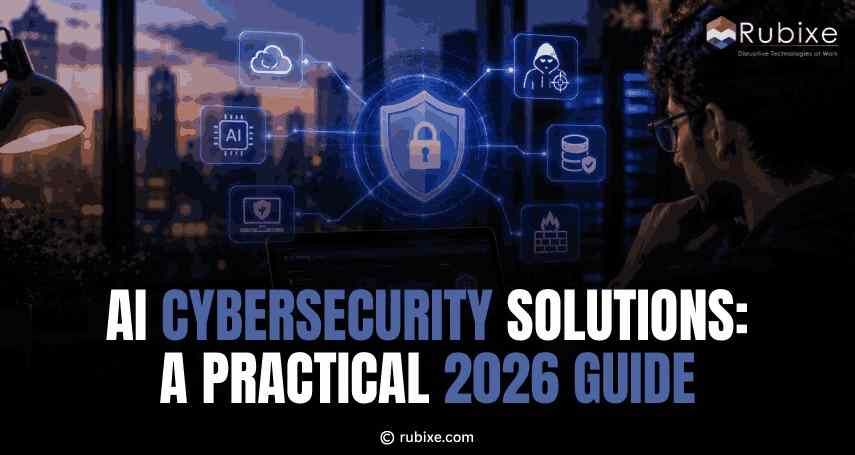
Businesses face constant cyber risks that demand advanced defenses. AI cybersecurity services integrate artificial intelligence to spot and counter threats with precision. These services analyze data patterns, predict attacks, and automate responses, helping organizations protect assets effectively. For companies seeking robust protection, AI cybersecurity services provide essential tools to maintain security in complex environments.
Evolution of Threat Detection in Cybersecurity
Threat detection has advanced from basic rule-based systems to sophisticated AI-driven approaches. Early methods relied on signatures to identify known malware, but they struggled with new variants. Heuristic analysis emerged next, evaluating code behavior to catch suspicious actions.
Machine learning marked a major shift by enabling systems to learn from data and detect anomalies without predefined rules. Deep learning further improved this by processing complex datasets like network traffic. Today, AI cybersecurity services use these technologies to handle vast information volumes, identifying subtle threats that traditional tools miss. This progression allows proactive defense, where systems anticipate risks based on historical patterns.
Organizations benefit from this evolution through faster identification and reduced manual effort.
Core Functions of AI in Threat Detection
AI performs several key functions in threat detection within cybersecurity services. It starts with data analysis, examining logs, traffic, and user actions to establish normal baselines. Any deviation signals a potential issue, such as unusual login attempts or data transfers.
Predictive analytics forecasts threats by reviewing trends and external intelligence. Behavioral monitoring tracks entities like devices and users, flagging inconsistencies that indicate insider risks or compromises. Automation handles responses, such as isolating affected systems or blocking malicious IPs.
These functions make AI cybersecurity services vital for comprehensive protection. They enable real-time monitoring and adaptive strategies, ensuring defenses evolve with threats.
Key Technologies Behind AI Cybersecurity Services
 Several technologies power AI in threat detection. Machine learning algorithms classify threats using supervised models for known patterns and unsupervised ones for anomalies. Deep learning employs neural networks to process unstructured data, like emails for phishing detection.
Natural language processing scans communications and logs to identify deceptive content. Reinforcement learning optimizes responses by simulating scenarios and refining actions over time. Big data tools manage the scale, integrating sources for holistic views.
These technologies form the backbone of AI cybersecurity services, delivering accurate detections and efficient operations. Businesses can leverage them for tailored defenses.
Advantages of AI Cybersecurity Services
AI cybersecurity services offer clear advantages. They provide rapid threat identification, processing data at speeds humans cannot match. This reduces response times, minimizing damage from breaches.
Accuracy improves as AI distinguishes true threats from benign activities, cutting false alerts and easing team workloads. Scalability handles growing data volumes, making services suitable for large enterprises. Predictive capabilities anticipate attacks, allowing preventive measures.
Cost efficiency arises from automation, freeing resources for strategic tasks. Overall, these services strengthen defenses while supporting compliance.
Real-Life Examples of AI in Action
Examples illustrate AI's impact on threat detection. Darktrace's system detected the WannaCry ransomware in a legal firm by spotting unusual file encryptions and scans, isolating devices to prevent spread.
A financial services company used IBM Watson to identify a phishing campaign through pattern analysis, responding before data loss.
In healthcare, AI monitored emails for phishing, flagging suspicious links and reducing successful attacks.
An e-commerce platform applied AI to detect account takeovers by analyzing login behaviors and blocking fraudulent access.
Golomt Bank implemented Securonix, reducing false positives by 60% and speeding investigations by 40%.
These cases show AI cybersecurity services delivering tangible results across sectors.
Addressing Challenges in AI Threat Detection
While effective, AI faces challenges. Data quality affects accuracy; poor inputs lead to errors. Adversarial attacks manipulate models, requiring robust designs.
Resource demands for training and maintenance can strain budgets. Privacy concerns arise from handling sensitive information, necessitating compliance with regulations.
Solutions include diverse datasets, regular updates, and hybrid human-AI oversight. Transparent models explain decisions, building trust. AI cybersecurity services incorporate these to mitigate issues.
Emerging Trends in AI Cybersecurity Services
Trends shape the future of AI in threat detection. Autonomous systems handle responses independently, with human supervision for complex cases. Federated learning trains models without sharing data, enhancing privacy.
Quantum-resistant methods prepare for advanced computing threats. Integration with zero trust verifies every access, using AI for dynamic policies.
Generative AI simulates attacks for testing defenses. These trends drive innovation in AI cybersecurity services.
How Rubixe Provides AI Cybersecurity Services
Rubixe offers AI cybersecurity services tailored to business needs. Our solutions use machine learning for anomaly detection and predictive analytics to foresee risks. We integrate technologies like deep learning for comprehensive monitoring.
Custom implementations ensure alignment with your operations. Expert teams handle setup and ongoing support, focusing on accuracy and efficiency. Partner with us for defenses that adapt to threats.
AI plays a pivotal role in threat detection, empowering cybersecurity services to safeguard organizations. By adopting these technologies, businesses gain resilient protection. Contact Rubixe to enhance your security today.