







Intelligent Automation and Its Impact on Operations
Intelligent automation transforms operations by improving efficiency, cutting costs, increasing accuracy, and enabling faster, scalable, data-driven performance
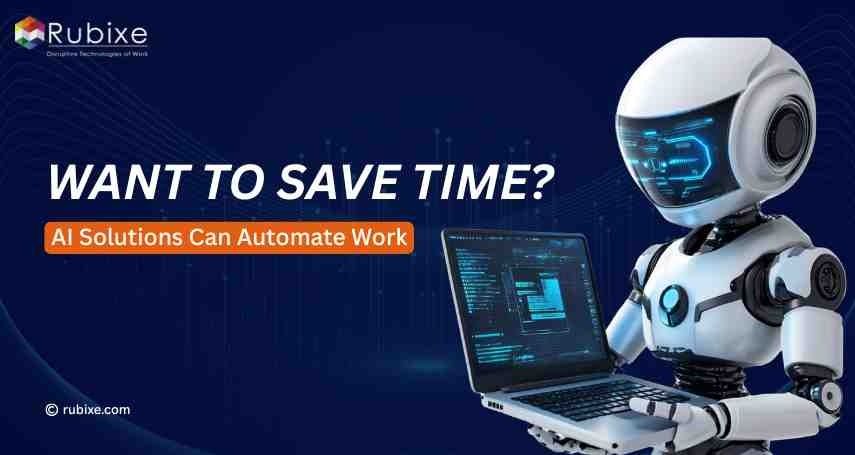
Businesses are under growing pressure to deliver faster results, reduce costs, and maintain high-quality performance. Traditional automation has helped remove repetitive tasks, but it often falls short when processes require flexibility or decision-making. AI automation solves this challenge by bringing real intelligence into daily operations.
With the power of artificial intelligence, machine learning, robotic process automation (RPA), and advanced analytics, intelligent automation can learn, adapt, and improve over time. It is transforming operations across industries, including healthcare, banking, manufacturing, logistics, retail, and IT services, helping organizations work smarter and stay competitive.
What Is Intelligent Automation?
Intelligent automation is the combination of traditional automation with technologies like AI, machine learning, RPA, and analytics. Intelligent automation can learn from data and improve over time. Unlike rule-based automation that only follows fixed instructions, it adds learning, decision-making, and adaptability to business processes.
Here’s what makes IA different:
-
Understanding unstructured data: It can read and process emails, documents, images, and text that traditional automation cannot handle.
-
Learning from historical patterns: The system improves by analyzing past data and outcomes.
-
Making data-driven decisions: This chooses actions based on real-time data and insights.
-
Continuous improvement with experience: Performance gets better over time as the system learns from new data and feedback.
Why Traditional Operations Are No Longer Enough
Many organizations still rely on manual workflows or basic automation tools that create hidden operational bottlenecks. These challenges typically include:
-
High dependency on human intervention
-
Process delays and inefficiencies
-
Data entry errors and rework
-
Lack of real-time visibility
-
Rising operational costs
-
Limited scalability
How Intelligent Automation Works in Operations
Intelligent automation combines multiple advanced technologies that work together to automate processes, reduce manual effort, and improve operational efficiency. These components form a unified system that not only performs tasks but also understands, analyzes, and optimizes them.
-
Robotic Process Automation (RPA): Handles repetitive, rule-based tasks such as data entry, form processing, and system updates with high speed and accuracy.
-
Machine Learning (ML): Learns from historical data, identifies patterns, and makes predictions to support smarter decision-making and adaptive automation.
-
Natural Language Processing (NLP): Enables systems to understand and respond to human language, powering chatbots, automated emails, and text-based workflows.
-
Computer Vision: Interprets images, scanned documents, and visual inputs to automate tasks like ID verification, document extraction, and quality inspection.
-
Advanced Analytics: Provides insights and optimization by analyzing large datasets to uncover trends, inefficiencies, and improvement opportunities.
Key Operational Areas Transformed by Intelligent Automation
1. Process Automation and Workflow Optimization
Intelligent automation streamlines complex workflows by automating approvals, validations, and exception handling. This reduces cycle times and ensures consistent process execution across departments.
2. Data Management and Accuracy
Manual data entry is one of the biggest sources of operational errors. Automation extracts, validates, cleans, and updates data across systems with high accuracy, drastically reducing rework and compliance risks.
3. Customer Support Operations
Chatbots, virtual assistants, and automated ticket routing powered by IA provide 24/7 customer support, faster resolution times, and improved customer satisfaction.
4. IT and Infrastructure Operations
IA monitors system performance, predicts failures, automates patching, and enables self-healing IT environments, reducing downtime and support costs.
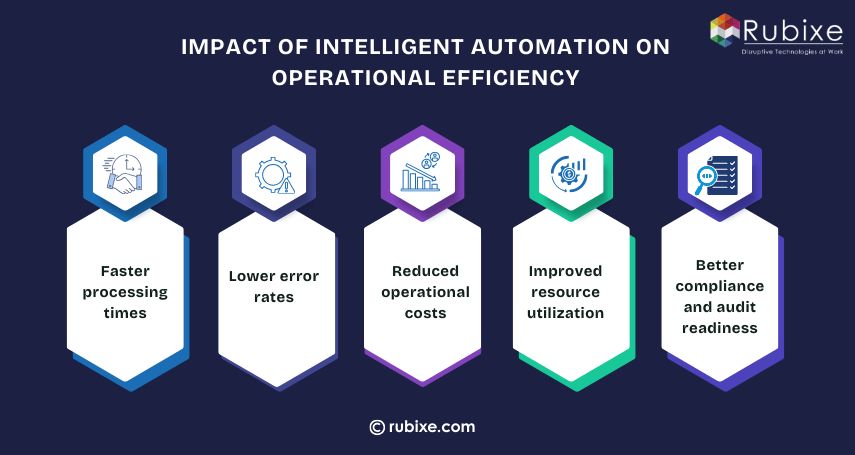
Impact of Intelligent Automation on Operational Efficiency
Intelligent automation has become a key driver of operational improvement. By combining smart technologies with automated workflows, organizations can streamline processes, reduce manual work, and consistently deliver better outcomes across departments.
-
Faster processing times: Automation handles repetitive tasks instantly, reducing delays and speeding up end-to-end workflows.
-
Lower error rates: Automated systems follow consistent rules, minimizing human mistakes and ensuring accuracy across operations.
-
Reduced operational costs: By cutting manual effort, improving speed, and optimizing resources, businesses lower overall costs significantly.
-
Improved resource utilization: Teams spend less time on low-value tasks and more time on strategic work, boosting productivity and efficiency.
-
Better compliance and audit readiness: Automated logs, standardized workflows, and accurate documentation make compliance easier and audits smoother.
-
Higher service reliability: With round-the-clock automation, businesses deliver consistent, reliable service with fewer disruptions.
Business Benefits of Intelligent Automation
1. Cost Optimization
Automation reduces dependency on manual labor, minimizes errors, and lowers reprocessing costs.
2. Scalability Without Proportional Cost Increase
Operations can scale quickly without hiring large teams. Intelligent automation adapts to growing transaction volumes with minimal incremental costs.
3. Enhanced Decision-Making
AI-driven insights enable faster, data-backed decisions across operations, reducing guesswork and improving accuracy.
4. Improved Compliance and Risk Management
By automating controls, validations, and audit trails, intelligent automation strengthens regulatory compliance and minimizes operational risk.
5. Better Customer Experience
Faster responses, accurate service delivery, and personalized interactions directly enhance customer satisfaction and brand trust.
Human–Automation Collaboration in Modern Operations
Many people assume intelligent automation replaces human jobs, but the truth is very different. Automation is designed to support humans, not eliminate them. By handling repetitive, routine, and time-consuming tasks, automation frees employees to do work that requires creativity, judgment, and strategic thinking.
With automation taking care of the heavy manual work, employees can focus on:
-
Innovation and problem-solving: Developing better solutions, improving processes, and contributing new ideas that drive growth.
-
Strategic planning: Making informed decisions, analyzing insights, and planning long-term initiatives without operational distractions.
-
Customer relationship management: Building stronger connections, resolving issues quickly, and delivering personalized experiences.
-
Continuous process improvements: Identifying inefficiencies, optimizing workflows, and ensuring operations stay competitive.
This human–automation partnership results in higher job satisfaction, less burnout, faster productivity, and stronger organizational outcomes.
Best Practices for Successful Intelligent Automation Adoption
To unlock the full potential of intelligent automation, organizations should:
-
Start with high-impact, low-risk processes
-
Align automation goals with business objectives
-
Ensure clean and consistent data
-
Invest in employee upskilling
-
Monitor performance with real-time analytics
-
Continuously refine and optimize automation workflows
A phased and value-driven deployment approach ensures faster ROI and sustainable operational transformation
The Future of Operations with Intelligent Automation
The next phase of intelligent automation will be driven by:
-
Hyperautomation strategies
-
Autonomous decision-making systems
-
Predictive and prescriptive analytics
-
AI-powered digital twins
-
Self-optimizing business processes
Operations will evolve from reactive execution models to proactive and predictive ecosystems, where systems anticipate issues before they impact business performance.
Why Intelligent Automation Is Now a Strategic Imperative
In a highly competitive digital economy, operational excellence is no longer optional. Organizations that delay automation adoption risk:
-
Higher operating costs
-
Slower service delivery
-
Poor customer experiences
-
Reduced market competitiveness
-
Limited innovation capacity
Intelligent automation has become a key part of how businesses operate. It helps teams work faster, reduce costs, and scale with confidence. By combining AI with automation, organizations gain smarter and more efficient processes across every area of the business.
We provide AI-powered automation solutions for customer service, back-office workflows, and IT operations. Our goal is to help organizations build efficient, resilient systems that support growth and stay ready for future challenges. Partner with us to strengthen your operations and move forward with smarter automation.