





How AI Security Analytics Improves SOC Team Efficiency
AI security analytics helps SOC teams reduce alert fatigue, improve threat detection, and support faster response decisions with data-driven insights
Security Operations Center (SOC) teams handle thousands of alerts every day, making it difficult to identify real threats quickly. This overload leads to alert fatigue, slower response times, and increased risk of missed incidents. AI security analytics helps solve this by filtering noise, improving threat detection, and enabling faster, data-driven decisions.
Why SOC Teams Feel Under Pressure: The Real Story
Let’s start with a simple, honest picture of a SOC team’s typical day.
-
Hundreds of alerts in a single shift
-
Too many false positives
-
Endless manual investigation
-
Tough deadlines
-
Limited workforce
-
The fear of missing “that one alert” that could cause a breach
According to IBM Security, security teams face increasing alert volumes and operational pressure, impacting response efficiency.
What AI Security Analytics Actually Does
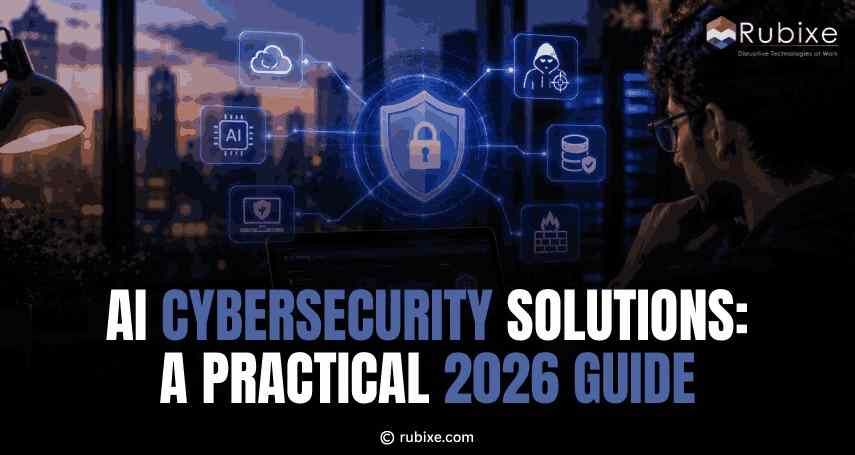
AI security analytics uses machine learning and data analysis to detect threats, reduce false positives, and support faster decision-making.
Forget complicated definitions.
AI security analytics is just this:
A smart system that understands threats faster than humans can, cuts out useless alerts, and helps the SOC team focus only on what truly matters.
Think of it like a super-fast assistant who never gets tired.
Here’s how it helps your team:
1. It reduces alert noise
Most SOC teams say over 40% of alerts turn out to be false alarms.
AI learns from past patterns and cuts out the noise.
2. It detects attacks early
Instead of waiting for something to break, AI looks for small hints of unusual behavior, strange logins, and odd network patterns.
3. It speeds up investigations
Manual investigation can take hours.
AI does it in seconds by pulling data from multiple systems and showing the important parts only.
4. It gives SOC teams more breathing room
Less chaos.
More clarity.
More focus on real threats.
And yes - this is where AI cybersecurity becomes a game changer.
How AI Security Analytics Improves SOC Team Efficiency
Let’s break it down into simple, relatable points.
1. Faster Threat Detection
SOC teams often lose time because threats hide inside massive data logs.
AI can go through millions of data points in seconds.
2. Automatic Correlation
Instead of manually checking ten systems, AI connects all the dots instantly.
3. Less Manual Work
Repetitive tasks drain energy.
AI handles those tasks so analysts can use their skills where they matter most.
4. Clearer Decision-Making
AI prioritizes high-risk alerts first and low-risk alerts later.
That alone can save hours every day.
5. Better Team Confidence
When analysts trust their tools, they perform better and feel less stressed.
This is one more reason companies are adopting AI cybersecurity to support their SOC teams.
Data That Speaks
Here are a few numbers that show the impact:
-
Up to 80% reduction in false positives with AI
-
3x faster incident response time
-
50% more visibility into unknown threats
-
60% lower burnout rate among SOC analysts when automation is adopted
These numbers are not just statistics.
They represent something hopeful:
Security teams can finally breathe.
The Future of SOC: Humans + AI Together
Many people fear that AI will replace them.
But in cybersecurity, something different is happening.
AI is not here to take jobs.
It’s here to remove the parts of the job that drain your life.
The future of SOC operations lies in a hybrid model where AI handles data-heavy tasks and human analysts focus on critical decision-making
-
Humans leading
-
AI supporting
-
Decisions happening faster
-
Workload becoming lighter
-
Threats are being stopped before they spread
This is what makes AI cybersecurity such a powerful solution.
Why Companies Must Adopt AI Security Analytics Now
There’s a hidden danger that many businesses ignore:
Attackers are already using AI.
When cybercriminals move faster, the SOC team cannot keep fighting with slow, manual processes.
Every month of delay increases the risk.
Every ignored alert increases exposure.
Every outdated tool increases the chance of a breach.
Companies that act now will move ahead.
Companies that wait will feel the pressure later.
This subtle urgency is exactly what you need to stay competitive in the new digital world.
And that’s why AI cybersecurity is not just a trend…
It’s becoming a survival skill.
How a SOC Team Can Start Using AI Security Analytics
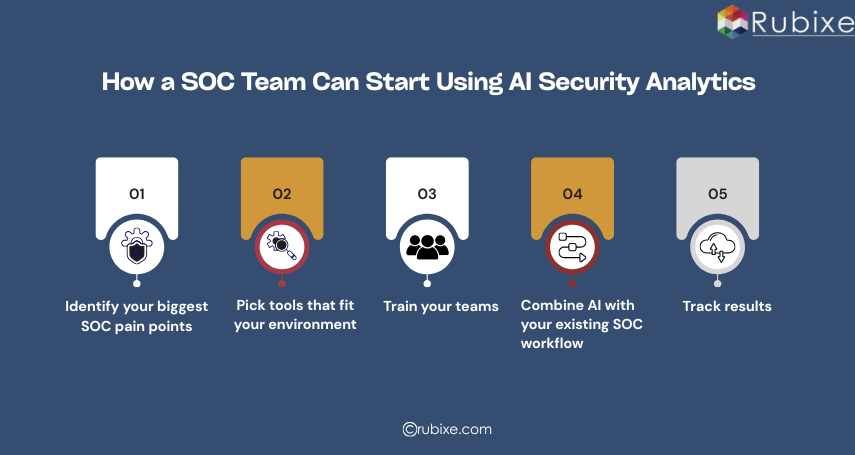 Here’s a simple path to get started:
Step 1: Identify your biggest SOC pain points
Alert fatigue?
Slow response?
Not enough staff?
Shadow IT?
Choose what hurts most.
Step 2: Pick tools that fit your environment
Look for platforms that offer:
-
Threat detection
-
Behavior analysis
-
Automated response
Step 3: Train your teams
AI works best when humans understand how to use it.
Step 4: Combine AI with your existing SOC workflow
No need to replace everything, integrate step by step.
Step 5: Track results
Measure alert reduction, response time, and team productivity.
When done right, companies see a huge improvement within weeks.
And yes, this is yet another moment where AI cybersecurity proves its value.
Your Next Step Matters
If you are a cybersecurity professional, a team leader, or someone who wants to grow in this field… here’s something important to remember:
AI won’t make you less valuable - it will make you unstoppable.
The world is moving fast, and people who understand both security and AI will lead the future.
This is your chance to be one of them.
Your skills matter.
Your career matters.
Your growth matters.
If you want to become the kind of professional who stands out in the cybersecurity world, this is the right moment to begin.
AI security analytics is becoming essential for modern SOC teams. By reducing alert fatigue, improving threat detection, and enabling faster response, it helps organizations strengthen their security posture. Companies that adopt AI-driven security strategies early will be better prepared to handle evolving cyber threats efficiently.