
















How Computer Vision is Used in Smart Agriculture
Explore how computer vision in agriculture improves crop monitoring, livestock tracking, and yield prediction through real-time insights and AI-driven decision-making.
You are investing in better inputs, advanced machinery, and data tools, but farm productivity still depends heavily on manual observation and delayed decisions.
Crop health issues are often detected too late, resource usage remains inconsistent, and scaling operations becomes difficult without real-time visibility. Computer vision in agriculture has become a critical layer in modern AI for Agriculture, enabling faster, data-driven decisions directly from field conditions.
What is Computer Vision in Agriculture
Computer vision in agriculture refers to the use of AI systems that analyze images and videos to monitor crops, livestock, soil, and farm environments.
It allows machines to “see” and interpret visual data, converting field-level observations into actionable insights for farmers and agribusinesses.
In the context of AI Agriculture, computer vision plays a key role in automating monitoring tasks, reducing manual dependency, and improving accuracy in identifying patterns such as crop stress, pest infestation, or yield variation.
How Computer Vision Works in Agriculture
Before these systems can deliver value, they depend on a structured process that converts raw visual data into meaningful insights.
At a high level, computer vision follows three core stages that enable intelligent farm monitoring and automation.
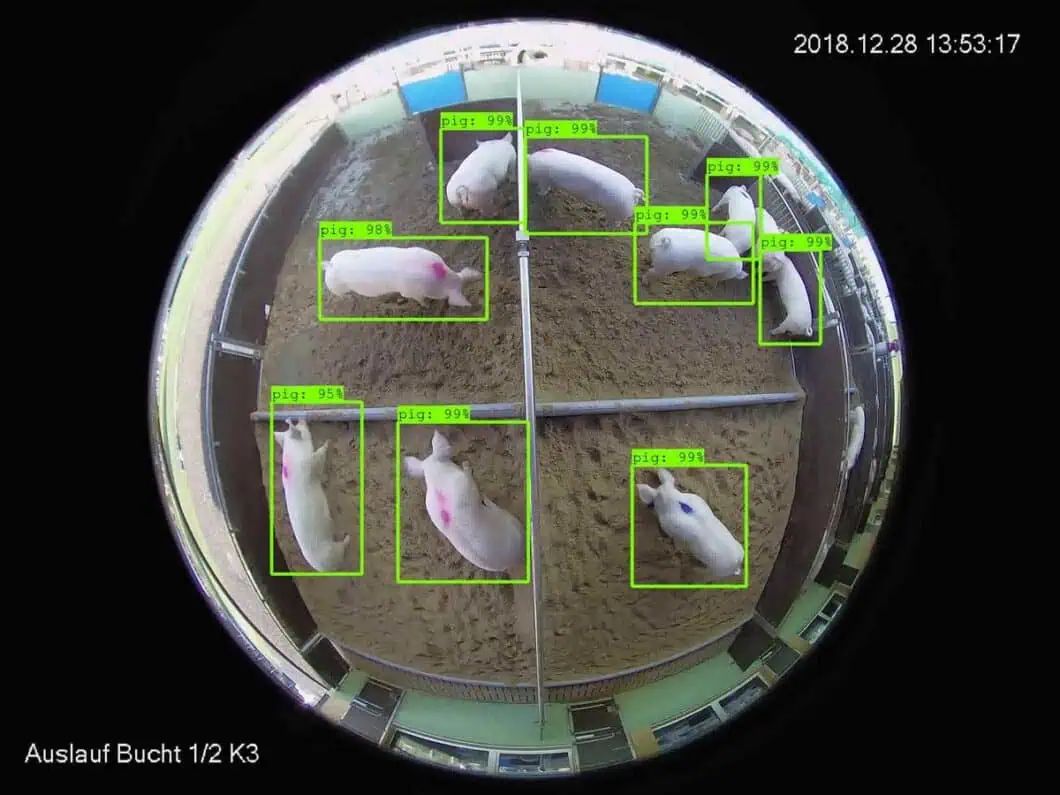
Acquiring the Image/Video from a Camera
Before any analysis begins, data must be captured from the field reliably and consistently.
-
Cameras, drones, satellites, and IoT-enabled devices collect high-resolution images and videos across farms, capturing details such as crop growth, livestock movement, and environmental conditions.
-
This continuous data collection ensures that farming decisions are based on real-time conditions rather than periodic manual inspections, forming the foundation for accurate monitoring.
Processing the Image
Once images are captured, the next step is to prepare the data for analysis.
-
Image processing techniques enhance quality, remove noise, and standardize inputs so that AI models can accurately interpret visual patterns.
-
This stage is critical because poor-quality data can lead to incorrect insights, affecting downstream AI decision-making across agricultural workflows.
Understanding the Image
After processing, AI models analyze the image to detect patterns, objects, and anomalies.
-
Machine learning algorithms identify features such as plant health, soil conditions, animal behavior, or pest presence, transforming raw images into structured insights.
-
By combining this with predictive analytics, farmers can move from reactive actions to proactive planning, improving yield and resource efficiency.
How to Implement Computer Vision in Agriculture
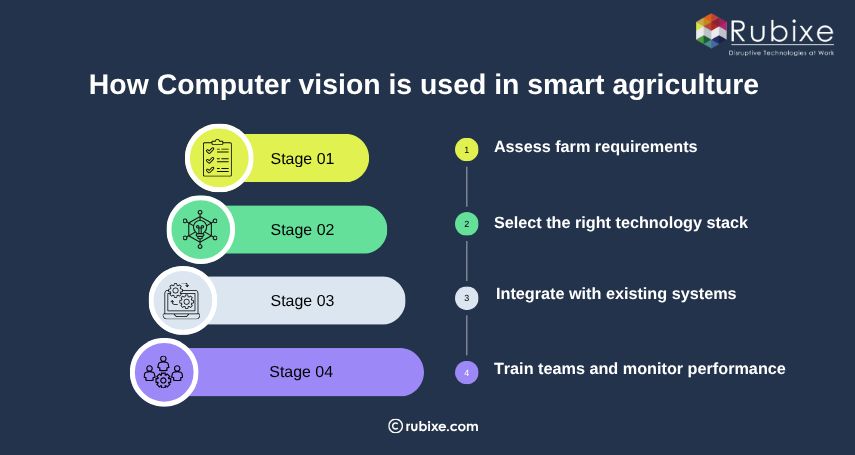
A structured approach ensures successful adoption and measurable outcomes.
-
Assess farm requirements: Identify key areas such as crop monitoring, livestock management, or soil analysis where computer vision can add value.
-
Select the right technology stack: Choose appropriate cameras, drones, and AI models based on farm size and operational needs.
-
Integrate with existing systems: Ensure computer vision solutions work seamlessly with current farm management tools.
-
Train teams and monitor performance: Equip teams with the knowledge to use AI insights effectively and continuously improve system performance.
How is Computer Vision Helpful in Agriculture?
The value of computer vision becomes clear when it directly impacts decision-making, efficiency, and sustainability across farming operations.
1. Enhanced Decision-Making
Farmers often depend on experience and periodic observations, which can delay critical decisions. Computer vision systems provide real-time insights by continuously analyzing field data, achieving up to 94.2% accuracy in crop disease classification using drone-based AI models, enabling faster and more accurate decisions.
With AI-driven insights, issues like crop stress or disease can be detected early, allowing timely interventions and reducing losses.
2. Enhanced Efficiency
Manual monitoring across large farms is time-consuming and resource-intensive. Computer vision automates these tasks, reducing labor dependency and enabling large-scale monitoring with minimal effort.
From tracking livestock to scanning crop health, automation improves operational efficiency and ensures consistency across processes.
3. Enhanced Sustainability
Sustainable farming requires precise use of resources such as water, fertilizers, and pesticides. Computer vision enables targeted interventions by identifying specific problem areas instead of applying blanket treatments.
This reduces waste, minimizes environmental impact, and supports long-term agricultural sustainability, highlighting the growing impact of AI in Agriculture.
Best Applications of Computer Vision in Agriculture
Computer vision is not limited to one area; it supports multiple agricultural operations, from livestock management to crop monitoring.
Computer Vision Systems in Livestock Farming
source:mdpi.com
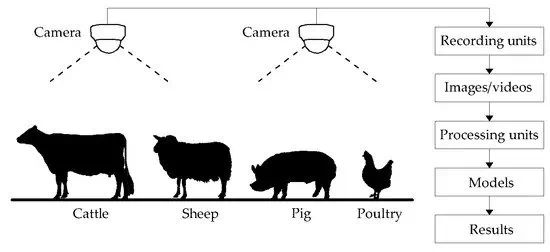
Monitoring livestock health and behavior is critical but often challenging at scale. Computer vision systems track animal movement, detect health issues, and monitor feeding patterns automatically.
This reduces manual supervision and ensures early detection of diseases, improving overall farm productivity.
Fish Farming with Computer Vision
In aquaculture, monitoring fish health and feeding efficiency is complex due to underwater conditions. Computer vision systems analyze fish movement, detect abnormalities, and optimize feeding schedules.
This improves yield while reducing feed wastage and operational costs.
Yield Estimation with Fruit or Vegetable Counting
Estimating yield manually can be inaccurate and time-consuming. Computer vision systems count fruits or vegetables directly from images, providing precise yield estimates before harvest.
This helps in planning logistics, pricing, and supply chain operations effectively.
Security Monitoring for Remote Farms
Large farms are often located in remote areas, making them vulnerable to theft or damage.
Computer vision systems enable real-time surveillance, detecting unauthorized access or unusual activity. This ensures better security without requiring constant human presence.
Achieve Compliance with Animal Welfare Law
Regulatory compliance is becoming increasingly important in agriculture. Computer vision helps monitor animal conditions, ensuring farms meet welfare standards and maintain transparency in operations.
This reduces compliance risks and builds trust with stakeholders.
Computer Vision Systems in Poultry Farming
source:mdpi.com
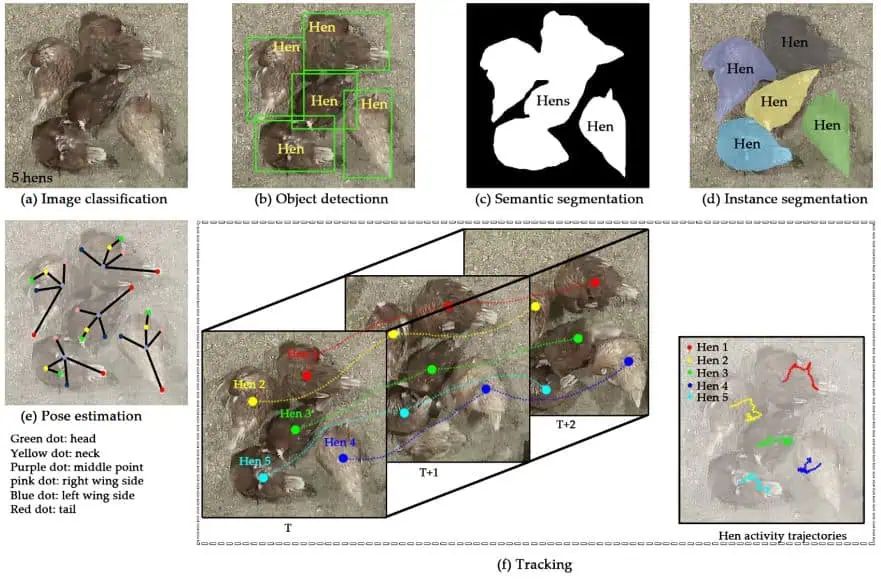
Poultry farms require close monitoring of bird health, temperature conditions, and feeding behavior. Computer vision enables automated tracking of flock activity and the identification of abnormalities, such as reduced movement or unusual behavior patterns.
This ensures faster intervention and reduces mortality rates in large-scale poultry operations.
Drone-Based Crop Monitoring with AI
Drones equipped with cameras provide aerial views of large farms, capturing data that is difficult to obtain from the ground. Computer vision analyzes this data to identify crop stress, water distribution issues, and pest infestations.
This enables large-scale monitoring and faster response to field-level challenges.
Weed Detection and Management
Weeds compete with crops for nutrients, affecting yield and quality. Computer vision systems identify weeds at early stages, enabling targeted removal or treatment.
This reduces herbicide usage and improves crop health.
Soil Health Assessment
Soil quality directly impacts crop productivity, but monitoring it manually is difficult. Computer vision analyzes soil color, texture, and moisture indicators to assess health conditions.
These insights help optimize fertilizer usage and improve long-term soil sustainability.
Key Benefits of Computer Vision in AI Agriculture
To summarize its impact, computer vision delivers measurable benefits across agricultural operations:
1. Early Pest and Disease Detection
Computer vision systems can identify early signs of pests, fungal infections, and crop diseases before they spread widely. This early detection helps farmers take preventive action instead of reactive treatment, significantly reducing crop damage.
2. Reduced Labor Dependency
By automating field monitoring and inspection tasks, computer vision reduces the need for continuous manual labor. This is especially valuable for large-scale farms where human inspection is time-consuming and inconsistent.
3. Precision Farming Enablement
Computer vision enables zone-level farming decisions by analyzing variations within the same field. Instead of treating entire fields uniformly, farmers can apply water, fertilizers, or pesticides only where needed.
4. Data-Driven Farm Records
Computer vision systems continuously generate visual data logs of farm conditions. These records help farmers and agribusinesses analyze trends over time and improve long-term farm planning.
5. Lower Input Waste
By applying resources only where required, computer vision minimizes excessive use of fertilizers, pesticides, and water. This not only reduces cost but also improves soil health over time.
Organizations working with AI Consulting services can implement these systems effectively, ensuring both operational efficiency and long-term sustainability.
Challenges in Adopting Computer Vision in Agriculture
While the benefits are significant, adoption comes with certain challenges that must be addressed.
-
Data quality issues: Poor image quality or inconsistent data collection can affect accuracy and insights.
-
High initial investment: Cameras, drones, and AI systems require upfront investment, especially for small farms.
-
Technical complexity: Farmers may need training to understand and use AI-driven systems effectively.
-
Integration challenges: Combining computer vision with existing farm management systems can be complex.
Addressing these challenges is essential for maximizing the value of computer vision in agriculture.
What is the Future of Smart Farming?
As AI technologies evolve, computer vision will become a core component of intelligent farming systems.
Enhanced Recommendation Systems: Future systems will combine visual data with advanced analytics to provide precise recommendations for irrigation, fertilization, and harvesting. This will further strengthen AI decision-making, enabling farms to operate with higher accuracy and efficiency.
Spatial Intelligence: AI systems will understand not just images but spatial relationships across fields. This will allow micro-level insights for different zones, improving resource allocation and crop management strategies.
IoT and Connectivity: Integration with IoT devices will enable continuous data flow across farms. Sensors, cameras, and AI systems will work together to create a connected ecosystem, improving visibility and control over operations.
Genetic Engineering Integration: Future farming will combine computer vision insights with genetic data to optimize crop selection and growth strategies.
This will redefine the future of farming, enabling higher yields with minimal environmental impact.
Evaluate how computer vision can fit into your farming operations, from crop monitoring to livestock and yield optimization.
Partner with experts in AI agriculture services to design and implement solutions tailored to your specific use cases and scale with confidence.