











How AI Facial Recognition Improves Customer Experience
Facial recognition AI software improves customer experience with faster check-ins, secure login, contactless service, and personalized interactions.
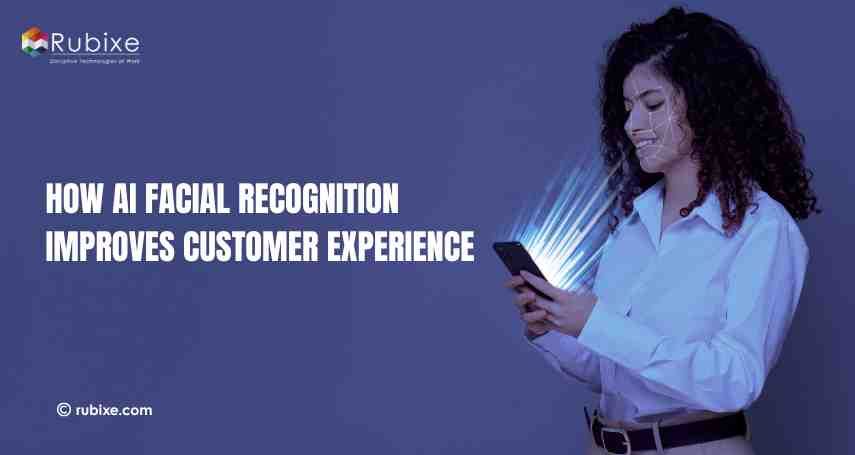
Are Your Customers Tired of Waiting, Repeating, and Verifying?
How many times have customers stood in line just to prove who they are?
How often do they reset passwords or repeat their details to support teams?
Long queues, slow check-ins, repeated identity checks, these small frustrations damage customer experience. Businesses lose trust and sometimes lose customers. This is where the experience becomes easier and faster for customers.
It removes friction. It saves time. It makes interactions simple and personal.
What Is Facial Recognition AI Software?
Facial recognition AI software uses artificial intelligence to identify or verify a person using their face.
It works in three simple steps:
-
Capture a face using a camera.
-
Convert the face into digital data.
-
Match it with stored data in seconds.
Modern systems use real-time face detection, which means identification happens instantly.
It is part of biometric authentication systems, just like fingerprint scans. But facial recognition is faster and does not require physical contact.
Why Customer Experience Needs Improvement
Before we look at the benefits, let’s understand the real problem.
Customers today expect:
-
Fast service
-
Zero paperwork
-
Personalized support
-
Strong security
If a business cannot provide this, customers move to competitors.
For example:
-
In retail, long billing queues reduce repeat visits.
-
In banking, slow KYC verification frustrates users.
-
In hotels, manual check-ins waste time.
Small delays create negative impressions.
How Facial Recognition AI Software Removes Delays
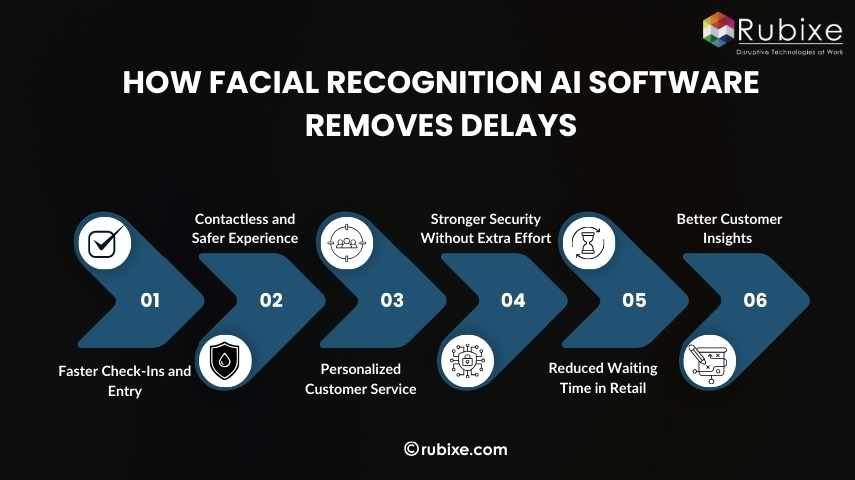
1. Faster Check-Ins and Entry
One of the biggest improvements is speed.
Airports, hotels, and office buildings now use AI-based systems to verify identity in seconds.
For example, Delta Air Lines introduced facial recognition boarding. Passengers no longer need to show boarding passes repeatedly. A quick face scan completes the process.
Result:
-
Reduced waiting time
-
Faster boarding
-
Less staff workload
Customers feel the service is modern and smooth. Speed directly improves satisfaction.
2. Contactless and Safer Experience
After global health concerns like COVID-19, customers prefer contactless services.
Facial recognition AI software supports this need:
-
No physical ID cards
-
No fingerprint scanners
-
No touching devices
This makes environments cleaner and safer.
Banks and fintech apps now use AI-powered identity verification for remote onboarding. Users just take a selfie to verify identity.
This reduces fraud while keeping the process simple.
Customers feel safe and secure at the same time.
3. Personalized Customer Service
Customers like it when brands remember them.
Facial recognition helps businesses identify returning customers and personalize service instantly.
For example:
-
A retail store can recognize VIP customers and notify staff.
-
A hotel can auto-load guest preferences during check-in.
-
A mall can send targeted offers (with consent).
Alibaba Group introduced “Smile to Pay” in its stores. Customers complete payment using face recognition. The system links directly to their account.
This reduces checkout time and improves convenience.
When customers feel recognized, they feel valued.
4. Stronger Security Without Extra Effort
Many customers worry about fraud and identity theft.
Traditional password systems are weak:
-
Passwords are forgotten.
-
OTPs can be intercepted.
-
ID cards can be stolen.
Facial recognition works as a secure layer in AI security solutions.
Because every face is unique, copying it is extremely difficult. Advanced systems even detect fake images or videos using liveness detection.
This improves trust.
For example, Apple uses Face ID in its devices. Users unlock phones, approve payments, and log into apps just by looking at the screen.
No typing. No remembering passwords.
Security becomes invisible, but stronger.
5. Reduced Waiting Time in Retail
Long billing lines are a common problem in retail stores.
Facial recognition can:
-
Identify customers quickly
-
Enable automated billing
-
Support cashier-less stores
Stores using AI systems report shorter queues and smoother checkout.
Customers value time more than discounts.
Saving 5 -10 minutes per visit can increase repeat business significantly.
6. Better Customer Insights
Facial recognition AI software can also provide useful data (while respecting privacy laws).
Businesses can understand:
-
Customer visit frequency
-
Peak hours
-
Demographics (age range, gender patterns)
This helps improve service planning.
For example:
-
Add more staff during busy hours
-
Customize promotions for specific groups
-
Improve store layout
Better insights lead to better service decisions.
Important Questions About Facial Recognition
“Is facial recognition safe?”
Modern systems use encrypted storage and follow strict compliance standards. Data is not stored as normal images but as encrypted patterns.
“What about privacy?”
Good businesses ask for user consent. Transparency builds trust. Customers are more comfortable when they understand how data is used.
“Is it expensive?”
Earlier, yes. Today, cloud based AI systems have reduced costs. Many solutions are scalable and affordable even for mid-sized businesses.
The long-term savings in staff time, fraud reduction, and improved retention often justify the investment.
Industries Already Using Facial Recognition
-
Banking and fintech
-
Airports and airlines
-
Retail chains
-
Healthcare facilities
-
Corporate offices
-
Smart cities
Adoption is growing because customer expectations are rising.
The Real Impact on Customer Experience
Let’s summarize the improvement:
|
Traditional Process |
With Facial Recognition AI Software |
|
Manual ID checks |
Instant face verification |
|
Long queues |
Faster service |
|
Password login |
Biometric authentication |
|
Repeated data entry |
Automatic recognition |
|
Basic security |
Advanced AI security |
The difference is clear.
Less friction. More convenience. Higher trust.
What Businesses Should Do Next
If you are planning to improve customer experience, start by asking:
-
Where do customers face delays?
-
Where is identity verification required?
-
Where does security slow down service?
These are the best points to introduce facial recognition.
Start small:
-
Pilot in one location
-
Test performance
-
Measure customer feedback
Then expand based on results.
Customer experience is no longer about smiling staff or attractive interiors. It is about speed, convenience, and security.
Facial recognition AI software removes common pain points like waiting, repeated verification, and password problems. It makes services faster, safer, and more personal.
Businesses that adopt this technology early create smoother journeys for customers. Those who delay may struggle to match expectations.
The next step is simple:
Identify one process in your customer journey that feels slow or outdated, and explore how facial recognition can transform it.
A better experience is not about doing more.
It is about removing friction.