














AI Workflow Automation to Improve Daily Team Productivity
AI workflow automation simplifies daily operations, reduces errors, and helps teams achieve higher productivity with less manual effort.
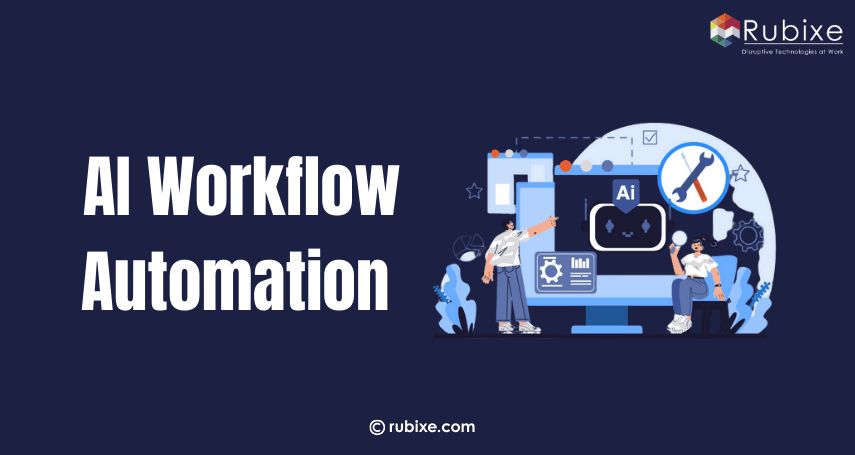
Today’s teams are expected to do more work in less time, with better accuracy and faster results. Emails, meetings, follow-ups, data updates, and reporting take up a large part of the day. When most of this work is done manually, productivity drops and stress increases. This is where AI Workflow Automation plays a major role in transforming the way teams work.
By using intelligent systems to manage routine tasks, businesses can improve speed, accuracy, and overall team performance. This article explains how AI workflow automation improves daily productivity, how it works, where it is used, and why it is becoming essential for modern teams.
Understanding AI Workflow Automation
AI Automation is the use of artificial intelligence to automatically run, manage, and improve everyday business processes. It allows systems to handle tasks that normally need human effort, such as sorting data, sending emails, approving requests, and updating records. This helps businesses work faster, reduce errors, and improve overall efficiency.
Unlike basic automation that only follows fixed rules, an AI-powered workflow can:
-
Learn from data: AI studies past actions and outcomes to improve how tasks are handled over time.
-
Recognize patterns: It identifies trends and repeated behaviors in data to make workflows smarter and more accurate.
-
Make simple decisions: AI can decide what action to take based on conditions, priority, or past results.
-
Improve with time: The system becomes more effective as it processes more data and receives feedback.
Why Productivity Matters More Than Ever
Team productivity is directly linked to business success. When teams work efficiently:
-
Projects finish on time
-
Customers receive faster service
-
Costs are controlled
-
Employees feel more satisfied
However, many teams lose valuable time every day due to repeated tasks, unclear processes, and slow communication. AI workflow automation helps remove these barriers and builds a smoother working system.
How AI Workflow Automation Improves Daily Work
1. Saves Time on Repetitive Tasks
Many daily tasks follow the same steps repeatedly. AI can handle these tasks automatically, such as:
-
Entering and updating data
-
Generating reports
-
Sending reminders and notifications
-
Processing documents
This saves several hours each week for every employee, allowing them to focus on more meaningful work.
2. Improves Accuracy and Reduces Mistakes
Manual work often leads to errors due to fatigue or oversight. When processes are automated with AI:
-
Data is checked automatically
-
Steps are followed correctly
-
Mistakes are detected early
This improves the overall quality of work and reduces the need for corrections.
3. Speeds Up Decision-Making
AI systems analyze large volumes of data in real time. Managers receive:
-
Instant performance reports
-
Alerts for delays or risks
-
Predictions based on past trends
This enables faster and more informed decisions without waiting for manual updates.
4. Improves Task Coordination
With AI Workflow Automation, tasks are automatically:
-
Assigned to the right person
-
Prioritized based on urgency
-
Tracked until completion
Everyone knows what needs to be done and by when, improving teamwork and accountability.
5. Supports a Better Work Environment
When employees are freed from repetitive work, they feel:
-
Less stressed
-
More motivated
-
More involved in creative and strategic tasks
This leads to better job satisfaction and improved team morale.
Practical Applications Across Different Teams
Human Resources
In HR departments, AI workflow automation helps with:
-
Screening resumes
-
Scheduling interviews
-
Onboarding new employees
-
Managing employee records
-
Tracking attendance and leaves
This reduces paperwork and speeds up hiring and employee management.
Finance and Accounting
Finance teams use automation for:
-
Invoice processing
-
Expense approvals
-
Compliance checks
-
Financial reporting
-
Fraud detection
Accuracy increases while processing time decreases.
Sales and Marketing
Sales and marketing teams benefit through:
-
Automatic lead assignment
-
Follow-up email automation
-
Customer data updates
-
Campaign performance tracking
-
Personalized customer communication
Customer Support
In customer service, AI workflow automation enables:
-
Instant replies through chatbots
-
Automatic ticket sorting
-
Priority-based ticket assignment
-
Feedback collection and analysis
Customers receive faster responses, improving satisfaction and loyalty.
Operations and Project Management
Project teams use AI for:
-
Task scheduling
-
Progress tracking
-
Resource planning
-
Risk forecasting
-
Timeline management
This keeps projects on track and reduces unexpected delays.
Daily Productivity Gains You Can Expect
Teams that adopt AI workflow automation see noticeable improvements in how work gets done every day. By reducing manual effort and streamlining tasks, employees can focus more on meaningful and high-impact work.
Here are the key daily productivity gains you can expect:
-
Faster task completion: Automated workflows handle routine steps instantly, reducing delays and speeding up overall turnaround time.
-
Clear work visibility: Real-time dashboards and process tracking give teams a clear view of task status and bottlenecks.
-
Fewer errors and rework: Automation reduces human mistakes in data entry, approvals, and reporting.
-
Better time management: Employees spend less time on repetitive tasks and more time on planning, problem-solving, and strategy.
-
Stronger collaboration: Automated task routing and notifications keep teams aligned and improve cross-team coordination.
-
More consistent output: Standardized workflows ensure the same level of quality and performance every time.
A Simple Example of AI Workflow Automation in Daily Work
Imagine a simple customer inquiry process:
-
A customer submits a query on the website
-
AI automatically understands the query type
-
The ticket is assigned to the right team
-
A response is sent instantly
-
The case is tracked until closure
-
Feedback is recorded for analysis
All this happens with minimal human involvement. The team only focuses on solving the issue, not managing the process. This is the real power of AI workflow automation in everyday productivity.
How Small and Mid-Sized Teams Can Benefit
Automation is no longer just for large enterprises. Today, Robotic Process Automation (RPA) and Business Process Automation (BPA) are easily accessible for small and mid-sized businesses, too. These technologies help smaller teams work smarter, reduce manual effort, save valuable time, and scale operations without constantly increasing headcount.
Here are the key areas smaller teams can automate:
-
Email scheduling: Automates follow-ups, newsletters, and routine communication without manual effort.
-
Social media posting: Schedules and publishes content across platforms to maintain a consistent online presence.
-
Lead management: Captures, assigns, and tracks leads automatically to avoid delays and missed opportunities.
-
Task reminders: Send automatic notifications for deadlines, meetings, and follow-ups to keep teams on track.
-
Daily report generation: Creates and shares performance reports without manual data compilation.
By automating these everyday tasks, small and mid-sized teams can compete with larger organizations, improve efficiency, and grow without increasing manpower.
Steps to Start with AI Workflow Automation
Step 1: Observe Daily Workflows
List tasks that are:
-
Repetitive
-
Time-consuming
-
Rule-based
These are the best starting points.
Step 2: Define Clear Objectives
Decide what you want to improve:
-
Speed
-
Accuracy
-
Cost
-
Customer experience
-
Team efficiency
Clear goals make implementation easier.
Step 3: Select Suitable Tools
Choose tools that:
-
They are easy to use
-
Fit your business needs
-
Integrate with your current systems
-
Provide good security
Step 4: Begin with One Process
Do not automate everything at once. Start with one workflow, measure success, and then expand gradually.
Step 5: Train Your Team
Employees should understand:
-
How automation supports their work
-
How to monitor processes
-
How to handle exceptions when needed
With the support of Agentic AI workflows, teams can move beyond basic automation and enable systems that think, decide, and act with minimal supervision. This approach helps businesses scale smarter while allowing employees to focus on higher-value work instead of manual tasks.
Common Challenges and How to Handle Them
Even with the right automation tools, some challenges can arise during implementation. The good news is that most of these issues can be managed smoothly with the right approach and planning.
Here are the most common challenges and how to handle them:
-
Change resistance: Clear communication, team involvement, and proper training help employees adapt to new automated workflows with confidence.
-
Skill gaps: User-friendly platforms, guided learning, and step-by-step onboarding make it easier for teams to adopt AI tools.
-
Data security concerns: Using trusted platforms with strong encryption, access controls, and compliance standards ensures data protection.
-
Process redesign needs: Some existing workflows may require small adjustments to work better with automation and improve overall efficiency.
With proper planning, training, and technology selection, these challenges can be handled effectively and without major disruption.
AI workflow automation is transforming how teams operate by increasing speed, accuracy, and intelligence in everyday processes. It reduces repetitive work, improves quality, and frees employees to focus on innovation and business growth. From small teams to global enterprises, organizations are adopting this technology to stay efficient and competitive. With our expertise in AI automation services, we help businesses streamline operations and unlock new levels of performance.