





How AI-Powered Retail Systems Solve Demand Forecasting Issues
AI services for retail help improve demand forecasting, manage inventory, analyze data, and enable smarter planning to optimize operations and boost efficiency.
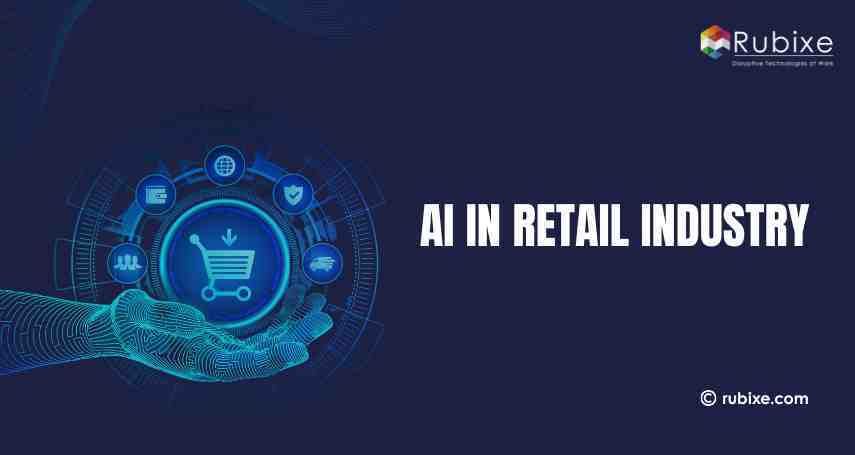
Retailers often struggle to predict what customers will buy.
Running out of stock or holding too much inventory can cost money and harm customer trust.
With AI in retail industry, businesses can use predictive analytics for retail to forecast demand accurately, reduce losses, and improve customer satisfaction.
Why Businesses Struggle with Demand Forecasting
Understanding customer demand is challenging. Traditional approaches, such as using past sales or guesses, often lead to mistakes and missed opportunities
Key Reasons Businesses Struggle with Demand Forecasting
-
Relying on old data: Many businesses use last year’s sales numbers to decide what to stock. But customer preferences change, and old data cannot show new trends. This can lead to ordering too many items that are no longer popular or too few items in high demand.
-
Sudden market changes: Sometimes a product suddenly becomes popular, or a new competitor enters the market. Traditional methods cannot react quickly to these changes, causing either missed sales or wasted inventory.
-
Seasonal fluctuations: Demand is not the same all year. Holidays, festivals, and special events can cause sudden spikes or drops in sales. Businesses that do not account for these changes often run out of stock or overstock products.
-
Limited data sources: Relying only on store sales misses important information. Online trends, social media discussions, and local events also affect what customers buy. Without considering these sources, forecasts are often incomplete.
-
Manual forecasting: Many stores still make guesses based on experience. Human guesses can be slow and may not consider all factors, which leads to mistakes in predicting demand.
How AI Solves Demand Forecasting Problems
AI-powered retail systems use advanced technologies like machine learning, predictive analytics, and natural language processing to forecast demand. Here’s how it works:
-
Data Collection: AI in retail industry collects data from multiple sources, including sales history, market trends, customer behavior, weather patterns, social media trends, and more.
-
Pattern Recognition: Using machine learning algorithms, AI in retail industry identifies patterns in historical and real-time data. For instance, it can detect seasonal demand spikes, popular products, and slow-moving items.
-
Predictive Analytics: AI in retail industry uses the patterns it finds to predict future demand. This helps retailers know how much stock to order, which products to promote, and when to prepare for peak seasons.
-
Real-Time Adjustments: Unlike traditional methods, AI systems continuously update predictions based on new data. If a sudden trend appears or a supplier delays shipments, AI adjusts forecasts automatically.
By implementing these systems, businesses can significantly reduce stockouts, minimize overstock, and improve customer satisfaction.
Walmart’s AI Approach for Better Retail Demand Forecasting
Walmart, one of the largest retailers globally. Walmart uses AI to analyze sales data, local events, and weather patterns to forecast demand for thousands of products.
-
During the holiday season, Walmart’s AI system predicts which products will be in high demand and adjusts inventory accordingly.
-
This has helped the company reduce stockouts by 15% and improve sales by millions of dollars.
This shows that AI is not just for the future, it is already helping retailers get real results today.
Benefits of AI in Retail Demand Forecasting
Implementing AI in retail industry demand forecasting offers many advantages. By using AI-powered systems, businesses can make smarter decisions, reduce costs, and improve customer satisfaction.
Here’s a closer look at the key benefits:
1. Accuracy
AI can analyze many different types of data at the same time, such as past sales, market trends, customer behavior, and even weather patterns. This allows retailers to predict demand much more accurately than traditional methods.
2. Cost Savings
When forecasts are more accurate, businesses can avoid overstocking or understocking products. Overstock leads to extra storage costs and unsold items, while understock leads to lost sales. AI in retail industry balances supply with demand, saving money on storage, reducing waste, and increasing overall profit.
3. Better Customer Experience
Customers are more satisfied when they find the products they want in stock. AI helps ensure that popular products are available when customers need them. This leads to happier customers, higher loyalty, and more repeat business. Retailers can also use AI to predict which items are likely to be in demand for special events or holidays, ensuring customers get what they want without delay.
4. Faster Decision Making
AI systems can process data in real-time, allowing retailers to respond quickly to changes in demand. If a product suddenly becomes popular, AI can alert the store to increase stock or adjust pricing.
5. Scalability
AI can handle data from multiple stores, regions, or even countries at the same time. This makes it suitable for small shops as well as large retail chains. Businesses can scale their operations without worrying about manually analyzing huge amounts of data.
How Businesses Can Implement AI in Retail
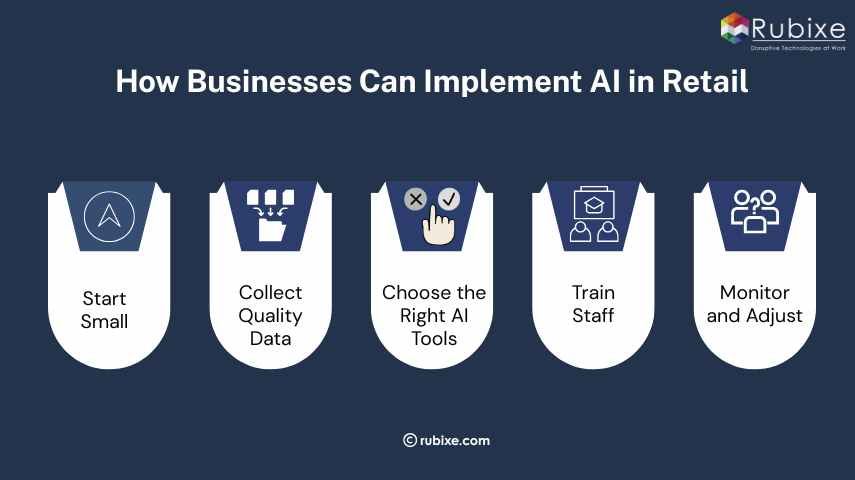 AI in retail industry can greatly improve demand forecasting, but implementing it correctly is important. Businesses need a clear plan to make the most of AI tools. Here’s how companies can successfully adopt AI in the retail industry:
-
Start Small: It is best to begin with a small, manageable project. For example, a business can choose one product line, a single store, or a particular region to test the AI system. Starting small helps the team understand how AI works and see early results without taking big risks.
-
Collect Quality Data: AI systems work best with accurate and complete data. Businesses should gather historical sales data, customer purchase information, and real-time data from multiple sources, such as online sales, social media, and market trends.
-
Choose the Right AI Tools: Selecting the right AI solution is critical. Businesses should choose tools that are easy to integrate with their existing systems and can handle future growth.
-
Train Staff: Employees need to understand how to use AI systems effectively. Training is important so that staff can interpret AI predictions correctly and make informed decisions.
-
Monitor and Adjust: AI predictions are not static. Businesses should continuously monitor the AI system’s outputs and compare them with actual sales results. If the predictions are off, strategies and forecasts should be adjusted. Regular monitoring ensures the system learns from new data and adapts to changing customer behavior, market trends, or unexpected events.
Key Challenges for Retailers Using AI
While AI brings many benefits to retail demand forecasting, businesses should also be aware of some challenges. Understanding these challenges helps companies plan better and avoid common mistakes.
-
Data Quality: AI systems rely on accurate and complete data. If the data is poor, outdated, or incomplete, predictions can be wrong. For example, missing sales information or incorrect stock data can lead the AI to forecast demand inaccurately.
-
High Initial Costs: Implementing AI systems can require a significant investment. This includes purchasing software, upgrading hardware, and possibly hiring experts to manage the system. Small businesses may find the initial costs challenging.
-
Skill Gap: AI systems need staff who understand how to use them effectively. Employees may require training to interpret AI insights, make informed decisions, and maintain the system.
-
Integration with Existing Systems: Many businesses have legacy systems for inventory, sales, and supply chain management. Integrating AI with these systems can sometimes be complex.
The Future of AI in Retail Forecasting
The use of predictive analytics for retail will continue to grow. Future AI systems will:
-
Predict trends faster and more accurately.
-
Personalize stock and promotions for local stores.
-
Integrate with automated warehouses and delivery systems.
-
Use real-time customer behavior from online and offline channels to improve forecasts.
Retailers who adopt AI early will gain a long-term advantage, improving efficiency, reducing waste, and providing better customer experiences.
FAQs
Q1: What is AI in retail?
A: AI in retail uses advanced technologies like machine learning, predictive analytics, and data analysis to help businesses understand customer behavior, forecast demand, and improve sales and inventory management.
Q2: How does AI improve retail demand forecasting?
A: AI collects and analyzes data from multiple sources, identifies patterns, and predicts future demand. This helps retailers order the right stock, reduce waste, and avoid running out of popular products.
Q3: Which retailers use AI for demand forecasting?
A: Large retailers like Walmart use AI to predict high-demand products, manage inventory, and adjust stock based on local trends, holidays, and customer behavior.
Q4: What are the benefits of AI in retail?
A: Businesses can enjoy accurate forecasts, cost savings, better customer satisfaction, faster decision-making, and scalability across multiple stores.
Using AI in retail industry helps businesses forecast demand more accurately, plan stock, and reduce costs.
Start using AI in retail today to improve your demand forecasts and stay ahead of the competition.