







How AI Helps in Cyber Security Protection for Companies
AI in cyber security helps protect company data, detect threats, monitor networks, and reduce risks using reliable, automated security solutions for businesses.
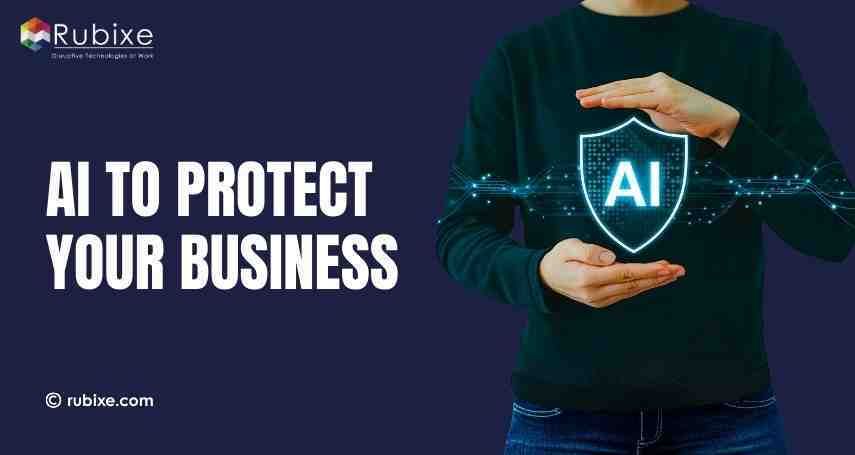
How can companies stay ahead of hackers? Can traditional security tools protect important data effectively? And how does AI in cyber security detect threats faster and more accurately than humans?
Cyber security is not just an IT issue , it affects the entire business. Companies store sensitive information such as customer data, financial records, employee details, and business plans.
AI systems can prevent or reduce up to 90–92% of cyber attacks, showing their effectiveness compared with traditional tools.
AI analyzes large amounts of data, detects unusual patterns, and responds to threats quickly, helping companies protect their networks, devices, and cloud systems more efficiently.
What Is AI in Cyber Security
AI in cyber security refers to the use of artificial intelligence to protect computer systems, networks, and data from cyber threats. Instead of depending only on fixed rules or manual monitoring, AI systems analyze data and identify risks automatically.
AI reviews large volumes of security data such as login activity, network traffic, and system behavior. It detects unusual patterns that may signal a cyber attack. When a threat is identified, AI can alert security teams or respond immediately to reduce risk.
Why Cyber Security Is a Major Concern for Companies
Cyber security is a major concern because companies store large amounts of sensitive and valuable data every day. This includes customer information, financial records, business plans, and employee details. If this data is stolen or exposed, it can cause serious damage to the business.
Cyber attacks can lead to system downtime, financial losses, legal issues, and loss of customer trust. Even a small security breach can interrupt daily operations and affect long-term growth. Many companies also face strict data protection rules, and failing to protect data can result in heavy penalties.
This is why many businesses are turning to AI in cyber security. AI helps detect threats early, monitor systems in real time, and reduce risks before they turn into serious attacks.
How AI in Cyber Security Works
AI works by collecting and analyzing large amounts of data. It looks for patterns that humans may miss. By studying these patterns, AI can identify potential threats much faster and more accurately than traditional security systems.
Here is how it works step by step:
1. Data Collection
AI collects data from emails, servers, firewalls, endpoints, and cloud systems.It gathers information from every part of a company’s digital ecosystem to create a complete picture of system activity. This includes monitoring user behavior, network traffic, file transfers, and application usage.
2. Pattern Learning
It learns what “normal” behavior looks like for users and systems. AI studies daily routines and system operations to understand typical activity patterns. For example, it observes normal login times, frequently accessed files, and common network activity.
3. Threat Detection
If AI finds unusual behavior, it marks it as suspicious.It can detect anomalies like unexpected logins, unusual data transfers, or unknown software behavior. AI compares current activity to its learned patterns and flags anything that doesn’t match. This early detection helps companies respond quickly before the issue escalates into a serious security breach.
4. Instant Response
AI can block access, isolate systems, or alert security teams. Once a threat is identified, AI reacts immediately to reduce potential damage. It can prevent compromised accounts from being used, disconnect infected devices, or send real-time alerts to security teams.This instant action helps prevent hackers from spreading malware or stealing sensitive information.
5. Continuous Learning
AI improves with every attack it sees. Every new threat or suspicious activity helps AI become smarter. It continuously updates its knowledge of normal behavior, learns to recognize new attack methods, and reduces false alarms.This ongoing learning makes AI a stronger and more reliable security solution over time.
Key Benefits of AI in Cyber Security for Companies
|
Benefit |
How AI Helps |
Example |
|
Faster Threat Detection |
Detects unusual activity in real time |
Finds a login from a new location instantly |
|
Better Protection Against Phishing |
Blocks fake emails automatically |
Stops a phishing email before an employee clicks it |
|
Reduced Human Error |
Monitors risky user actions |
Warns an employee about a weak password |
|
Advanced Malware Detection |
Detects unknown or new malware |
Stops a fileless attack or new virus |
|
Continuous Monitoring 24/7 |
Works all day and night |
Protects cloud systems and remote devices continuously |
How AI Helps Different Areas of Cyber Security
1. AI in Network Security
AI monitors network traffic and detects unusual data flow. It helps stop:
-
DDoS attacks
-
Data exfiltration
-
Unauthorized access
AI understands normal network behavior and quickly finds threats.
2. AI in Endpoint Security
Endpoints include laptops, desktops, and mobile devices.
AI in cyber security protects endpoints by:
-
Detecting suspicious apps
-
Blocking unsafe downloads
-
Isolating infected devices
This is important for companies with remote workers.
3. AI in Cloud Security
Many companies use cloud platforms today.
AI helps by:
-
Monitoring cloud activity
-
Detecting misconfigurations
-
Preventing unauthorized access
Cloud security becomes more reliable with AI.
4. AI in Identity and Access Management
AI tracks how users log in and use systems.
It helps companies by:
-
Detecting unusual login behavior
-
Preventing account takeovers
-
Supporting multi-factor authentication
This keeps company systems safe from stolen credentials.
Challenges of Using AI in Cyber Security
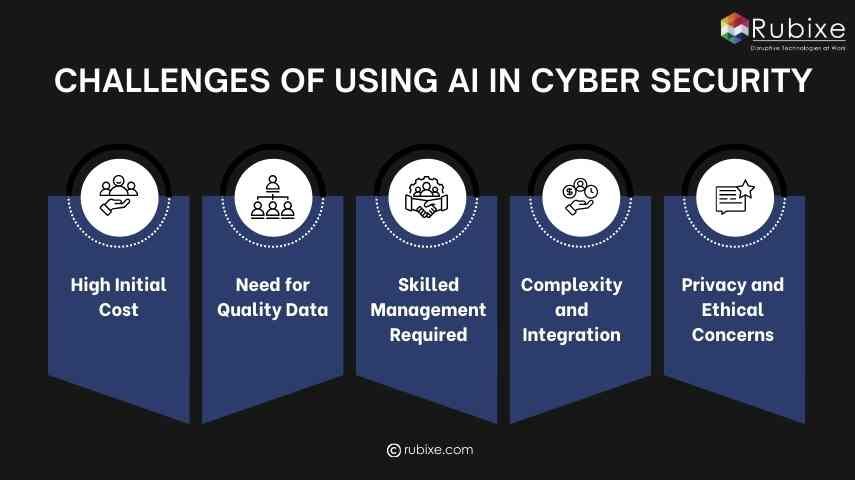
While AI is powerful for protecting companies, it has some challenges. Businesses need to understand them to use AI effectively.
1. High Initial Cost
AI security tools can be expensive at first. They require software, hardware, and cloud systems. Small and medium companies may find this costly. However, the long-term savings from preventing attacks often outweigh the initial cost.
2. Need for Quality Data
AI works best with good, clean data. Poor or incomplete data can make AI less accurate and miss threats. Companies must ensure all systems provide complete and reliable information for AI to learn effectively.
3. Skilled Management Required
AI is not fully automatic. Skilled security teams are needed to set up, monitor, and update the system. Without proper management, AI may generate false alerts or miss real threats.
4. Complexity and Integration
AI must work with firewalls, endpoints, cloud services, and networks. Poor integration can leave gaps in security. Careful planning is needed for smooth operation across all systems.
5. Privacy and Ethical Concerns
AI monitors a lot of data, including user behavior. Companies must handle this responsibly and follow data protection laws to avoid privacy issues.
Despite these challenges, AI in cyber security is highly effective when used correctly, helping companies detect and respond to threats faster and more reliably.
Why Companies Trust AI in Cyber Security
Hackers are becoming more sophisticated, and traditional security tools alone are often not enough. This is why many businesses are turning to AI in cyber security and trusting it to protect their digital assets.
Here’s why companies rely on AI:
1. Faster Threat Detection
AI can analyze massive amounts of data in real time and spot threats that humans might miss.
-
It detects unusual behavior, malware, or suspicious network activity instantly.
-
Faster detection reduces the risk of data breaches and financial losses.
Companies trust AI because it responds faster than any human team could, minimizing the impact of attacks.
2. Continuous Learning and Adaptability
AI systems learn continuously from every threat they encounter.
-
They adapt to new attack techniques, zero-day malware, and evolving phishing methods.
-
Over time, AI becomes smarter, more precise, and more reliable.
This adaptability gives companies confidence that their security is always improving and staying ahead of cybercriminals.
3. Reduced Human Error
Many cyber attacks succeed because of human mistakes, such as weak passwords or clicking unsafe links.
-
AI monitors user behavior and flags risky actions in real time.
-
It helps enforce security rules automatically, reducing reliance on human judgment alone.
By minimizing errors, AI ensures companies maintain stronger, more consistent protection.
4. 24/7 Protection
Cyber attacks don’t follow business hours they can happen at any time.
-
AI works around the clock, monitoring systems continuously.
-
It provides protection even when human security teams are unavailable.
Companies trust AI because it acts as a constant security guard, never taking breaks.
5. Proactive Threat Prevention
Advanced AI systems can predict potential attacks based on patterns and historical data.
-
They identify vulnerabilities before hackers exploit them.
-
Companies can strengthen their defenses proactively rather than only reacting to attacks.
This proactive capability builds trust, as businesses know AI helps prevent problems before they happen.
Future of AI in Cyber Security
The future of cyber security lies in AI-powered systems, which are becoming smarter, faster, and more proactive. Companies are increasingly depending on AI to stay ahead of hackers, protect data, and ensure business continuity.
Here’s what the future of AI in cyber security looks like:
1. Predictive Threat Detection
AI will not only detect threats as they happen but also predict potential attacks before they occur.
-
By analyzing patterns and historical data, AI can identify vulnerabilities in networks, applications, or systems.
-
Companies will be able to proactively strengthen defenses, preventing breaches rather than just responding to them.
Predictive AI will turn cyber security from reactive to proactive, giving businesses a major advantage over attackers.
2. Automated Incident Response
Future AI systems will handle more automated responses to security incidents.
-
AI will isolate infected devices, block malicious traffic, and fix vulnerabilities without waiting for human intervention.
-
This will significantly reduce response time and minimize the impact of attacks.
Automation will allow security teams to focus on strategy and complex threats rather than repetitive monitoring tasks.
3. Integration with Zero Trust Security Models
Zero Trust security assumes no user or device is automatically trusted. AI will play a key role in enforcing this model.
-
AI will continuously monitor user behavior, device activity, and network traffic.
-
It will grant access dynamically based on risk levels, reducing the chances of insider threats or compromised accounts.
This integration will make security systems smarter, adaptive, and more resilient.
4. Enhanced Threat Intelligence
AI will increasingly use global threat intelligence to understand hacker behavior and attack patterns.
-
By sharing insights across industries, AI can detect new types of malware and phishing techniques faster.
-
This collective intelligence will make AI systems more effective in preventing emerging threats.
Companies will benefit from AI that not only protects them but learns from attacks worldwide.
5. Self-Healing Security Systems
In the future, AI-driven security systems will become self-healing.
-
They will detect vulnerabilities, apply patches, and restore systems automatically.
-
This reduces downtime and ensures that businesses remain operational even during cyber attacks.
Self-healing AI will make cyber security faster, more reliable, and less dependent on human intervention.
AI in cyber security helps companies detect threats quickly, prevent attacks, and protect important data. While challenges like cost and data quality exist, the benefits are much greater.
To get the most from AI, companies should invest in suitable AI tools, train their teams to work with AI, and regularly check data and system performance. Combining AI with human oversight ensures strong protection.
By using AI in cyber security, businesses can stay ahead of hackers, reduce risks, and keep their networks and data safe. Start using AI now to protect your business and build trust with your customers.