











Why AI Initiatives Fail: Types of Digital Transformation
Types of digital transformation in AI show how businesses use data, automation, and AI tools to improve processes, decisions, and growth for better results
Are Businesses Really Transforming with AI or Just Adopting Tools?
Many businesses today are investing in AI, but not all are seeing meaningful results. The reason is simple: adopting tools is not the same as transforming how a business operates.
-
Over 70% of digital transformation initiatives fail due to unclear strategies
-
Businesses using AI - driven digital transformation improve efficiency by up to 40%
-
Data-driven companies make decisions up to five times faster
The real difference lies in understanding the types of digital transformation in AI and applying them strategically across operations, business models, and customer experiences.
Industry research consistently shows that AI adoption is accelerating transformation outcomes across enterprises, making it a critical investment for long-term growth.
What Is Digital Transformation in AI?
Digital transformation refers to the use of technology to improve how businesses operate and deliver value. When AI is integrated into this process, it enables systems to learn from data, automate tasks, and continuously improve performance.
AI allows businesses to:
-
Automate repetitive tasks using intelligent systems
-
Analyze large volumes of data for actionable insights
-
Predict outcomes using advanced analytics
-
Deliver personalized customer experiences
Unlike traditional transformation, which focuses on digitizing processes, AI-driven transformation focuses on making systems smarter and more adaptive.
Why AI Is Critical in Digital Transformation
Traditional digital systems operate based on predefined rules. AI systems, however, learn and change with data, making them far more effective in dynamic business environments.
Without AI:
-
Processes remain manual and time-consuming
-
Decisions rely heavily on human judgment
-
Systems lack scalability and adaptability
With AI:
-
Business process automation reduces manual effort
-
Real-time insights improve decision-making
-
Systems continuously optimize performance
This shift is why AI in digital transformation has become a key driver of business success across industries.
Main Types of Digital Transformation in AI
1. Process Transformation
Process transformation focuses on improving internal workflows and operational efficiency.
AI plays a major role by automating repetitive tasks and reducing human error. Businesses can streamline operations and improve accuracy without increasing workforce dependency.
Examples:
-
AI-powered chatbots handling customer queries
-
Automated invoice and document processing
-
Workflow automation systems
The result is faster operations, reduced costs, and improved productivity.
2. Business Model Transformation
Business model transformation involves changing how a company creates value and generates revenue.
AI enables businesses to develop new services, improve pricing strategies, and create data-driven revenue streams.
Examples:
-
Subscription-based platforms
-
AI-powered recommendation engines
-
Data monetization strategies
This type of transformation helps businesses stay competitive and adapt to changing market demands.
3. Customer Experience Transformation
Customer experience transformation focuses on improving how businesses interact with customers. AI helps businesses understand customer behavior and deliver personalized experiences at scale.
Examples:
-
Personalized product recommendations
-
Targeted marketing campaigns
This leads to higher engagement, better retention, and improved customer satisfaction.
4. Cultural and Organizational Transformation
This type of transformation focuses on changing how teams work and make decisions.
AI supports the shift toward a data-driven culture, where decisions are based on insights rather than assumptions.
Examples:
-
AI dashboards for real-time insights
-
Smart reporting systems
-
Collaboration tools powered by AI
This transformation improves decision-making speed and encourages innovation within organizations.
Technologies Powering AI Transformation
Several key technologies drive AI transformation:
-
Machine Learning (ML) for pattern recognition
-
Natural Language Processing (NLP) for understanding human language
-
Robotic Process Automation (RPA) for task automation
-
Computer Vision for image analysis
-
Predictive Analytics for forecasting outcomes
These technologies enable businesses to implement intelligent and scalable transformation strategies.
AI Maturity Model (Framework)
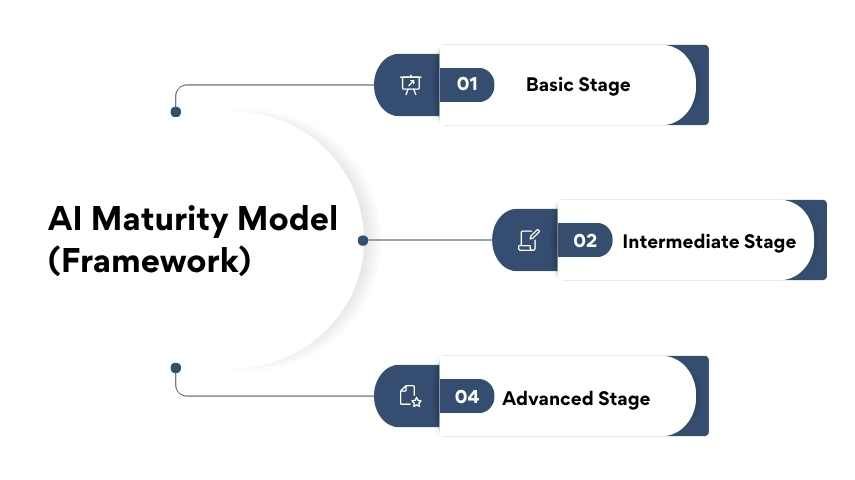
Businesses typically adopt AI in stages:
1. Basic Stage: Limited automation and mostly manual processes
2. Intermediate Stage: AI tools used in specific functions
3. Advanced Stage: Fully integrated AI systems across the organization
Understanding this progression helps businesses plan their transformation journey effectively.
Digital Transformation Roadmap with AI
Step 1: Define Goals
Clearly identify business objectives and align them with your long-term digital transformation consulting strategy. This ensures that AI initiatives are focused on measurable growth and operational efficiency.
Step 2: Identify Opportunities
Evaluate areas where business process automation can create the most impact. Look for repetitive tasks, data-heavy operations, and decision-making bottlenecks where AI can improve speed and accuracy.
Step 3: Prepare Data
Ensure data is clean, structured, and accessible. High-quality data is the foundation of every successful AI solutions company implementation, enabling accurate insights and predictive capabilities.
Step 4: Choose Tools
Select the right AI tools for business based on your specific needs. Whether it is automation, analytics, or customer engagement, choosing scalable tools is critical for long-term success.
Step 5: Start Small
Begin with pilot projects to test the effectiveness of your AI in your digital transformation strategy. This reduces risk and helps refine your approach before full-scale implementation.
Step 6: Scale Gradually
Expand successful initiatives across the organization. A phased approach ensures sustainable growth while maximizing ROI from your business process automation and AI investments.
Businesses can accelerate this process by working with AI Consulting Company, which helps implement scalable AI strategies.
Top AI Tools for Digital Transformation
-
Salesforce Einstein for customer insights
-
SAP AI for operations
Choosing the right tools ensures better results and long-term value.
AI vs Traditional Digital Transformation
|
Aspect |
Traditional |
AI-Driven |
|
Work |
Manual |
Automated |
|
Decisions |
Experience-based |
Data-driven |
|
Speed |
Slow |
Fast |
|
Accuracy |
Medium |
High |
|
Improvement |
Static |
Continuous |
Benefits of AI in Digital Transformation
AI provides several advantages:
-
Faster operations through automation
-
Better decisions using real-time data
-
Reduced costs
-
Improved customer experiences
-
Scalability for business growth
Common Challenges in AI Transformation
Businesses often face challenges such as:
-
Lack of a clear strategy
-
Poor data quality
-
Resistance to change
-
Integration complexity
-
Skill gaps
Working with experts like AI Solutions Company helps overcome these challenges effectively.
What Happens If Businesses Ignore AI?
Companies that do not adopt AI risk falling behind. They may experience slower growth, higher costs, and reduced competitiveness compared to AI-driven businesses.
Future of AI in Digital Transformation
The future will focus on:
-
Hyperautomation
-
Real-time decision-making
-
Advanced personalization
-
Intelligent business ecosystems
Businesses that adopt AI early will gain a strong competitive advantage.
FAQs
1. What are the types of digital transformation in AI?
Process, business model, customer experience, and organizational transformation.
2. How is AI used in digital transformation?
AI automates tasks, analyzes data, predicts outcomes, and improves decision-making.
3. Why is AI important for business transformation?
AI improves efficiency, reduces costs, and enables data-driven growth.
Understanding the types of digital transformation in AI is essential for businesses aiming to grow in a competitive environment.
AI enables organizations to work smarter, make better decisions, and deliver improved customer experiences. The key is to apply AI strategically and focus on areas that create real value.
With the right approach and support from Rubixe, businesses can successfully navigate their transformation journey and achieve long-term success.