




How Does AI Drive Digital Transformation?
Understand how AI drives digital transformation by improving decisions, automating processes, and enhancing customer experience with practical use cases.
Are You Transforming Your Business… or Just Adding Tools?
Most businesses today say they are “digitally transforming.”
But if you look closely, many are simply adding software on top of old processes.
Are your decisions still manual?
Are your operations still reactive?
Is your customer experience still generic?
If yes, then you’re not transforming, you’re digitizing.
This is where Digital Transformation Consulting becomes important. It helps businesses go beyond just using tools and start making real changes.
AI doesn’t just support transformation, it drives it.
What Is Digital Transformation Consulting?
Digital Transformation Consulting is a structured approach where experts help businesses rethink how they operate using technology, data, and strategy.
It is not about:
-
Installing tools
-
Automating small tasks
It is about:
-
Redesigning business models
-
Improving decision-making
-
Creating scalable systems
Consultants analyze your current processes, identify gaps, and build a roadmap that aligns technology with business goals.
Today, AI plays a central role in this process because it adds intelligence to every layer of transformation.
Why Traditional Digital Transformation Falls Short
Many businesses invest heavily in digital tools but fail to see real impact. Here’s why:
1. No Clear Strategy: Companies adopt tools without defining outcomes.
2. Data Is Underutilized: Data is collected but not used for decision-making.
3. Processes Remain Outdated: Old workflows are digitized instead of redesigned.
4. Limited Personalization: Customers still receive generic experiences.
Without AI, transformation remains incomplete. AI bridges these gaps by turning data into action.
How AI Drives Digital Transformation
1. AI Turns Data Into Actionable Insights
Businesses generate massive amounts of data daily. But data alone has no value unless it leads to decisions.
AI analyzes patterns and delivers:
-
Sales forecasts
-
Customer behavior insights
-
Risk predictions
Example:
A retail company uses AI to predict demand for specific products. Instead of reacting to stock shortages, it prepares inventory in advance.
This shift moves businesses from:
Reactive → Predictive
2. AI Automates Decision-Making Processes
Traditional automation handles repetitive tasks. AI goes further by automating decisions.
Use Cases:
-
Resume screening in recruitment
-
Loan approvals in banking
-
Fraud detection in finance
AI learns from data and improves over time, reducing errors and increasing efficiency.
3. AI Personalizes Customer Experiences
Customers expect relevant and tailored interactions.
AI enables:
-
Personalized product recommendations
-
Dynamic website content
-
Targeted marketing campaigns
Practical Scenario:
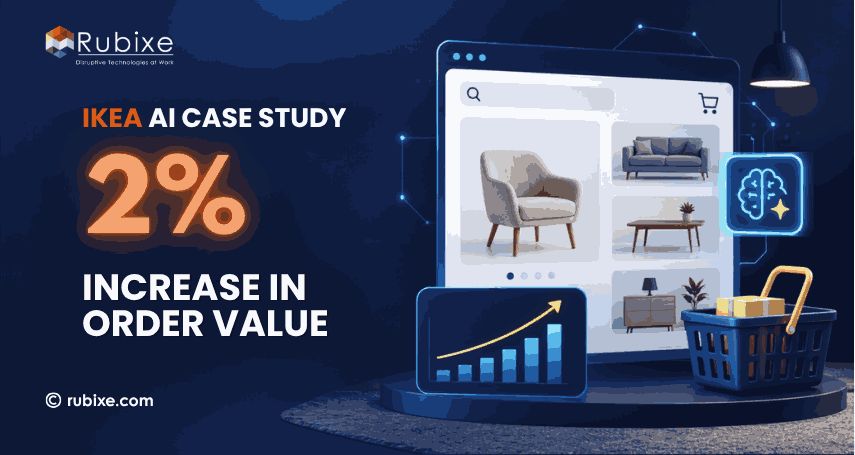
An e-commerce platform suggests products based on browsing behavior, increasing conversion rates.
This level of personalization is impossible with traditional systems.
4. AI Enables Real-Time Business Decisions
Speed matters. Delayed decisions lead to lost opportunities.
AI processes real-time data and enables:
-
Dynamic pricing
-
Instant customer support
-
Live inventory tracking
Example:
Airlines adjust ticket prices dynamically in response to demand and competition.
5. AI Improves Operational Efficiency
AI identifies inefficiencies across operations and optimizes them.
Examples:
-
Predictive maintenance in manufacturing
-
Supply chain optimization
-
Workflow automation
Result:
-
Reduced costs
-
Increased productivity
-
Better resource utilization
6. AI Strengthens Strategic Planning
Business leaders often rely on historical data and assumptions.
AI enhances strategy by providing:
-
Scenario analysis
-
Market trends
-
Risk insights
This enables leaders to make informed decisions backed by data.
Key Services Offered in Digital Transformation Consulting
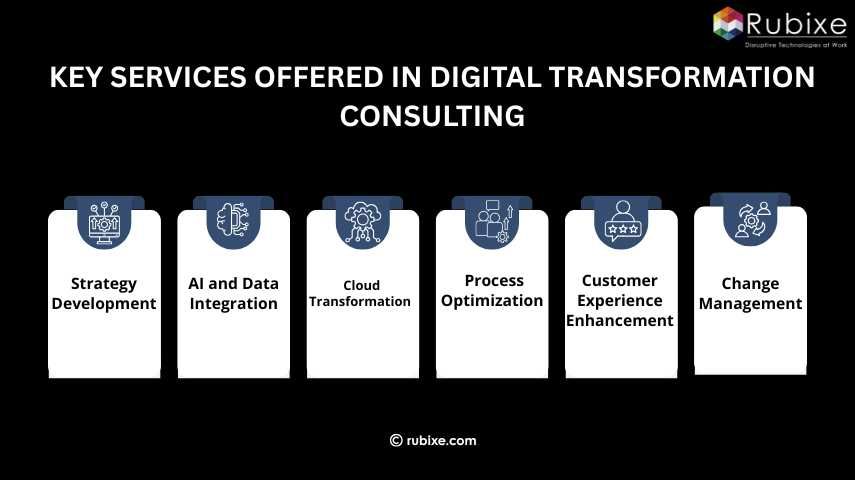
A strong digital transformation consulting service goes beyond implementation.
1. Strategy Development: Creating a roadmap aligned with business goals.
2. AI and Data Integration: Implementing AI solutions for insights and automation.
3. Cloud Transformation: Migrating systems to scalable cloud platforms.
4. Process Optimization: Redesigning workflows for efficiency.
5. Customer Experience Enhancement: Improving engagement through personalization.
6. Change Management: Ensuring smooth adoption across teams.
Digital Transformation Consulting Framework
A structured approach ensures successful transformation.
Step 1: Business Assessment: Analyze current processes, tools, and performance gaps.
Step 2: Define Objectives: Set clear goals such as cost reduction or revenue growth.
Step 3: Identify AI Opportunities: Find areas where AI can create measurable impact.
Step 4: Build a Roadmap: Create a phased implementation plan.
Step 5: Execute and Integrate: Deploy solutions and integrate with existing systems.
Step 6: Measure and Optimize: Track performance and continuously improve.
Real - World Case Study
A logistics company faced delays and high operational costs.
Problem:
-
Inefficient route planning
-
Fuel wastage
-
Delivery delays
Solution:
AI-powered route optimization and predictive scheduling.
Results:
-
25% reduction in delivery time
-
Lower fuel consumption
-
Improved customer satisfaction
This demonstrates how AI transforms operations, not just processes.
How to Choose the Right Digital Transformation Consulting Partner
Choosing the right consultant can determine success or failure.
1. Industry Experience
Look for expertise in your specific industry.
2. Technology Capabilities
Ensure they have strong AI and data capabilities.
3. Proven Results
Check case studies and past performance.
4. Scalable Approach
They should offer solutions that grow with your business.
5. Clear ROI Focus
The focus should be on measurable outcomes, not just implementation.
Cost and ROI of Digital Transformation Consulting
Cost Factors:
-
Business size
-
Project complexity
-
Technology used
-
Duration of implementation
ROI Includes:
-
Reduced operational costs
-
Increased efficiency
-
Higher revenue
-
Improved customer retention
While initial investment may seem high, the long-term benefits outweigh the cost.
AI vs Traditional Digital Transformation
|
Aspect |
Traditional Approach |
AI-Driven Approach |
|
Decision Making |
Manual |
Data-driven |
|
Speed |
Slow |
Real-time |
|
Personalization |
Limited |
Advanced |
|
Efficiency |
Moderate |
High |
|
Scalability |
Limited |
Strong |
|
Adaptability |
Static |
Self-learning |
Common Challenges in AI-Driven Transformation
1. Data Quality Issues
Poor data leads to inaccurate insights.
2. Resistance to Change
Employees may resist new systems.
3. Integration Complexity
Connecting AI with existing systems can be challenging.
4. Lack of Expertise
Businesses may lack in-house AI knowledge.
A consulting partner helps overcome these challenges effectively.
What Happens If You Ignore AI?
Businesses that delay AI adoption face:
-
Slower decision-making
-
Higher operational costs
-
Poor customer experience
-
Competitive disadvantage
Meanwhile, AI-driven competitors move faster and grow smarter.
The Future of AI in Digital Transformation
AI will continue to evolve and impact businesses through:
-
Hyper-personalization
-
Autonomous operations
-
Advanced analytics
-
Intelligent decision systems
Businesses that adopt early will gain a strong competitive advantage.
What Really Matters
Digital transformation is not about technology, it is about how your business operates and makes decisions.
AI is the core driver that makes this transformation possible.
Without AI:
You digitize processes.
With AI:
You transform your business.
What Should You Do Next?
If you are planning a digital transformation:
-
Define clear business goals
-
Focus on high-impact areas
-
Leverage AI for decision-making
-
Choose the right consulting partner
-
Start small and scale strategically
Digital Transformation Consulting succeeds when AI is integrated with purpose, not added as an afterthought. Businesses that combine strategy, data, and AI don’t just improve operations, they redefine how they compete and grow.
The real question is no longer “Should you adopt AI?”
It is “How fast can you transform before your competitors do?”