










AI Maturity Assessment: A Complete Guide
AI maturity assessment helps businesses evaluate readiness, data use, and processes to plan AI adoption and improve digital transformation outcomes.
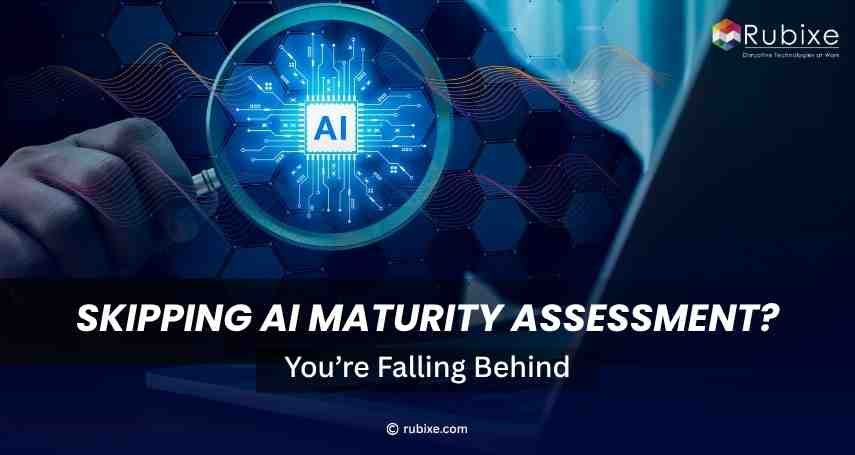
Are your AI efforts actually driving results, or are they still stuck at experimentation?
Many organisations invest in AI tools, run pilots, and explore automation, but struggle to move beyond isolated use cases. The gap is not effort. It is direction.
This is where an AI maturity assessment becomes critical. It helps you understand where your organisation stands, what is missing, and how to move forward with clarity. This is where an AI maturity assessment becomes critical. It shows where your organisation stands, what is holding progress back, and what needs to change to scale AI effectively.
What is AI Maturity
AI maturity refers to how effectively an organisation adopts, integrates, and scales artificial intelligence across its operations.
It is not about whether you are using AI. It is about how well AI is embedded into your business decisions, processes, and systems.
At an early stage, companies experiment with basic automation or analytics. As maturity increases, AI starts influencing decision-making, predicting outcomes, and optimising operations at scale.
A mature organisation typically shows:
-
Clear alignment between AI initiatives and business goals
-
Reliable data infrastructure
-
Defined processes for deployment and monitoring
-
Cross-functional adoption across teams
In simple terms, AI maturity measures how far you have moved from experimentation to real impact.
Why AI Maturity is Important
Many companies assume that adopting AI tools is enough. In reality, most AI projects fail to scale due to a lack of structure.
This gap exists because businesses:
-
Start without a clear roadmap
-
Lack data readiness
-
Fail to align AI with measurable outcomes
An AI maturity assessment helps solve this by identifying:
-
Current capability gaps
-
Readiness for scaling AI
-
Areas where investment will generate real value
Without this clarity, organisations continue investing in disconnected initiatives that do not deliver consistent results.
What does the AI Maturity Assessment do
An AI maturity assessment acts as a structured evaluation of your organisation’s AI capabilities.
It looks beyond tools and focuses on core areas such as:
-
Data quality and accessibility
-
Technology infrastructure
-
Team capabilities
-
Process integration
-
Governance and compliance
The outcome is not just a score. It is a clear, actionable roadmap.
For organisations at an early stage, this may mean building a strong AI readiness assessment before scaling further. For more advanced teams, it helps refine strategies and optimise performance.
This assessment answers critical questions:
-
Are we ready to scale AI?
-
Where are we losing efficiency?
-
What should we prioritise next?
It removes guesswork and replaces it with structured decision-making.
Business Use Cases of Assessing AI Maturity Level
AI maturity assessment is not theoretical. It directly impacts how businesses operate.
1. Improving Operational Efficiency
A logistics company may use AI to optimize delivery routes. An assessment helps identify whether the system is scalable or limited to small datasets.
2. Enhancing Customer Experience
Retail businesses use AI for recommendations and personalization. Maturity assessment ensures these systems are driven by reliable data and integrated across platforms.
3. Risk Management and Fraud Detection
Financial institutions rely on AI to detect anomalies. Without proper maturity, these systems produce inconsistent results.
4. Workforce Productivity
Organisations using AI for internal automation can evaluate whether processes are truly optimised or still dependent on manual intervention.
5. Strategic Decision-Making
At higher maturity levels, AI supports forecasting and planning, giving leadership a data-driven advantage.
These use cases show one thing clearly - AI maturity defines whether AI remains a tool or becomes a business driver.
Benefits of AI Maturity Assessment in Organisations
 A structured AI maturity assessment creates measurable improvements across multiple levels.
1. Clear Direction: It removes uncertainty and defines a focused path for AI adoption.
2. Better Resource Allocation: Instead of investing in multiple tools, organisations prioritise what actually delivers value.
3. Faster Scaling: Once gaps are identified, scaling becomes predictable and controlled.
4. Stronger Decision-Making: AI systems become more reliable when backed by structured evaluation.
5. Governance and Compliance: As organisations progress in their AI maturity, they implement clear AI governance to ensure responsible and ethical use of AI systems.
Organisations with structured AI governance frameworks are more likely to achieve consistent ROI from AI initiatives.
Step-by-step Guide to Your AI Maturity Assessment
A practical AI maturity assessment follows a structured approach. Skipping steps often leads to incomplete evaluation.
Step 1: Define Business Objectives
Start with clarity. Identify what you expect from AI - cost reduction, efficiency, customer experience, or revenue growth.
Step 2: Evaluate Data Readiness
AI depends on data quality. Assess the availability, accuracy, and accessibility of your data.
Step 3: Assess Technology Infrastructure
Check whether your current systems can support AI deployment and scaling.
Step 4: Evaluate Skills and Talent
Identify gaps in technical expertise and domain knowledge. Many organisations require hiring the right AI strategy consultant to bridge this gap effectively.
Step 5: Analyse Current Use Cases
Review existing AI implementations. Understand what is working and what is not.
Step 6: Establish Governance Framework
Define policies, compliance standards, and monitoring systems for responsible AI usage.
Step 7: Build a Roadmap
Convert insights into a structured plan for scaling AI across the organisation.
Organisations that work with experienced AI consulting companies often accelerate this process by avoiding trial-and-error approaches.
Risks in AI Maturity and How to Avoid Them
Scaling AI without structure introduces risks that can slow down progress or create long-term issues.
1. Poor Data Quality: AI systems fail when data is inconsistent or incomplete.
Solution: Invest in data management before scaling.
2. Lack of Alignment: AI initiatives disconnected from business goals lead to low impact.
Solution: Align every AI use case with measurable outcomes.
3. Skill Gaps: Teams may lack the expertise required to manage AI systems.
Solution: Upskill teams or collaborate with reliable AI enterprise software providers.
4. Ethical and Compliance Issues: Unregulated AI systems can lead to biased outcomes or regulatory risks.
Solution: Implement governance frameworks early.
5. Over-Experimentation Without Scaling: Many organisations remain stuck in pilot stages.
Solution: Focus on structured AI adoption with clear milestones and timelines.
According to IBM, organisations that focus on structured scaling achieve significantly higher returns from AI investments.
FAQs
1. What is an AI maturity assessment?
An AI maturity assessment evaluates how effectively an organisation is using AI across its operations and identifies areas for improvement.
2. Why is AI maturity important for businesses?
It helps organisations move from experimentation to scalable AI implementation, improving efficiency and decision-making.
3. How long does an AI maturity assessment take?
It depends on organisation size, but typically ranges from a few weeks to a couple of months.
4. What are the key components of AI maturity?
Data readiness, infrastructure, skills, governance, and business alignment.
5. Can small businesses benefit from AI maturity assessment?
Yes. Even small organisations can identify gaps early and build scalable AI strategies.
From Assessment to Execution
AI adoption without structure leads to slow progress and unclear results. An AI maturity assessment gives you a clear view of where you stand and what needs to change. If your organisation is experimenting with AI but struggling to scale, the next step is not more tools. It is a better direction.
Start by evaluating your current capabilities, identifying the gaps, and building a roadmap that aligns AI with real business outcomes. That is how AI moves from an experiment to a long-term advantage.