




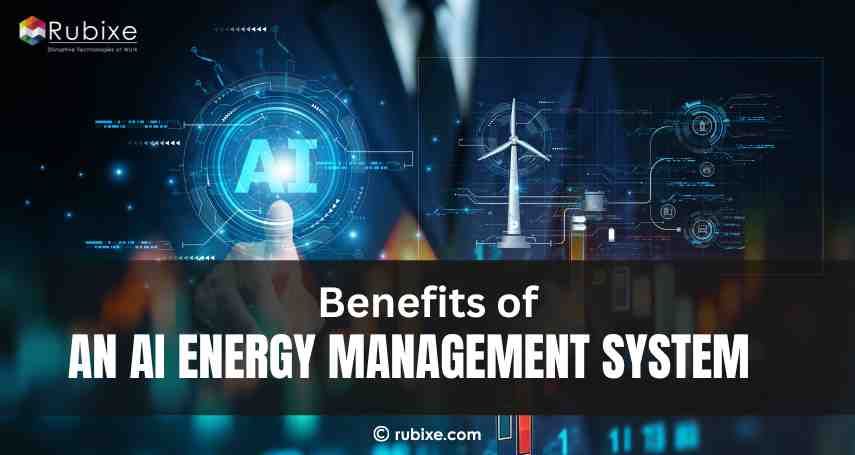
Benefits of an AI Energy Management System
Benefits of an AI energy management system include cost savings, real-time monitoring, predictive insights, and improved operational efficiency.
Are your energy bills rising every year, even though your operations haven’t changed much?
Many businesses assume energy costs are fixed. They focus on increasing revenue while ignoring hidden inefficiencies in power usage. Machines run longer than needed. HVAC systems operate on outdated schedules. Peak-hour demand charges quietly inflate monthly bills.
An AI energy management system changes this completely. It doesn’t just track energy use. It analyzes patterns, predicts demand, and automatically adjusts systems to reduce waste.
If you’re evaluating whether investing in smart energy optimization makes sense, here are the real, measurable benefits, without hype.
What Is an AI Energy Management System?
An AI energy management system uses artificial intelligence and machine learning to monitor, analyze, and optimize energy consumption across facilities, buildings, or industrial environments.
Unlike traditional monitoring tools that only display usage data, AI-driven systems:
-
Detect inefficiencies automatically
-
Predict future consumption
-
Identify abnormal energy spikes
-
Optimize systems in real time
-
Support sustainability goals
It turns raw energy data into actionable decisions.
1. Significant Cost Reduction
Energy is one of the largest operational expenses for commercial buildings and industrial facilities.
In many industries, energy accounts for 10% to 40% of operating costs.
An AI energy management system reduces costs by:
-
Shifting usage away from peak hours
-
Eliminating unnecessary idle consumption
-
Improving equipment efficiency
-
Preventing overcooling or overheating
For example:
If a manufacturing facility spends ₹4 crore annually on electricity and reduces consumption by just 8%, that equals ₹32 lakh in yearly savings.
Over five years, that means big savings, without increasing production or expanding the business.
Energy optimization is not about cutting comfort or productivity. It’s about removing waste.
2. Real-Time Energy Visibility
Many businesses lack clarity about where energy is being consumed.
AI-powered systems provide:
-
Live dashboards
-
Department-level consumption data
-
Equipment-specific performance metrics
-
Instant alerts for abnormal usage
When decision-makers see real-time data, they can act immediately instead of waiting for monthly reports.
Visibility drives accountability.
3. Predictive Energy Forecasting
One of the strongest advantages of an AI energy management system is predictive analytics.
Using historical data and machine learning, the system can:
-
Forecast peak demand periods
-
Estimate future energy bills
-
Predict seasonal consumption patterns
-
Anticipate equipment overload
For example:
If the system predicts high energy demand during certain hours, non-essential processes can automatically shift to off-peak periods.
This prevents costly demand penalties.
Energy forecasting transforms reactive management into a proactive strategy.
4. Automated Energy Optimization
Manual adjustments are slow and inconsistent.
An AI-driven energy platform can automatically:
-
Adjust HVAC temperature based on occupancy
-
Dim lighting during low-usage periods
-
Optimize manufacturing load distribution
-
Shut down idle machinery
Automation ensures continuous efficiency without constant human supervision.
That consistency creates long-term savings.
5. Reduced Equipment Wear and Tear
Energy inefficiency often indicates operational stress.
Machines that consume excess power may be overworked or poorly maintained.
An AI energy management system detects unusual energy patterns that signal:
-
Motor inefficiencies
-
Cooling system strain
-
Equipment imbalance
-
Early mechanical issues
Early detection prevents breakdowns and extends asset lifespan.
Reduced downtime directly improves profitability.
6. Improved Sustainability and ESG Compliance
Sustainability is no longer optional.
Investors, customers, and regulators expect environmental accountability.
An intelligent energy management platform helps organizations:
-
Track carbon emissions
-
Monitor renewable energy integration
-
Generate sustainability reports
-
Support ESG compliance
Reducing energy waste lowers environmental impact while strengthening brand credibility.
7. Better Decision-Making Through Data Insights
Energy data alone is not useful.
Insight is valuable.
An AI energy management system analyzes patterns across:
-
Time of day
-
Equipment performance
-
Weather conditions
-
Operational shifts
These insights help leaders make strategic decisions, such as:
-
Upgrading inefficient equipment
-
Adjusting operational schedules
-
Redesigning energy-intensive workflows
Data-backed decisions outperform guesswork.
8. Integration with Smart Infrastructure
Modern systems integrate with:
-
IoT devices
-
Smart meters
-
Building management systems
-
Renewable energy sources
This connectivity ensures seamless optimization across all operational layers.
An integrated system creates unified energy control instead of fragmented monitoring.
9. Scalability for Growing Businesses
As operations expand, energy consumption increases.
A scalable AI energy management system adapts to:
-
New facilities
-
Additional machinery
-
Expanded data loads
-
Changing regulatory requirements
This protects long-term investment and avoids frequent system replacements.
10. Competitive Advantage
Lower operational costs increase pricing flexibility.
Improved sustainability enhances brand perception.
Operational efficiency strengthens profitability.
Businesses that adopt AI-driven energy optimization gain a measurable edge over competitors still relying on manual processes.
Efficiency is a strategic advantage, not just a technical upgrade.
AI Energy Management System: How It Works
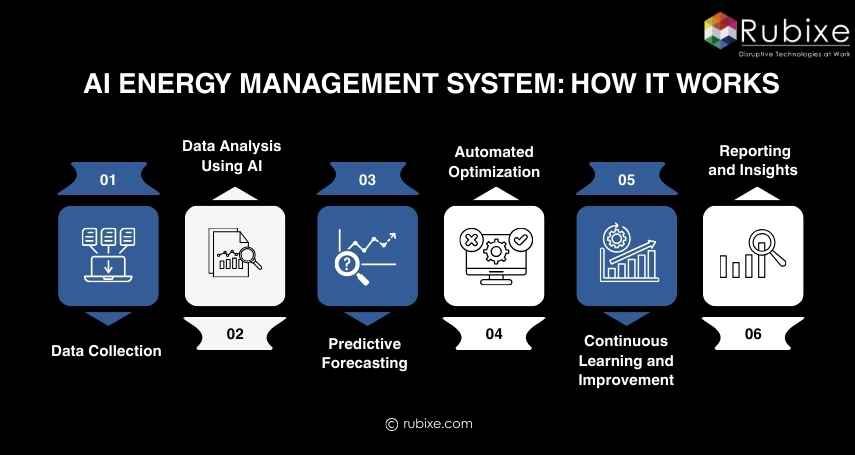
An AI energy management system works by collecting energy data, analyzing it using artificial intelligence, and automatically optimizing power usage across your facility.
Instead of just showing energy reports, it actively improves efficiency.
Here’s how it works step by step:
1. Data Collection
The system gathers real-time data from:
-
Smart meters
-
IoT sensors
-
HVAC systems
-
Lighting systems
-
Manufacturing equipment
-
Building management systems
It continuously tracks electricity usage, load patterns, temperature, occupancy levels, and equipment performance.
Without accurate data, optimization isn’t possible.
2. Data Analysis Using AI
Once data is collected, machine learning algorithms analyze patterns such as:
-
Peak usage hours
-
Seasonal energy trends
-
Equipment efficiency levels
-
Unusual consumption spikes
The AI identifies inefficiencies that humans may not notice in large datasets.
For example:
If one machine consistently consumes 15% more power than similar units, the system flags it.
3. Predictive Forecasting
The system doesn’t just analyze past data, it predicts future demand.
Using historical consumption and external factors like weather or production schedules, it can:
-
Forecast peak demand
-
Estimate monthly energy costs
-
Predict overload risks
This allows businesses to prepare in advance instead of reacting to high bills.
4. Automated Optimization
This is where real impact happens.
The AI energy management system can automatically:
-
Shift non-essential operations to off-peak hours
-
Adjust HVAC based on occupancy
-
Reduce lighting in unused areas
-
Balance the load across the equipment
AI Automation ensures energy efficiency without manual intervention.
5. Continuous Learning and Improvement
The system improves over time.
As it collects more data, the AI model:
-
Refines demand forecasts
-
Improves anomaly detection
-
Optimizes control strategies
-
Enhances accuracy
The longer it runs, the smarter it becomes.
6. Reporting and Insights
Finally, the system generates clear reports showing:
-
Energy savings achieved
-
Carbon emission reductions
-
Peak demand improvements
-
Cost optimization trends
These insights help leadership make strategic decisions.
Addressing Common Concerns
“Is implementation complex?”
Modern systems are designed for phased deployment. They can integrate with existing infrastructure without major disruptions.
“Will employees need advanced technical skills?”
No. Most platforms provide simple dashboards and automated controls. Training requirements are minimal.
“Is the investment worth it?”
When even small percentage reductions translate into thousands of dollars in annual savings, ROI becomes clear within 1–2 years for most organizations.
Long-Term Strategic Value
An AI energy management system is not a short-term cost-cutting tool.
It supports:
-
Long-term operational resilience
-
Data-driven infrastructure planning
-
Sustainable growth
-
Reduced environmental footprint
Energy management becomes a strategic function rather than an administrative task.
Energy as a Strategic Business Advantage
Energy intelligence means:
-
Knowing exactly where power is used
-
Predicting future demand
-
Automatically adjusting consumption
-
Aligning sustainability with profitability
Artificial intelligence makes this possible at scale. The more data the system collects, the smarter it becomes.
Continuous learning leads to continuous improvement.
Turn Energy into a Strategic Asset
Energy should not be an unpredictable expense.
It should be controlled, optimized, and strategically managed.
The benefits of an AI energy management system extend beyond cost savings. It improves visibility, enhances efficiency, supports sustainability, reduces risk, and strengthens long-term competitiveness.
If rising energy costs, peak demand penalties, or sustainability pressures are affecting your operations, the next step is clear.
Audit your current energy usage. Identify inefficiencies. Evaluate AI-driven solutions aligned with your infrastructure and goals.
Smart energy management is no longer optional. It is a business necessity.
The right system will not just reduce costs, it will transform how your organization consumes, controls, and optimizes energy.