
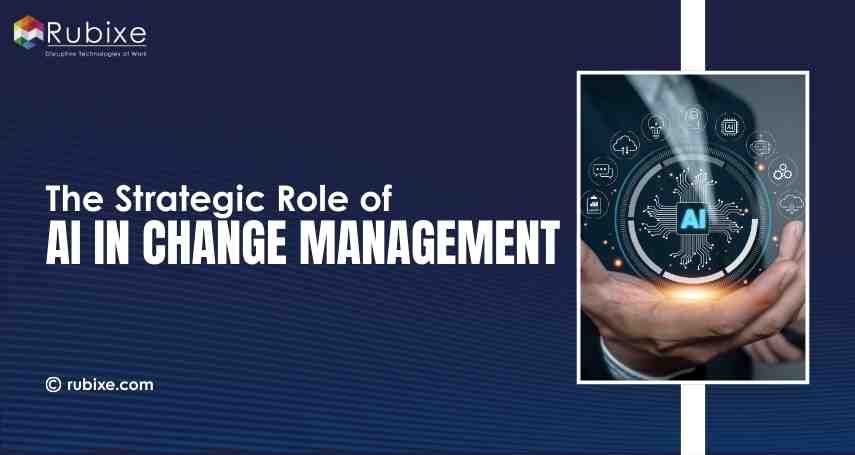
The Strategic Role of AI in Change Management
AI change management services help businesses plan transitions, support employee adoption, manage risk, and align processes during transformation
What if your organisation could turn constant change into a competitive advantage?
In today’s world of new technologies, shifting customer expectations, market uncertainty, and workforce transformation, change is no longer occasional, it’s permanent. Yet many organisations struggle to adapt: employees resist, leaders hesitate, and initiatives stall. AI in change management isn’t about forcing change faster; it’s about making change smarter, more human, and more predictable.
Why Change Management Fails More Often Than It Succeeds
-
Decisions Based on Gut Feeling: Leaders often rely on intuition rather than data-driven insights, increasing the risk of misaligned strategies. AI provides real-time analytics to guide smarter decisions.
-
Late Detection of Employee Resistance: Traditional methods spot resistance too late, slowing adoption. AI monitors engagement and sentiment continuously, highlighting issues before they escalate.
-
Ineffective Communication: Change communications can miss underlying employee concerns. AI tools analyse feedback and conversations to surface hidden challenges and improve messaging.
-
Subjective Progress Measurement: Progress is often tracked emotionally or anecdotally, leading to biased assessments. AI enables objective, data-driven tracking of adoption, engagement, and outcomes.
-
Limitations of Traditional Tools: Surveys, workshops, and static frameworks are slow, reactive, and prone to bias. AI adds speed, adaptability, and predictive capabilities to change management.
-
Clarity in Uncertainty: By leveraging AI, organisations can gain actionable insights, align stakeholders, and move forward confidently even in fast-changing environments.
What AI in Change Management Really Means
Artificial Intelligence in Change Management doesn’t replace leaders or HR teams; it augments their decision-making with intelligence. By analysing patterns in employee behaviour, communication signals, performance trends, sentiment data, and adoption rates, AI gives leaders real-time visibility into how change is unfolding, replacing guesswork with actionable insight.
The Emotional Reality of Organisational Change
-
Feedback Patterns: AI analyzes employee feedback from surveys, chats, and other sources to reveal concerns and resistance that might not show up in formal reports.
-
Engagement Fluctuations: Changes in participation, productivity, or enthusiasm are detected early, helping leaders address disengagement before it impacts outcomes.
-
Collaboration Changes: AI monitors how teams interact and collaborate, identifying shifts in communication or cooperation that signal stress or uncertainty.
-
Learning Behaviour: By tracking training completion and skill adoption, AI highlights areas where employees may feel unprepared or overwhelmed by new processes.
-
Turning Resistance into Dialogue: Early insight into human reactions allows leaders to address concerns proactively, transforming change from a confrontation into an open conversation.
From Reactive to Predictive Change Leadership
Traditional change management reacts after problems arise, but AI-enabled change management predicts them. By identifying teams likely to resist, detecting adoption slowdowns early, forecasting burnout risks, and dynamically adjusting communication strategies, AI transforms change from a chaotic process into a strategically orchestrated one.
Where AI in Change Management Creates Real Strategic Value
-
Data-Backed Decision-Making: AI provides leaders with real-time insights, allowing decisions to be based on evidence rather than assumptions or gut feelings.
-
Targeted Interventions: By identifying exactly where resistance or challenges exist, AI ensures support and resources are applied where they are most needed.
-
Faster Adoption Cycles: Early detection of resistance and engagement issues enables leaders to act quickly, maintaining momentum and speeding up overall adoption.
-
Measurable Progress: AI tracks adoption rates, engagement, and outcomes, turning change management from an abstract process into a quantifiable, actionable discipline.
-
Strategic Transformation: With AI, change management evolves from a soft skill into a core strategic capability that strengthens leadership and drives organisational success.
The Role of AI in Employee Communication During Change
One-size-fits-all messaging is a major reason change initiatives fail. Different teams need tailored narratives, and AI makes this possible by analysing which messages resonate. Identifying communication gaps, personalising content, and optimising timing. The result: employees don’t feel “managed” but understood, building trust and improving adoption.
AI and Workforce Alignment During Transformation
-
Mapping Current Skills to Future Needs: AI analyzes employee capabilities against evolving role requirements, helping leaders understand workforce readiness for upcoming changes.
-
Identifying Learning Gaps: Skill gaps are highlighted early, so training and support can be prioritised where they will have the greatest impact.
-
Recommending Targeted Upskilling Paths: AI suggests personalised learning and development plans, enabling employees to acquire the skills needed for new systems and processes.
-
Supporting Internal Mobility Decisions: By aligning employee strengths with future roles, AI aids in redeployment and internal career growth, reducing uncertainty and turnover.
-
Building Confidence and Reducing Fear: When people understand how their skills match future needs, they feel secure and capable, improving engagement and adoption during change.
AI, Automation, and Change Management: A Natural Alliance
Automation can speed up change, but without intelligence, it risks creating chaos. AI ensures automation is implemented thoughtfully, with clear adoption signals, human-centred pacing, and continuous feedback loops, making transformation scalable, effective, and stable.
Why AI Readiness Matters Before AI-Led Change
-
Assessing Data Maturity: The audit evaluates whether your organisation’s data is accurate, accessible, and structured to support AI-driven change insights.
-
Cultural Openness to AI: AI adoption succeeds only if employees and leaders are receptive to intelligent tools, making culture a critical factor in readiness.
-
Leadership Alignment: Ensuring that decision-makers understand and support AI initiatives helps drive adoption and strategic impact across the organisation.
-
Technology Infrastructure: The audit reviews whether systems, tools, and platforms can integrate AI effectively without causing disruption.
-
Preventing Frustration, Ensuring Progress: By assessing readiness upfront, organisations reduce the risk of failed implementations and position AI as a true strategic asset rather than just another tool.

Managing Risk and Trust in AI-Driven Change
Change initiatives rely on sensitive employee data, making trust non-negotiable. Artificial Intelligence in Change Management must be built on transparent data practices, ethical AI principles, strong cybersecurity, and clear governance. When employees trust the system behind the change, adoption follows naturally, and momentum builds with confidence.
The Human Side of AI in Change Management
-
Listening at Scale: AI uncovers patterns across feedback, engagement, and behaviour that leaders can’t easily see on their own, enabling deeper and more informed listening.
-
Faster, Informed Responses: Real-time insights allow leaders to address concerns and resistance quickly, before issues grow or momentum slows.
-
Clarity in Leadership Decisions: By replacing assumptions with data-backed insight, AI helps leaders guide change with confidence and purpose.
-
From Control to Guidance: With greater visibility and understanding, change management shifts away from enforcing compliance toward supporting and guiding people through transition.
How We Support Smarter Change Journeys
We approach Artificial Intelligence in Change Management with a balanced focus on strategy, technology, and people. From AI consulting to define the right change use cases and readiness audits to assess organisational maturity, to scalable AI services, automation, skilled staffing, and robust AI cybersecurity, the emphasis stays on sustainable transformation, not rushed disruption.
Trusting AI to Guide Change
-
Expertise: AI-driven change management is grounded in real organisational data, ensuring insights are based on evidence rather than assumptions or intuition.
-
Experience: Models and frameworks are refined through practical, real-world deployments, making them relevant and effective in live organisational environments.
-
Authority: Clear leadership ownership ensures AI initiatives are aligned with business goals and supported by accountable decision-makers.
-
Trust: Transparency, ethical AI practices, and strong data governance build confidence among employees and stakeholders.
-
AI as a Partner: When guided by EEAT principles, AI becomes a trusted partner in change, supporting people and leaders rather than replacing them.
The Long-Term Impact of AI in Change Management
Organisations that embed AI into change management adapt continuously rather than episodically, reduce transformation fatigue, retain high-performing talent, and build resilience into their culture. As a result, change stops being something to simply “get through” and becomes a core organisational capability.
Change is inevitable, but clarity is a choice. While every organisation faces transformation, success depends on how clearly leaders understand what’s happening beneath the surface. AI in Change Management replaces guesswork with insight, fear with preparedness, and resistance with alignment, allowing leaders to move forward with confidence guided by intelligence, not urgency.