

SaaS AI vs Custom AI: Which Fits Your Business?
Understand SaaS AI vs Custom AI for business needs, costs, security, scalability, and integration to choose the right AI approach for long-term operations
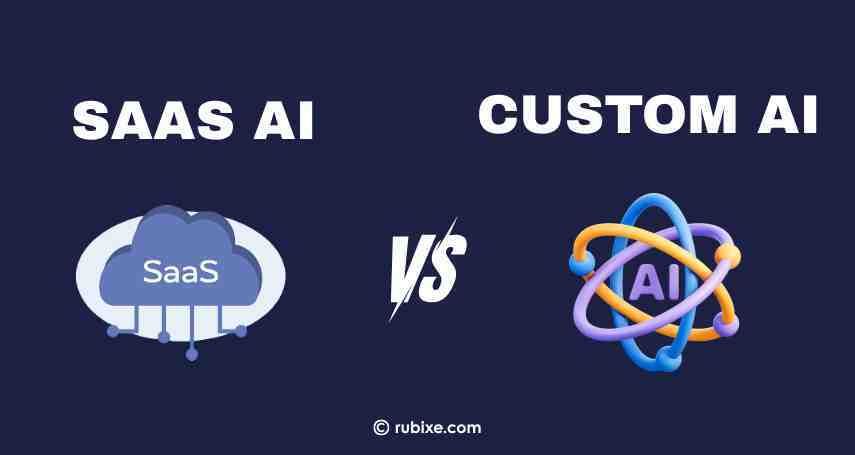
Are you falling behind because your business isn’t using AI the right way?
Every day, companies are gaining speed, cutting costs, and making smarter decisions with AI. The question is, should you go with ready-made SaaS AI or invest in a Custom AI built just for your business?
Choosing the wrong AI can waste time, money, and opportunities. The right approach helps businesses improve operations, make smarter decisions, and remain effective as demands grow.
What Is SaaS AI and Custom AI?
Artificial Intelligence (AI) can be applied in many ways to help businesses work smarter and faster. When implementing AI, companies usually have two main options: SaaS AI and Custom AI. Both have advantages depending on your business needs, budget, and resources.
SaaS AI stands for Software-as-a-Service Artificial Intelligence. It is a ready-made AI tool or platform that you can access online without building it from scratch. These tools are usually subscription-based, meaning you pay a monthly or yearly fee to use them. SaaS handles many common business tasks, such as:
-
Data analysis
-
Customer support automation
-
Marketing automation
-
Predictive analytics
-
Chatbots and virtual assistants
The biggest advantage of SaaS is that it is quick to implement. Businesses can start using it almost immediately without needing a full AI development team.
On the other hand, Custom AI is built specifically for your business. Instead of using a pre-made solution, a team of developers and data scientists creates an AI system tailored to your unique requirements.
Key Differences Between SaaS AI and Custom AI
|
Feature |
SaaS AI |
Custom AI |
|
Setup Speed |
Quick to implement |
Takes months to develop |
|
Cost |
Subscription-based |
Higher upfront cost |
|
Flexibility |
Limited features |
Fully customizable |
|
Maintenance |
Provider updates |
Your team handles updates |
|
Integration |
May have standard integrations |
Can be built to fit any system |
|
Scalability |
Usually scalable |
Scalable but requires planning |
|
Support |
Provided by a SaaS company |
Internal or developer-based |
Advantages of SaaS AI
-
Quick Implementation
One of the biggest advantages of SaaS is how fast it can be implemented. Since it is a ready-made solution, businesses don’t need to spend months building AI from scratch. For example, a small e-commerce business can integrate a chatbot within a week, allowing it to handle customer queries automatically.
-
Lower Initial Cost
SaaS is subscription-based, so companies pay a monthly or yearly fee rather than investing large sums upfront. This makes it ideal for small and medium-sized businesses that want to use AI without heavy financial risk.
-
Automatic Updates
The platform is maintained by the providers. They regularly release updates, fix bugs, and add new features. This means your AI tools remain up-to-date without extra effort from your team. Businesses don’t need to worry about security patches, software compatibility, or staying current with AI technology trends.
-
Proven Solutions
Many tools are already widely used and tested across industries. This reduces the risk of failure since you know how the tool works before implementation.
-
Easy to Scale
Most platforms are designed to grow with your business. As your data volume increases or your user base expands, the AI can handle the additional load without major changes.
-
Minimal Technical Knowledge Required
These tools are designed to be user-friendly. They often include dashboards, visual workflows, and simple interfaces that don’t require coding knowledge. Teams can adopt AI quickly, even if they don’t have a dedicated data science or IT department.
Advantages of Custom AI
-
Fully Tailored to Your Business
Custom AI is designed specifically for your business needs. Unlike ready-made solutions, you are not limited to pre-built features. Every function can be designed to match your workflows, data, and objectives.
-
Better Integration
Custom AI can integrate seamlessly with your existing systems and tools.
-
Unique Competitive Advantage
Custom AI can give your business unique capabilities that competitors don’t have.
-
Handles Complex Problems
Custom AI can be designed to solve unique problems efficiently.
-
Long-Term Flexibility
Custom AI gives you full control over how the system evolves.
-
Enhanced Security and Data Privacy
Since custom AI is built in-house or on private servers, you have more control over sensitive data.
Common Use Cases of SaaS AI and Custom AI
Knowing where SaaS AI and Custom AI are commonly used can help you decide which one fits your business needs better.
SaaS AI Use Cases
1. Customer Support Automation
Many businesses use SaaS AI chatbots like Drift or Intercom to answer customer questions automatically. This saves time for support teams and gives customers faster responses.
2. Marketing Automation
Tools like HubSpot AI or Mailchimp AI help businesses send personalized emails, schedule campaigns, and analyze marketing performance without manual work.
3. Predictive Analytics
SaaS platforms like Google AI or Tableau with AI can predict customer behavior, sales trends, or website traffic. This helps businesses make smarter decisions.
4. Social Media Monitoring
SaaS can analyze social media posts and reviews to track brand sentiment, spot trends, and respond to customers faster.
5. Reporting and Dashboards
Many SaaS tools automatically collect data and generate reports, helping teams see performance metrics without extra effort.
Custom AI Use Cases
1. Supply Chain Optimization
Custom AI can analyze delivery routes, inventory levels, and supplier performance to reduce costs and improve efficiency.
2. Personalized Recommendations
E-commerce companies use Custom AI to offer personalized product suggestions based on each customer’s behavior and preferences.
3. Fraud Detection
Banks and fintech companies build Custom AI to detect unusual transactions and prevent fraud using their unique data.
4. Predictive Maintenance
Manufacturing companies use Custom AI to predict equipment failures before they happen, saving time and money on repairs.
5. Custom Natural Language Processing (NLP)
Businesses with unique customer communication needs can develop Custom AI to understand specific phrases, questions, or complaints.
When SaaS AI Is the Right Choice
SaaS AI is suitable for businesses that:
-
Need a quick AI solution
-
Have standard workflows
-
Are budget-conscious
-
Want to test AI before investing in custom solutions
-
Prefer minimal technical management
Examples of SaaS AI solutions include:
-
AI-powered chatbots like Drift or Intercom
-
Predictive analytics tools like Tableau with AI or Google AI services
-
Marketing automation tools like HubSpot AI
SaaS AI allows businesses to start small, scale fast, and learn before committing to a custom solution.
When Custom AI Is the Right Choice
Custom AI is ideal for businesses that:
-
Have unique data or workflows
-
Need specialized AI models not available in SaaS tools
-
Can invest in long-term AI development
-
Want full control over features and updates
-
Need high security or data privacy
Custom AI works well for large companies or startups with a clear AI strategy. Examples include:
-
AI models predicting manufacturing defects
-
Personalized AI for customer behavior analysis
-
AI systems integrating multiple business platforms
Factors to Consider Before Choosing
-
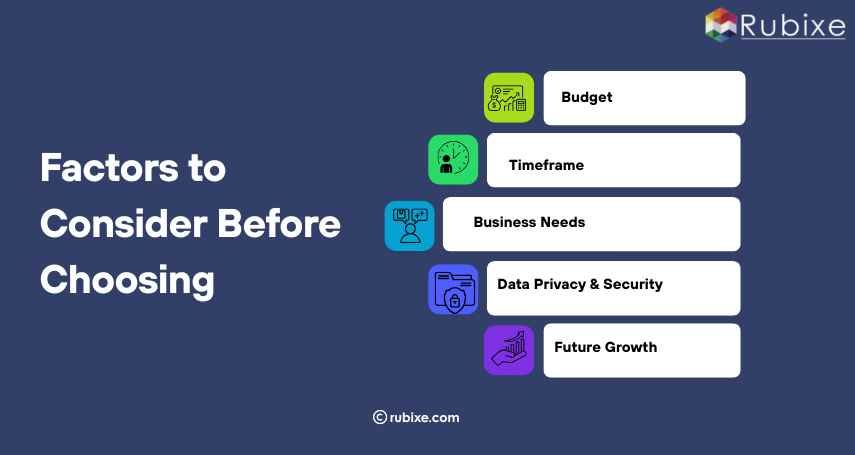
Budget – SaaS AI has lower upfront costs because it uses a subscription model, making it easier for small or medium businesses. Custom AI requires a higher initial investment but can offer long-term value.
-
Timeframe – SaaS can be implemented in days or weeks since it is ready-made. Custom AI takes months to design, build, and integrate.
-
Business Needs – SaaS works well for standard workflows like marketing, support, and analytics. Custom AI is ideal for complex or unique processes that need a tailored solution.
-
Data Privacy & Security – Custom AI gives full control over sensitive data by hosting it internally or on private servers. SaaS stores data externally, which may not meet all privacy or compliance requirements.
-
Future Growth – SaaS AI is easy to scale with increasing data or users. Custom AI can be designed to scale according to your business’s unique growth strategy.
AI is not just a trend, it can help your business work faster and better. SaaS AI is good if you want quick results. Custom AI is better if your business has special or complex needs.
First, think about what your business needs, your budget, and your resources. You can start with SaaS AI to see results fast. Later, you can use Custom AI for tools made just for your business.
Choosing the right AI now will help your business stay strong, work well, and be ready for the future.