





How AI Boosts Retail Sales Fast
How AI boosts retail sales fast through personalization, demand forecasting, automation, and data insights to increase conversions and revenue growth.
There's a moment every retailer knows, the one where you're staring at inventory numbers that don't quite match demand, or watching cart abandonment rates climb despite every optimization you've tried. We've seen this pattern repeat across dozens of retail conversations over the years.
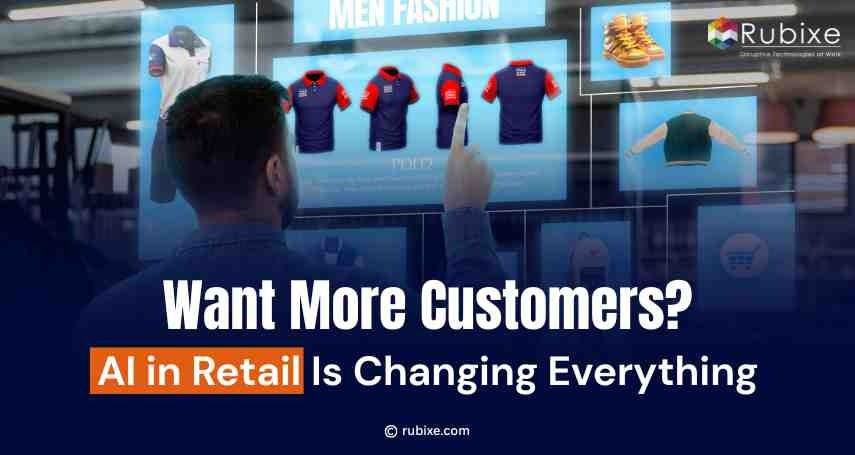
And what's shifted the needle, consistently, isn't a new promotion strategy or a redesigned checkout page. It's AI in retail; specifically, how it's being applied in ways that are fast, targeted, and grounded in actual shopper behavior.
This isn't a piece about the distant future of retail. It's about what's already working, right now, for brands that chose to move early.
Why AI in Retail Is No Longer Optional
The numbers make the argument better than we can. The global AI in retail market stood at USD 11.61 billion in 2024 and is on track to hit USD 40.74 billion by 2030, compounding at 23% annually. That kind of growth trajectory signals one thing clearly: this technology is moving from competitive edge to table stakes.
But here's what catches most people off guard. It's not just that AI is growing. It's what it's actually delivering. Retailers using AI and ML technologies recorded double-digit sales growth in both 2024 and 2025, and their annual profit outpaced non-AI competitors by roughly 8%.
That delta between adopters and non-adopters is widening every quarter. And the retailers feeling that gap most sharply are the ones who waited.
How AI in Retail Actually Drives Sales, Not Just Efficiency
 Most conversations about AI in retail start with operations: Supply chain, inventory, logistics. Those matters. But if you want to understand how AI drives revenue, you have to look at what happens between a customer's first browse and their final purchase decision.
1. Hyper-Personalized Product Recommendations
This is where the sales impact is most direct and most immediate. According to the Barilliance Research report, personalized recommendations drive up to 31% of e-commerce revenue, which is nearly a third of all online sales influenced by AI suggestion engines. AI recommendation click-through rates are also 24% higher than non-personalized alternatives and lift average order value by 18%.
Amazon built an empire on this.
But the mistake smaller retailers make is assuming this capability is out of reach. It isn't. The underlying engine of analyzing browsing patterns, purchase history, session behavior, and contextual signals is now accessible through cloud based AI platforms that integrate with most modern commerce stacks.
The shift from "customers who bought this also bought" to truly individualized journeys is significant. When a shopper lands on your site, sees a homepage curated to them, not to the average buyer, conversion rates follow.
2. Dynamic Pricing That Responds in Real Time
Pricing in retail used to mean seasonal markdowns and margin-protecting floors. AI in retail changes that calculus entirely. Dynamic pricing models continuously analyze competitor pricing, inventory levels, demand signals, and even time-of-day patterns to adjust prices in ways that protect margin while staying competitive.
The grocery sector has leaned hardest into this. A fashion brand working with real-time pricing can clear end-of-season inventory without a blunt 40%-off banner that trains customers to wait. They surface the right discount, to the right shopper segment, at the moment that makes the purchase most likely.
3. Smarter Demand Forecasting Means Less Waste, More Sales
One of the more underappreciated revenue drivers of AI in retail is demand forecasting. Stockouts cost retailers real money, not just the sale, but the customer relationship.
Overstocking costs margin and often ends in markdown cycles that erode brand positioning.
AI-powered forecasting pulls together historical sales data, weather patterns, local events, and market trends to predict demand with a precision that spreadsheet-based planning simply cannot match.
Retailers using AI have achieved 95% forecasting accuracy and seen a 40% reduction in inventory carrying costs, alongside a 60% drop in stockout incidents.
For a retailer doing meaningful volume, a 60% reduction in stockouts translates directly into revenue that was previously being lost to an empty shelf or an out-of-stock notification.
The In-Store AI Opportunity Most Brands Are Missing
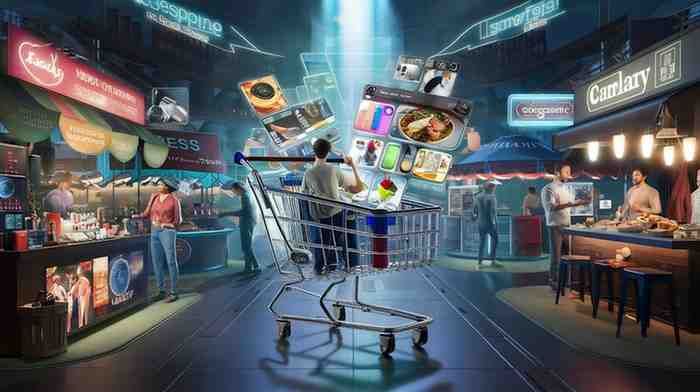
The physical store is where AI in retail has the most unrealized potential, and the brands moving there first will have a significant head start.
E-commerce has had AI personalization baked in for years. But walking into a brick-and-mortar store has remained largely static. You see a floor layout built on historical intuition, staff operating without real-time data, and checkout processes that haven't fundamentally changed.
That's starting to break.
-
Computer vision systems now monitor shelf stocking in real time and alert staff before gaps turn into lost sales.
-
AI-powered robots scan store floors, identify spills and hazards, and free up associates for higher-value customer interactions.
-
Smart fitting rooms in fashion retail can suggest complementary items based on what a customer has brought in, turning a single-item visit into a multi-item purchase.
Walmart has deployed AI-assisted delivery routing that analyzes weather data to improve on-time arrival rates.
Multinational retail giant Target uses predictive analytics trends to model customer behavior at a store-segment level, adjusting assortment by location rather than applying a one-size-fits-all product mix.
These aren't experiments; they're operational realities delivering margin improvement right now.
If your AI in retail strategy begins and ends at the website, you're leaving a significant portion of the opportunity on the table.
AI-Powered Customer Experience: Beyond the Chatbot
 When people hear "AI customer experience," they picture a chatbot with canned responses. That's a 2019 understanding of what's possible.
Modern AI retail assistants powered by large language models and trained on brand-specific knowledge can handle complex queries, process returns, surface personalized recommendations mid-conversation, and escalate intelligently to human agents only when needed.
AI chatbots now resolve up to 86% of customer questions without any human intervention.
The revenue impact here is real and often underestimated. Every customer who gets an instant, accurate answer to a pre-purchase question is a customer who didn't leave to search elsewhere. Every post-purchase issue resolved without friction is a customer more likely to return.
Visual search is another underutilized capability. A shopper who can photograph a product they saw on social media and land directly on a matching product page rather than spending ten minutes searching is far more likely to convert.
Sephora's AR try-on tools and visual search implementations have shown meaningful improvements in both conversion and return rates.
Working on an AI integration strategy for your retail brand? Rubixe specializes in helping retail businesses implement AI solutions that connect directly to revenue outcomes, from personalization engines to demand forecasting systems. Explore how Rubixe approaches AI in retail
Where AI in Retail Goes Wrong
After watching implementations succeed and fail across different retail contexts, a few patterns show up repeatedly when things go sideways.
1. Starting with technology, not the problem.
The retailers who see the best returns from AI in retail define the specific customer or operational problem first, then find the AI application that addresses it. Deploying AI for its own sake produces impressive demos and disappointing ROI.
2. Underestimating data quality.
AI is only as good as the data it trains on. Fragmented customer data, inconsistent product tagging, and siloed systems produce recommendations that miss the mark or forecasts that misfire. Before investing in AI tooling, invest in data hygiene and integration.
3. Ignoring the in-store half of the equation.
As covered above, if your AI retail roadmap only covers digital channels, you're missing where a large portion of your sales likely happen.
4. Moving too slowly on iteration.
AI models improve with feedback and new data. The retailers getting the most out of these systems treat deployment as the beginning of an optimization cycle, not the end of an implementation project.
5. Trying to do everything simultaneously.
Personalization, dynamic pricing, demand forecasting, visual search, and in-store analytics are each substantial implementations. The brands that succeed tend to pick the highest-impact application first, prove the model, and scale from there.
Frequently Asked Questions About AI in Retail
1. How quickly can AI in retail impact sales after implementation?
Timing depends on the application. Recommendation engines and dynamic pricing can show conversion impact within weeks of proper deployment. Demand forecasting improvements tend to take a full seasonal cycle to demonstrate their value clearly.
2. Is AI in retail only viable for large enterprises?
Increasingly, no. Cloud-based AI platforms have made sophisticated personalization, forecasting, and customer service tools accessible at mid-market price points. The gap between enterprise and SMB access has closed significantly in the last two years.
3. What's the most important data source for retail AI?
First-party customer data, like purchase history, session behavior, and loyalty data, is the foundation. AI systems that work from rich, clean first-party data outperform those working from incomplete or third-party-dependent datasets.
4. How does AI in retail handle seasonal demand spikes?
Well-trained forecasting models incorporate seasonal patterns alongside real-time signals like social trend data and competitor activity. They tend to outperform historical average-based forecasting precisely because they can adjust to signals that static models miss.
5. What's the first AI in retail investment a mid-sized retailer should make?
If your conversion rate is the primary pain point, start with personalization recommendations and dynamic content. If inventory management is the bigger problem, start with forecasting. Matching the first investment to the biggest measurable gap produces the fastest, most demonstrable return.
The Speed Advantage Belongs to Those Who Move Now
AI in retail moves fast, and the distance between early adopters and late movers grows with every quarter. The retailers who have committed to personalization engines, dynamic pricing, demand forecasting, and intelligent customer service systems aren't just running more efficiently. They're compounding an advantage that becomes harder to close over time.
The technology is accessible. The playbooks are established. What separates the brands seeing results from those still deliberating is the decision to start somewhere specific, learn fast, and build from there.
If you're ready to move from understanding AI in retail to implementing it in a way that connects directly to your sales and margin goals, Rubixe is here to help you build that roadmap. We work with retail brands at every stage of AI maturity to identify the highest-leverage entry points and execute with precision. Let's talk